Previously, I had reviewed Twin Warriors in New Mexico. I now review the Club at Las Campanas – The Sunrise Course.
This was the second course that I had an opportunity to play (in as many days) during my stay in New Mexico. After subjecting myself to the 7800 yard behemoth that was Twin Warriors, a brisk 7626 yards of Nicklaus’ best work should be no problem, right? Away we go!
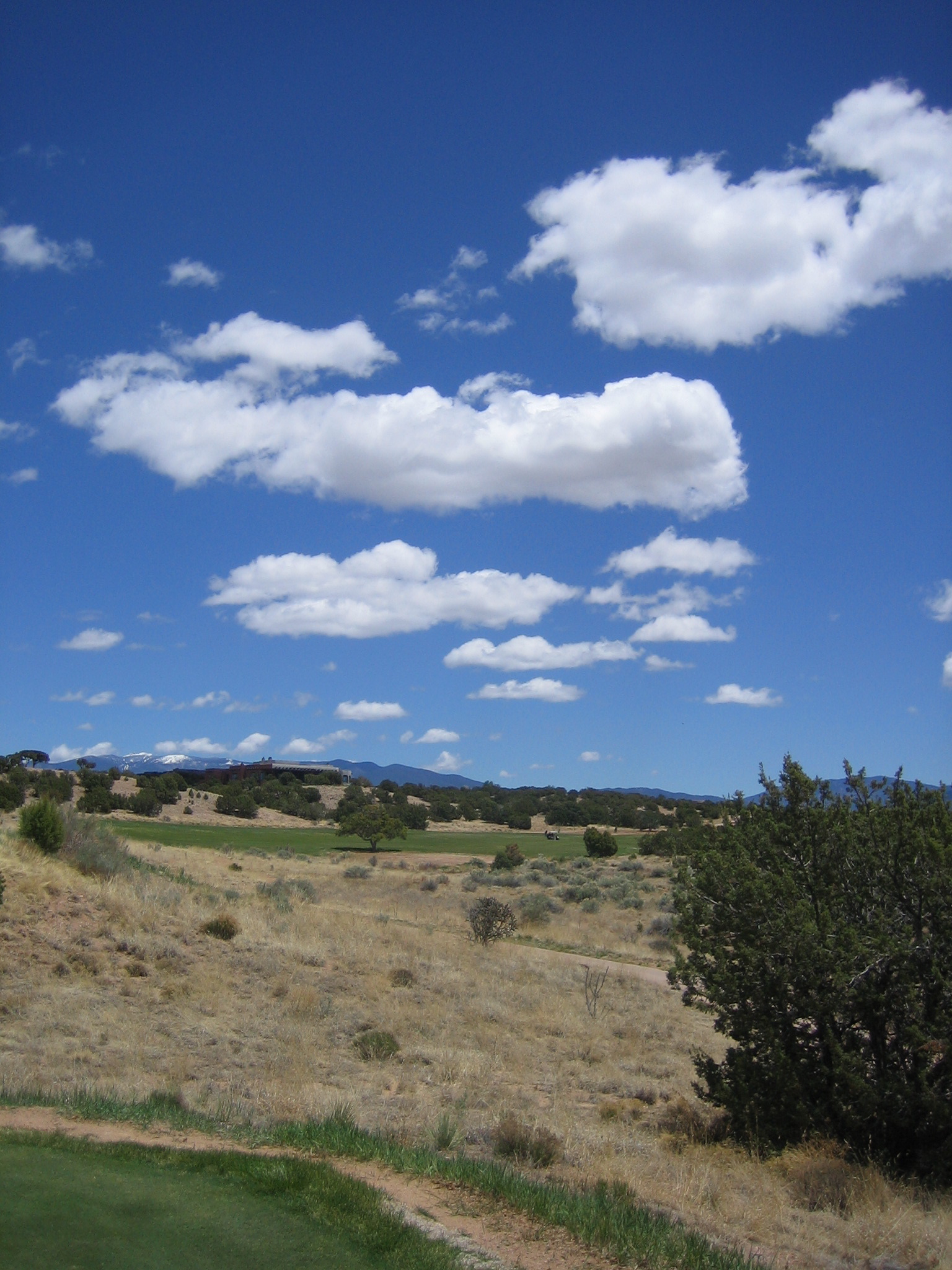
Again, we break with our stated goal of reviewing courses that the average joe can play without paying an arm and a leg by visiting one of the more exclusive clubs in New Mexico (hey, what can I say, if you can get on you’re going to play). While these courses are private, they have a distinctly resort feel to them. The drive up to the club house wanders through the prairie and has me wondering why I don’t live out in the desert. We pass tennis courts, adobe houses, and some of the back nine on two beautiful Jack Nicklaus designs. The pro shop is WELL apportioned and has a full array of titleist equipment (complete with fitting guy!). There are at least 10 different brands of clothing, any of which might be at home on the set of caddyshack. The practice facility was equally well apportioned. Grass driving range complete with pyramids of Nike practice balls and a LARGE putting green/chipping area with every contour imaginable. As for the facility:
The facility has two championship layouts. They were apparently Jack’s 99th and 100th courses respectively. Each one has a distinct character (the Sunset, I am told is slightly more of a shot makers course, while the Sunrise is the bombers course). On advice of the member who some how finagled me into the line-up, I played the Sunrise Course. Here are the stats:
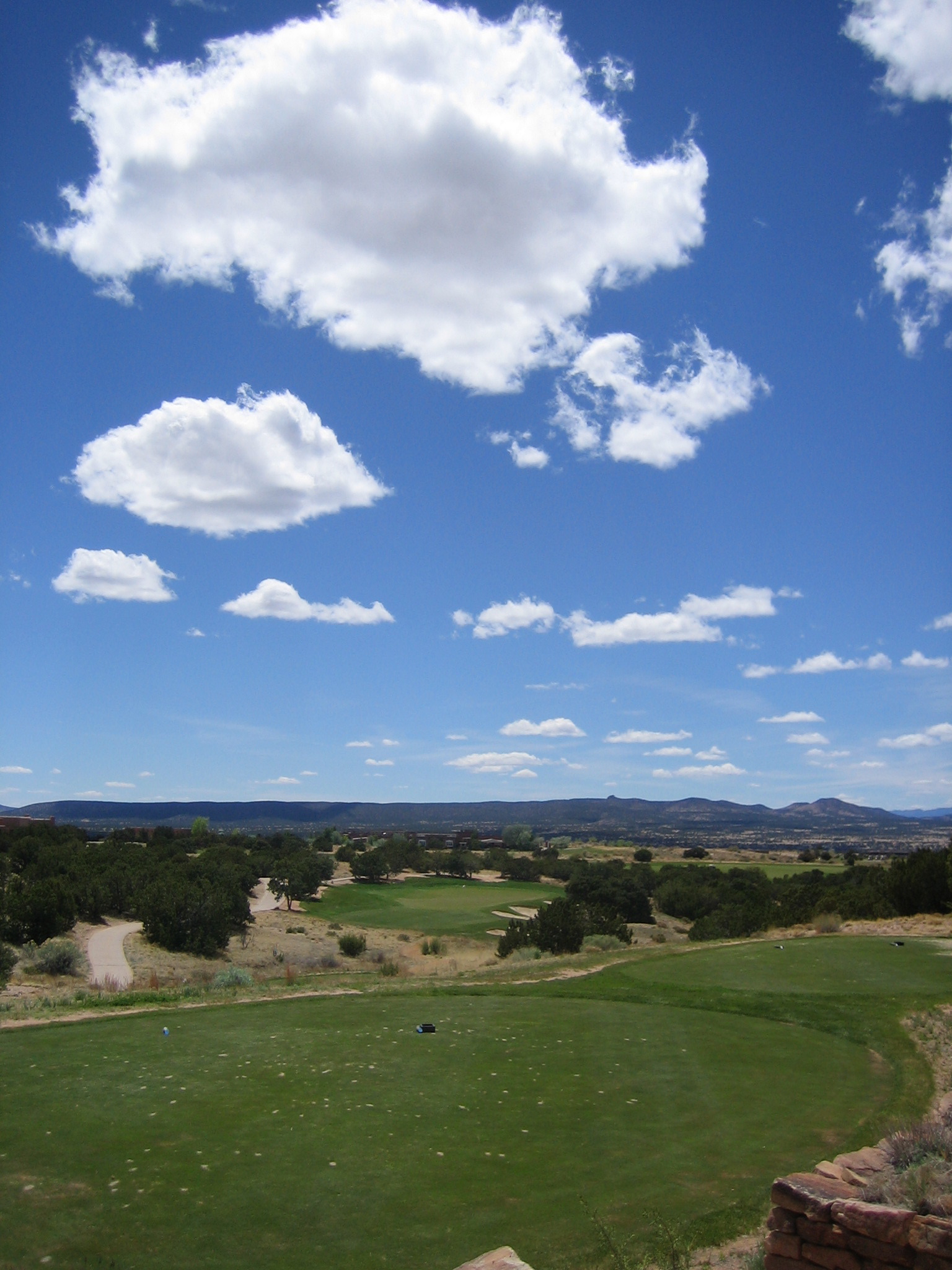
The Club at Las Campanas – The Sunrise Course:
Green Tees (Tips) 7626, 73.9/132
Gold Tees 7033, 71.0/130
Blue Tees 6462, 69.3/124
White Tees 5928, 66.4/114 (M); 71.9/132 
Red Tees 5029, 66.6/120
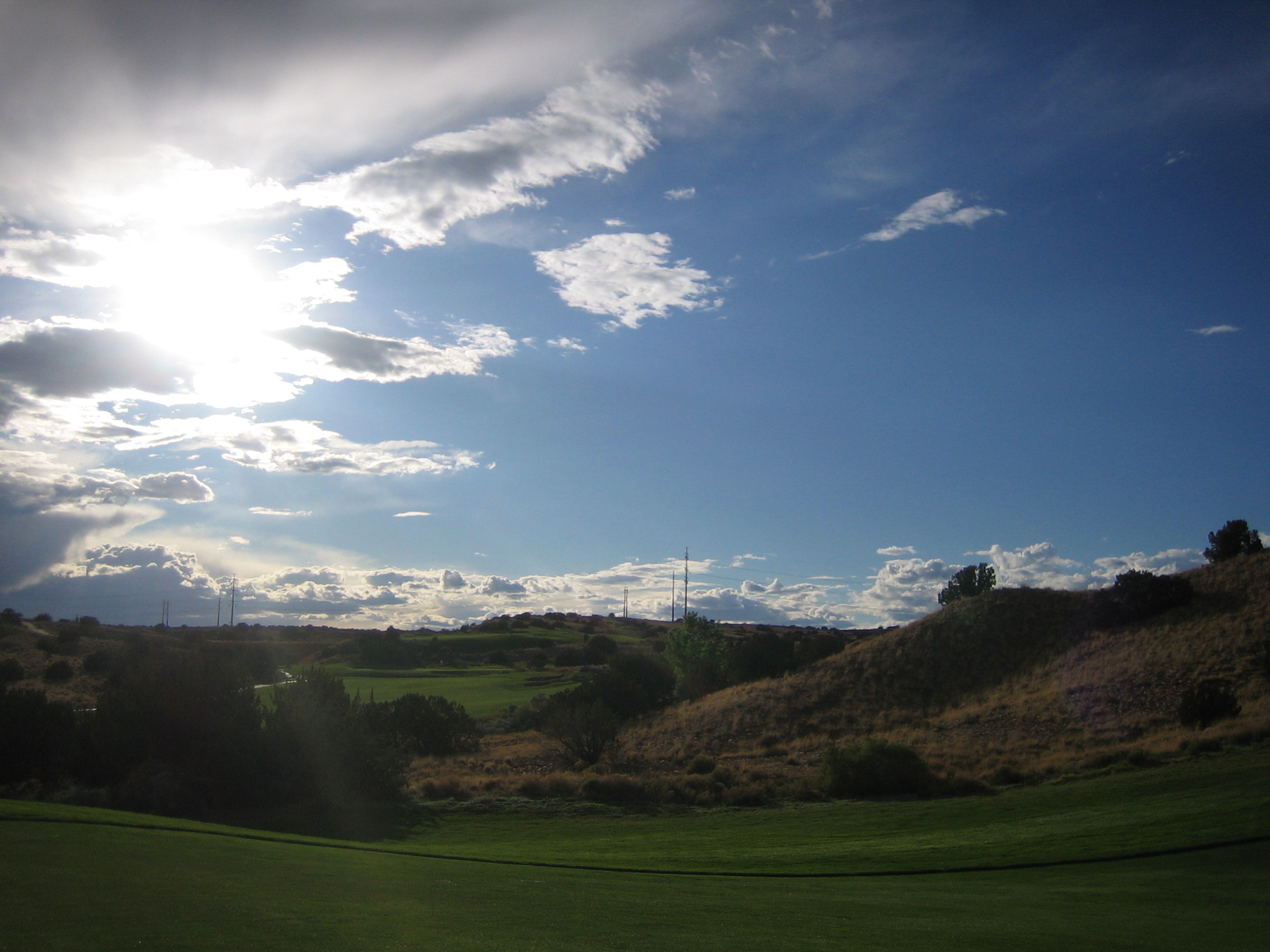
Because we so rarely have the time to write reviews these days here at the PF, we choose to write about winners. The Sunrise Course was precisely that. Though it listed shorter than Twin Warriors, it was certainly the more interesting of the two courses. Jack has made use of elevation change in the middle of the prairie in ways that I thought unimaginable. There were also blind drives that were rewarded by big drives and aggressive lines. See for example, the split fairway on the 9th hole.
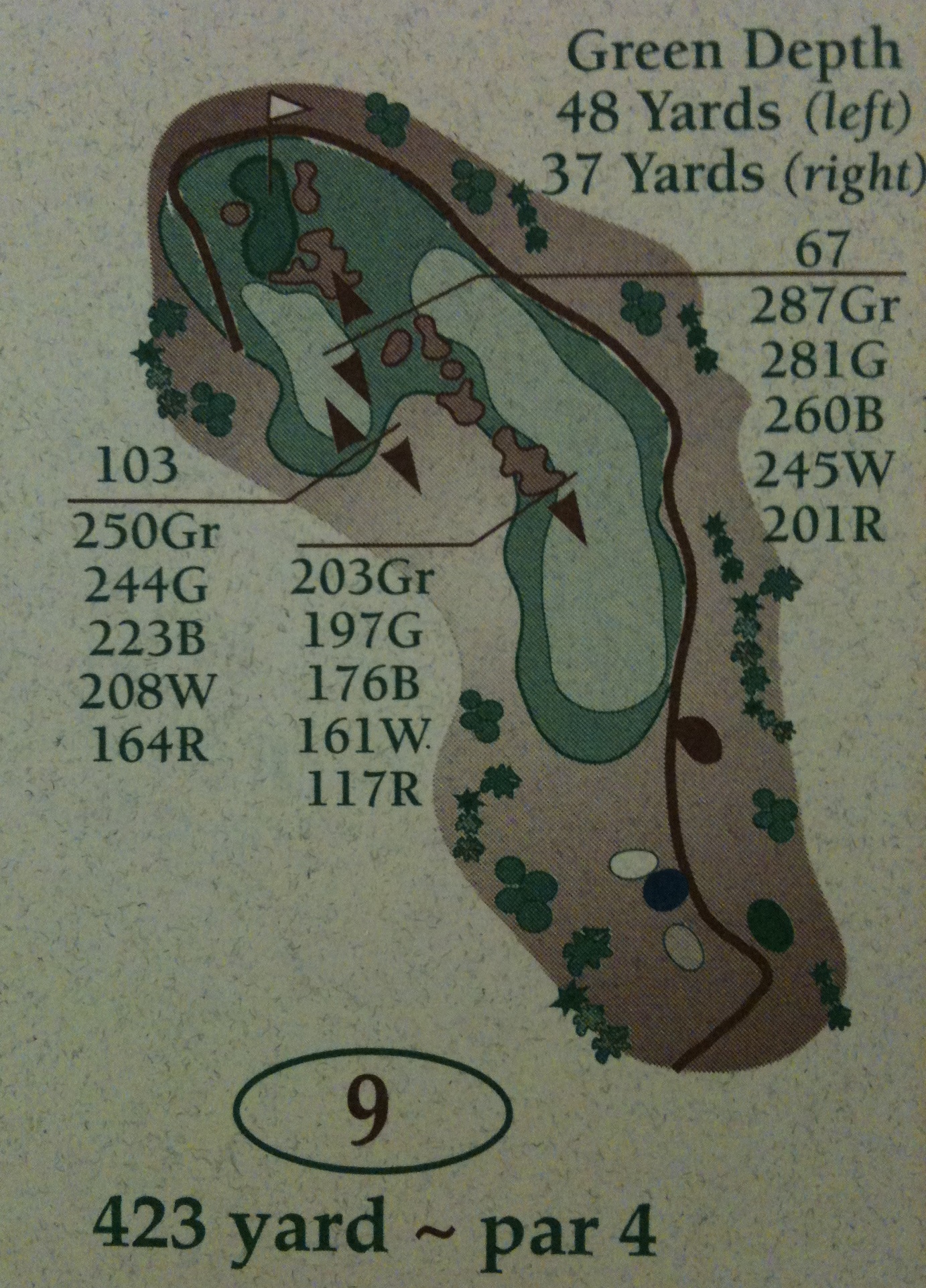
One thing about Jack’s designs that I found to be particularly true here though was that if you miss left, you were generally able to recover. Another truism of Jack’s designs is that if you are having a “loose” iron play day, you will feel the burn of the course. Thankfully, however, I was fortunate to be having a nice ball striking day. with a 42-44 = 86, I was more than pleased with my play from the Green Tees. Though my lone birdie of the day came on the 10th hole after a long drive, long three wood and chip sideways onto the tiny, well bunkered green; my favorite hole of the course was the par 3 twelfth.
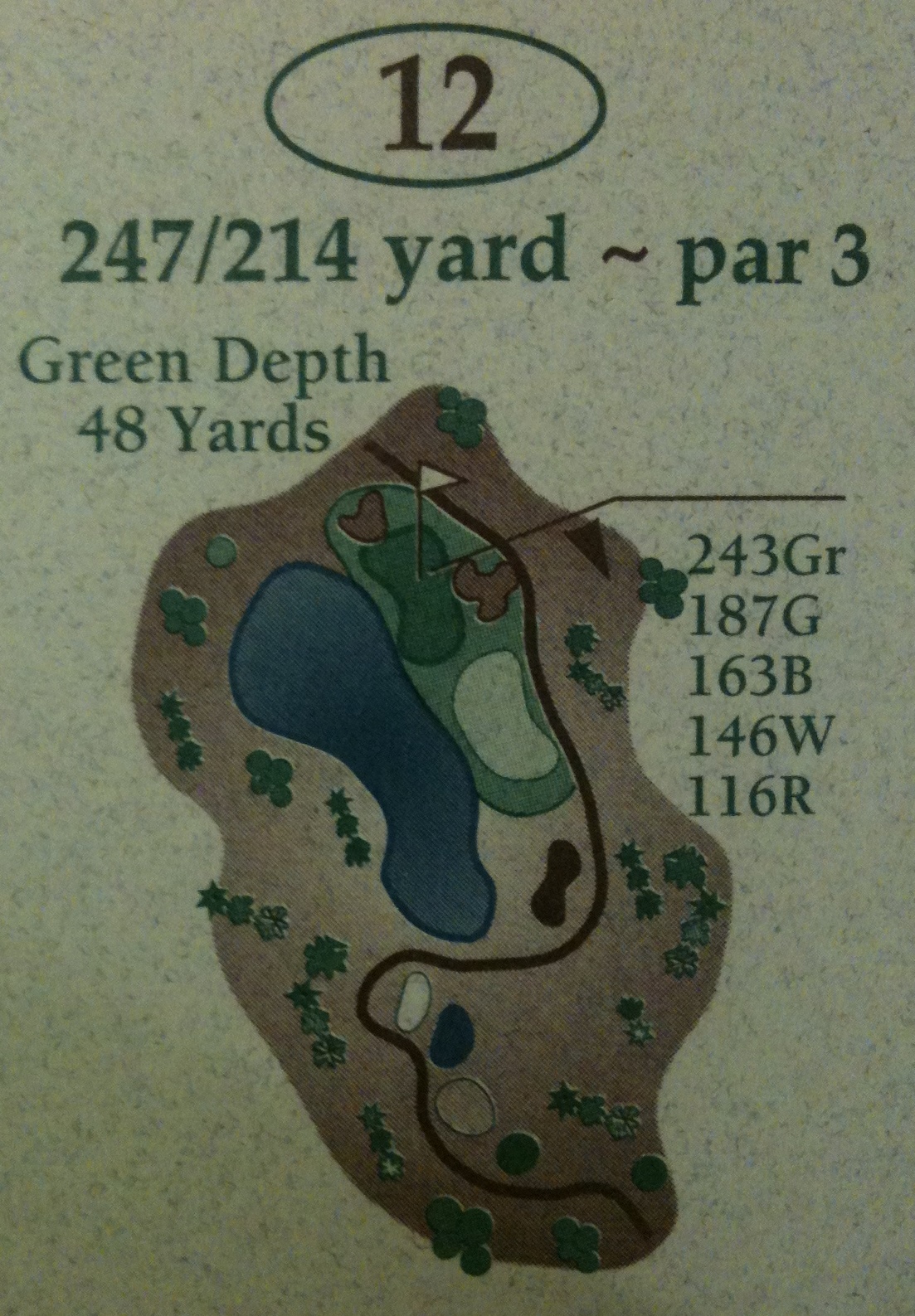
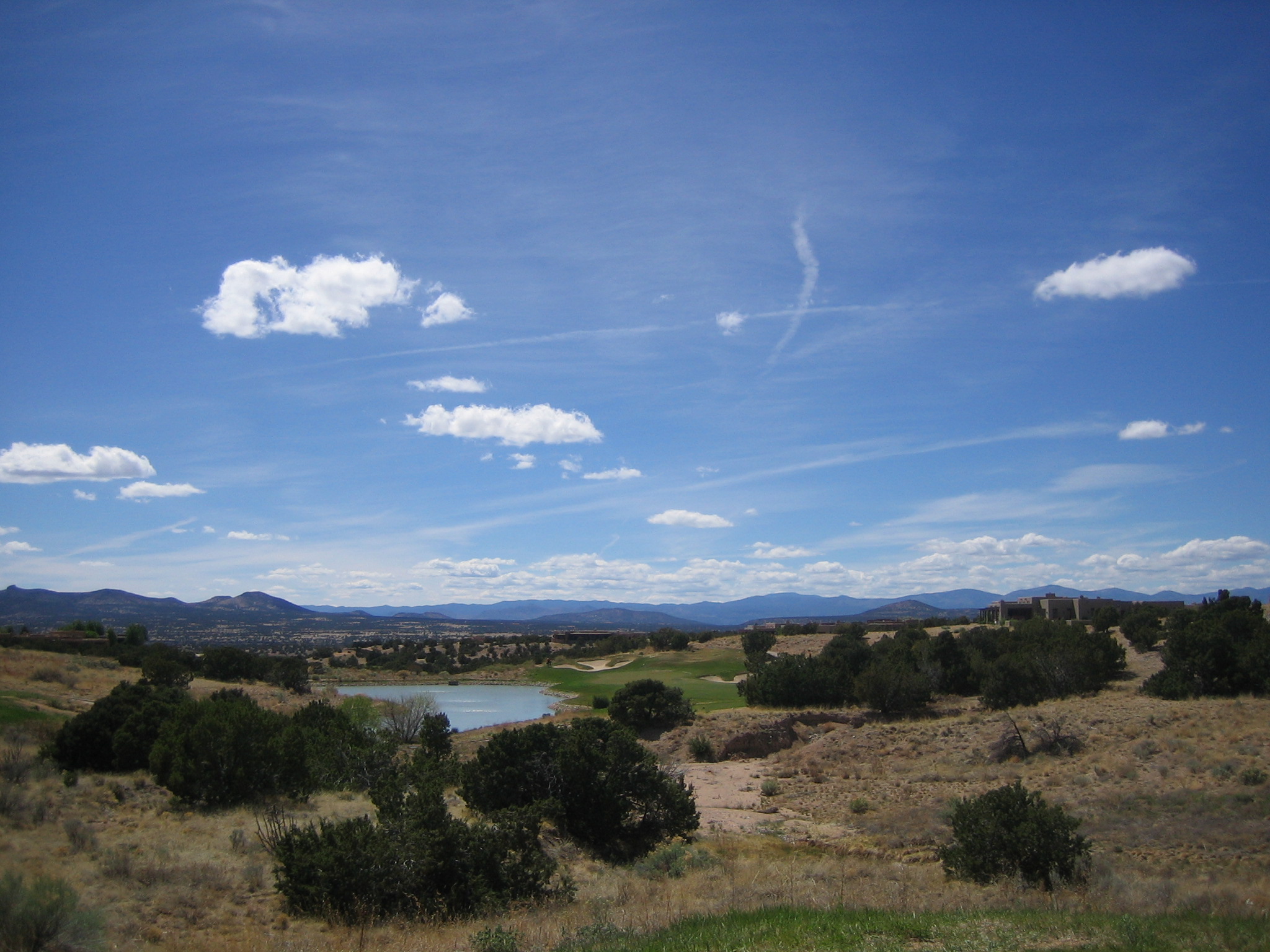
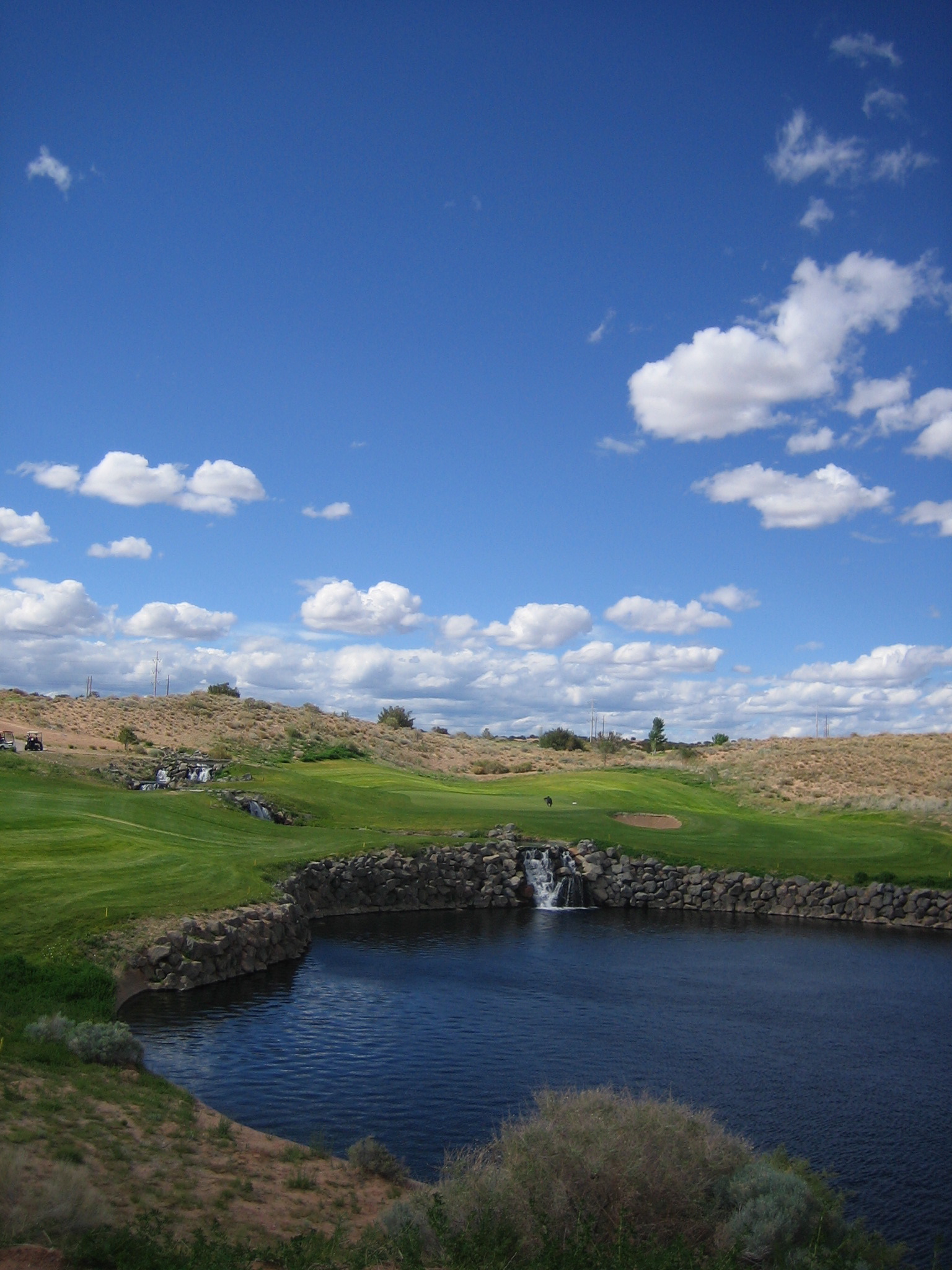
The twelfth (yardage guide and picture above from the tee) measures a stout 247 yards from the Green Tee. This monster of a par 3 affords very little in the way of forgiveness. Water left, bunkering right, and the only real bailout short into a collection area make this truly a “heroic” school of design hole. Oh, lets not forget the head wind. As if this beast was not enough pressure on its own, two of the cart boys had made their way down to watch me tee off. I guess it is rare for them to see new blood around this course (much less anyone that could reasonably be called “new”). I carefully teed up my TaylorMade Penta and gave it as smooth a ride as I could manage with my 3-wood. The instant it left the club face, I knew it was going to be pretty damn good. Below is the result that I drove up to after the long, 247 yard tee shot.
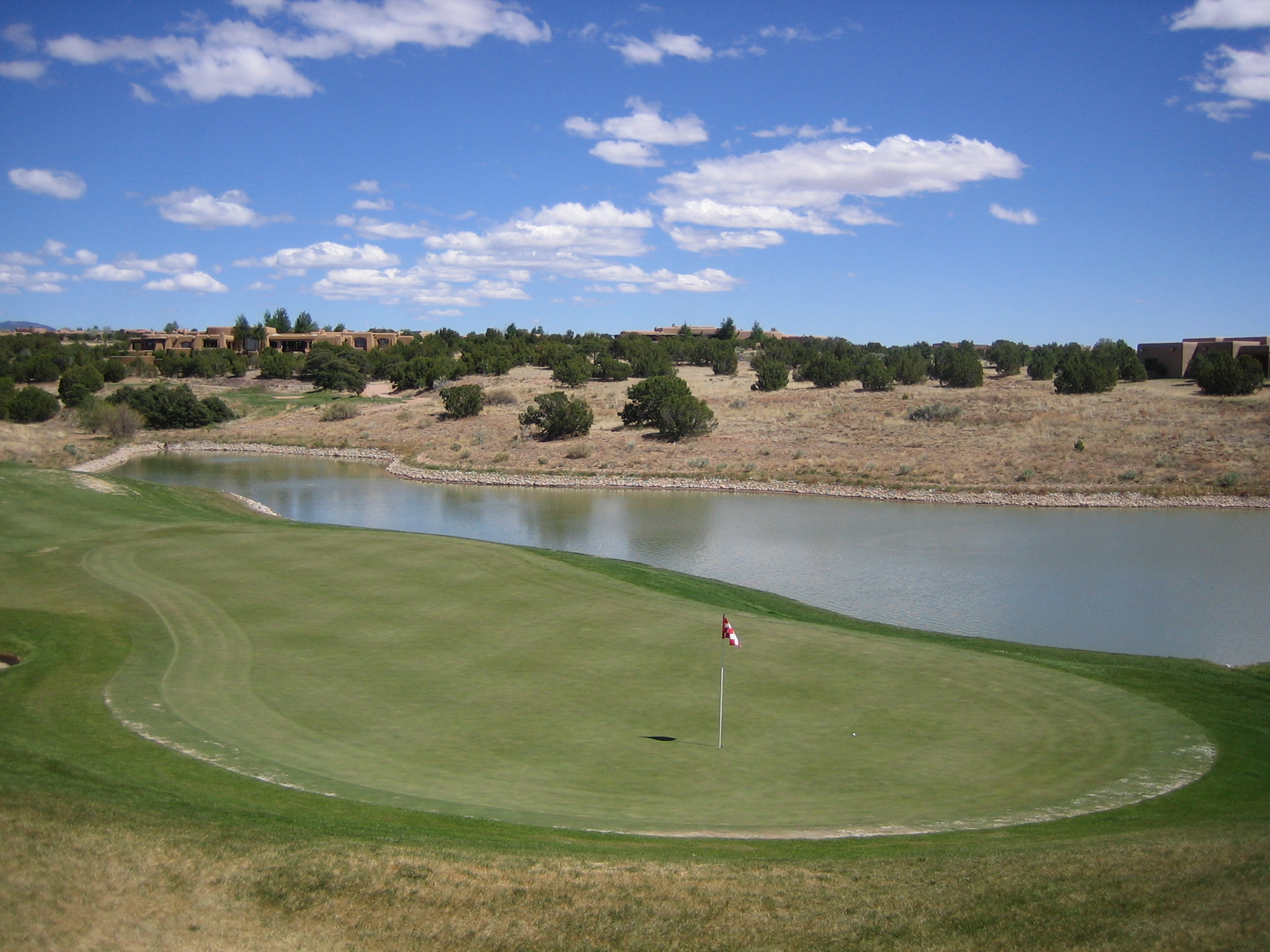
Needless to say, my round was made (unlike the putt).
The course was in impeccable condition. Parts were dry, as they should be in the desert, but for the most part, it was quite lush. The bunkering was superb and set up some fantastic aiming lines for the first time player. Though there were blind shots, I always felt as though I had a sense for where Jack wanted me to go.
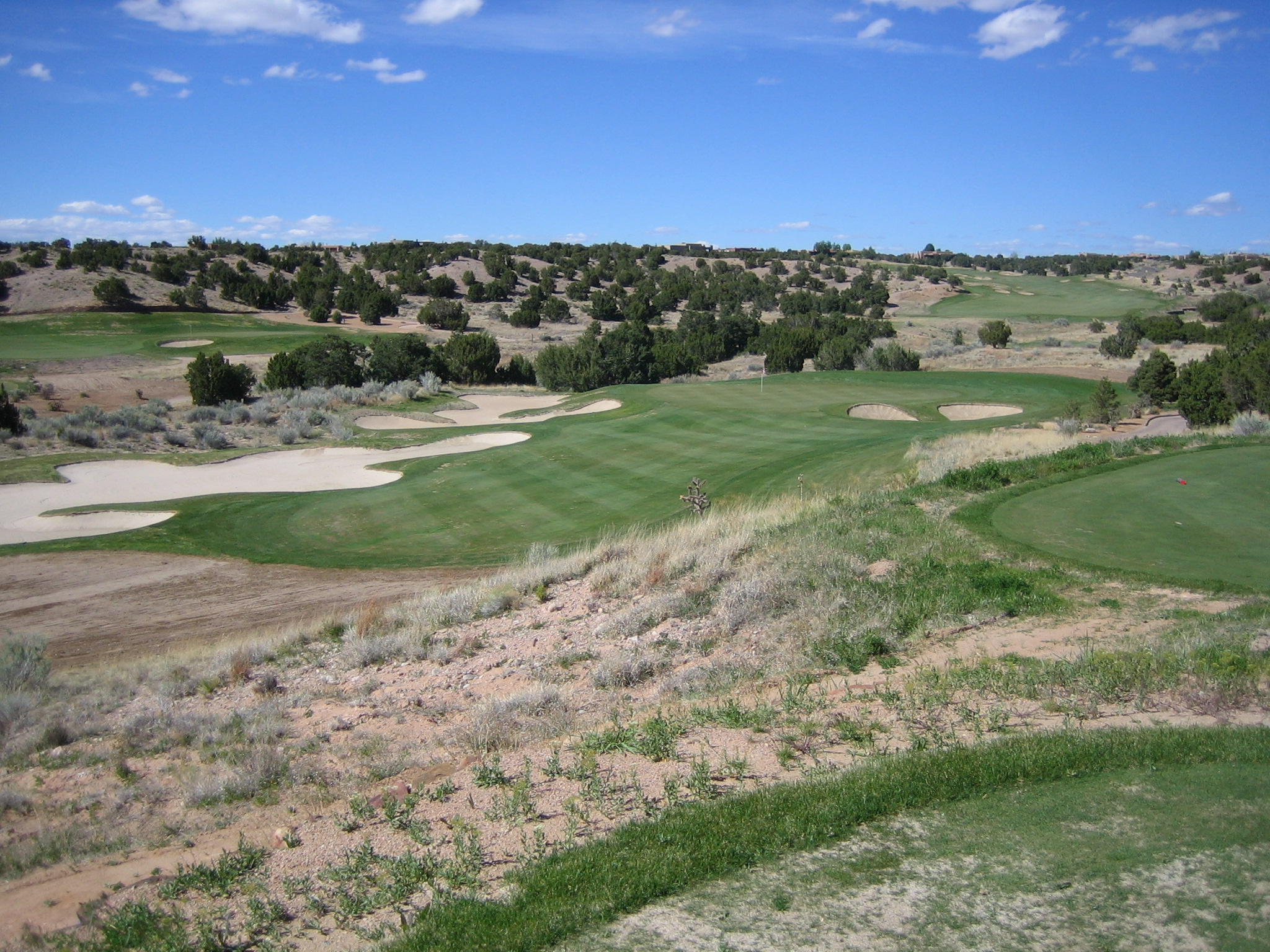
Overall, I’d have to say the Golden Bear’s 100th was clearly a monument to the prowess he has developed over years of designing courses. I truly think that this course is one that I could continue to play every day and it would never get old. Really, I can think of no higher compliment than that. There are holes that are incredibly difficult, but they are the kinds that create shots you will never forget.
Course Review: Twin Warriors
May 27, 2011
I recently had a chance to visit the beautiful state of New Mexico. Though I went for a much more important reason, that reason understands my obsession with this crazy game, and for some reason, encourages it. Before I get to the specifics of the course, I must say that I could very easily write a “Play of the Week” for the whole state. If you haven’t been, you must go. Green chile, staggering views, a wonderful farmers market in Santa fe, a rustic downtown, and phenomenal weather are a few of the things that await. For golf, this state is a hidden gem. I’ll admit, prior to going, I wasn’t hopeful. When was the last time there was a lush green course out in the desert? (I can hear JK screaming Wolf Creek).
As for Twin Warriors, all I can say is wow. Twin warriors is located about 1/2 way between Albuquerque and Santa Fe just off I-25. This casino course was rated Number 10 on the list of top 40 casino courses by Golf Digest, and recently played host to the US Open qualifier for this area. From the clubhouse to the 18th green, this place lived up to the hype. Here’s the rundown:

Scorecard:
One great thing about casino courses, they almost always have a plethora of tees.
Tips (Tour) – 7736 75.4/140
Championship – 7284 73.5/140
Back – 6715 71.1/136
Resort – 6131 68.9/126 (74.1/133)
Forward – 5100 67.0/116 (Note, the 10th hole plays as a par 3 instead of a par
NOTE: Though these yardages seem extreme, the area is roughly 7,000 feet above sea level, thus the ball flies a little further.
Driving range, full practice facility ($25 daily use fee) with practice bunker, large putting green.
Excellent pro shop with all sorts of Twin Warriors gear and full selection of various brands of clothing.
Though the rate can be as high as $79 to play this track, resort guests and NM residents pay significantly less. I was able to get a tee time as a walk in for $39 (NM rate) at around 3pm. Since the sun goes down around 8, this was certainly early enough to be one of the last groups coming in. This course was also completely empty on a Friday afternoon.
The review:
This course was phenomenal. I played from the tips to get a real feel for this Gary Panks Signature design. The first hole is a 563 yard par 5 that doglegs slightly right. This hole plays directly into a prevailing wind that was blowing about 20 MPH when I teed off. Needless to say, it took a pretty good driver and a perfect three wood to be within chipping distance. Though this course measured 7800 yards, it was very playable from the tips. The elevation change really helps increase distance off the tee, but any mistake is magnified that much more. One problem that I’ve had in the past with desert courses is the need for a “rock” club for those occasions when I’m not lucky enough to find the fairway. No such club was required at Twin Warriors. If you are not fortunate enough to find the grass, you are likely hitting out of the largest bunker you’ve ever been in. The sand was soft and never threatened to dent my beautiful Mizuno irons.
The course itself was very interesting. Though the course sports wide fairways that beg for hard hit drivers, heaven forbid you miss them. When I was playing, the wind made this easier said than done. The wind certainly turned this into a shot-makers course and required you to find the correct level of the green if you had a hope of two-putting. The greens were also in phenomenal condition – probably the best greens I’ve played all year.
As far as the surrounding beauty, well I’ll let you be the judge…
One of the best holes on the course was the Par-3 fourth:
Yes folks, that’s the real hole. This is not a painting, and I have no idea how to use Photoshop. The views on this course are just that good. This photo was taken from the back tee which measures 197 yards. The hole plays directly into the prevailing wind and certainly typifies the “heroic” school of golf course design. I hit a very flush three iron and landed about 20 feet passed the middle right hole location (as per my plan). Once I got on the green, I realized that I had essentially guaranteed myself a bogey with this play because I was on a shelf that dropped 2.5 feet to the hole. I ended up putting sideways to avoid rolling off the green with the direct round and two putted from roughly 15 feet coming back up the hill. Local knowledge would have helped here. By the way, you don’t want to go in the bunker on the right. It’s actually 5-6 feet below the level of the green. See below:

My favorite hole on the course was probably the Par-5 sixteenth. This hole measures a whopping 648 yards from the tips. Fortunately, there is a significant elevation change that is in the player’s favor. I hit driver about 365 yards on a string to have 280 left to the back right pin location. A 3/4 three wood short of a deep collection area short of the green left me about 65 yards in. After a slightly pulled approach, I two putted for a neat little par on this monster of a hole. I must give JK a tip of the cap here: 4 out of the 5 shots that I hit were due to clubs that JK essentially put into my bag.
I must also mention the Par-3 15th. This 244 yard monster was the only hole that I felt was a little too long even from the tips. I hit an 18* hybrid off the tee about as well as I could and was still about 10 yards shy of the green. Though it was more likely that I was just between clubs (between a hybrid and a three wood?!?), this hole just felt a little too long. The part of the green that you actually can see from the tee is quite small and pretty heavily contoured. Also, it is exceedingly punitive if you go over the back of the green (you’re basically over a cliff). One cool thing about this hole, though, is that it is constructed right next to an extinct volcano.
All in all, this track was fantastic. If you get a chance, I highly recommend playing Twin Warriors. Don’t be discouraged by the length either! This course will help you out along the way if you can keep it between the ditches.
Greens: 9/10 (hey, they’re not Augusta)
Fairways: 7/10
Other course maintenance: 7/10
Value: 10/10
Pace of Play: 9/10
Pro shop/clubhouse: 8/10
Overall: 8.5/10
The Verdict: Fantastic casino course. Break out the 100’s boys, we got a track worth gamblin’ on.

This was one other ridiculously cool picture I had to include. One awesome thing about the desert was watching it rain without the rain actually hitting the ground! During my round, however, I was blitzed by a freak rain shower on the 13th green. I was so happy to be out there though, I made my longest putt of the day (17 feet) while it was raining on me sideways!
Course Review: Bridgemill Athletic Club
April 26, 2011
Today, I review Bridgemill Athletic Club.
I recently had the opportunity to play Bridgemill for the first time. The course in Canton, GA, used to be a fully private club but has recently moved to semi-private.

Having never played the course before, my first impressions are always lasting. Typically, I find something to complain about on the layout–either that it is unfair or did not give enough cues as to where to hit the ball or whatnot. Bridgemill, I must say, was extremely fair. There are no truly blind shots, no unknown landing areas, no unfair drops. The closest thing to “unfair” was a hole (I believe #6) where the fairway sloped severely to the right once you got over a hill, but the ball would not be lost just because it was hit there.
At over 7,000 yards from the tips, one would guess that the course played very long. However, I did not get the feeling that the course was out of reach. Many of the par 4’s are under 420 yards. The longer they are, typically the more open they become. I hit a good number of fairway woods from par 4 tee boxes, even from the back tees. Where the course makes up yardage is on the par 5’s. No par 5 is less than 545 yards, and the par 5 9th hole is over 600. The par 3’s are also no joke. Although one is downhill at 173 yards, the others range from about 190 up to 237! The 237-yard 5th is all carry to a large green. Thankfully, there is a bailout right. The signature 199-yard 16th hole, however, has no bailout, being an island green.

Also, the greens were in the best shape of greens I have seen this year. Rolling fast and true, they had no signs of aeration. There were a number of slopes and undulations, including multiple 2-tiered greens, which I enjoy. Moreover, they were bent grass, where so many of the local courses have chosen to go the bermuda route (which I cannot stand).
The clubhouse is very nice, and the practice facility at Bridgemill is top notch. Two practice greens, a nice range, and a bunkered chipping/pitching area were all in fantastic shape, ready for players. Moreover, at $55 on a Thursday morning, the price wasn’t terrible either, at least for the experience. And it isn’t a bad place to hang around–the homes that line the course, simply put, beautiful.

As always, The Bads: The course is a ways from Atlanta. Although it is in a beautiful part–with mountain vistas on the drive in–the drive in was a long one. The staff were a little prickly, as well, pairing us up with a single when there was no apparent reason to do so, as well as “forgetting” to tell us that a shotgun tournament was going to hold us up, and restricting us from going to the first tee before our tee time because “maintenance won’t be done yet.” Still, the course was a great one, and I enjoyed it very much. Although it had rained just the night before, I also must note that the course was pretty soggy.
Layout: 9/10
Greens: 10/10
Fairways: 9/10
Other Maintenance/Upkeep: 10/10
Cost: 6/10
Value: 8/10
Location: 6/10
Staff: 4/10
Overall: 8/10
For more photos of Bridgemill Athletic Club, visit http://www.atlantagolfpics.com/BridgeMill/bridgemill1.htm
Course Review: Shoreline Golf Links (Mountain View, CA)
April 12, 2011
As JK mentioned in his previous post about Southland, our goal at the PF is to review courses that the average joe can play. Enter Shoreline Golf Links. This great little muni is located in scenic Mountain View, CA very near the headquarters of Google. The course offers a full length golf experience at a reasonable price. Who could ask for more? Here’s the run down:

3 practice facilities – chipping, putting, and a practice bunker
18 holes- 4 sets of tees:
Red – 5437 yards – 66.5/116
White – 6061 yards – 69.3/123
Blue – 6608 yards – 71.9/127
Black – 6996 yards – 73.5/129
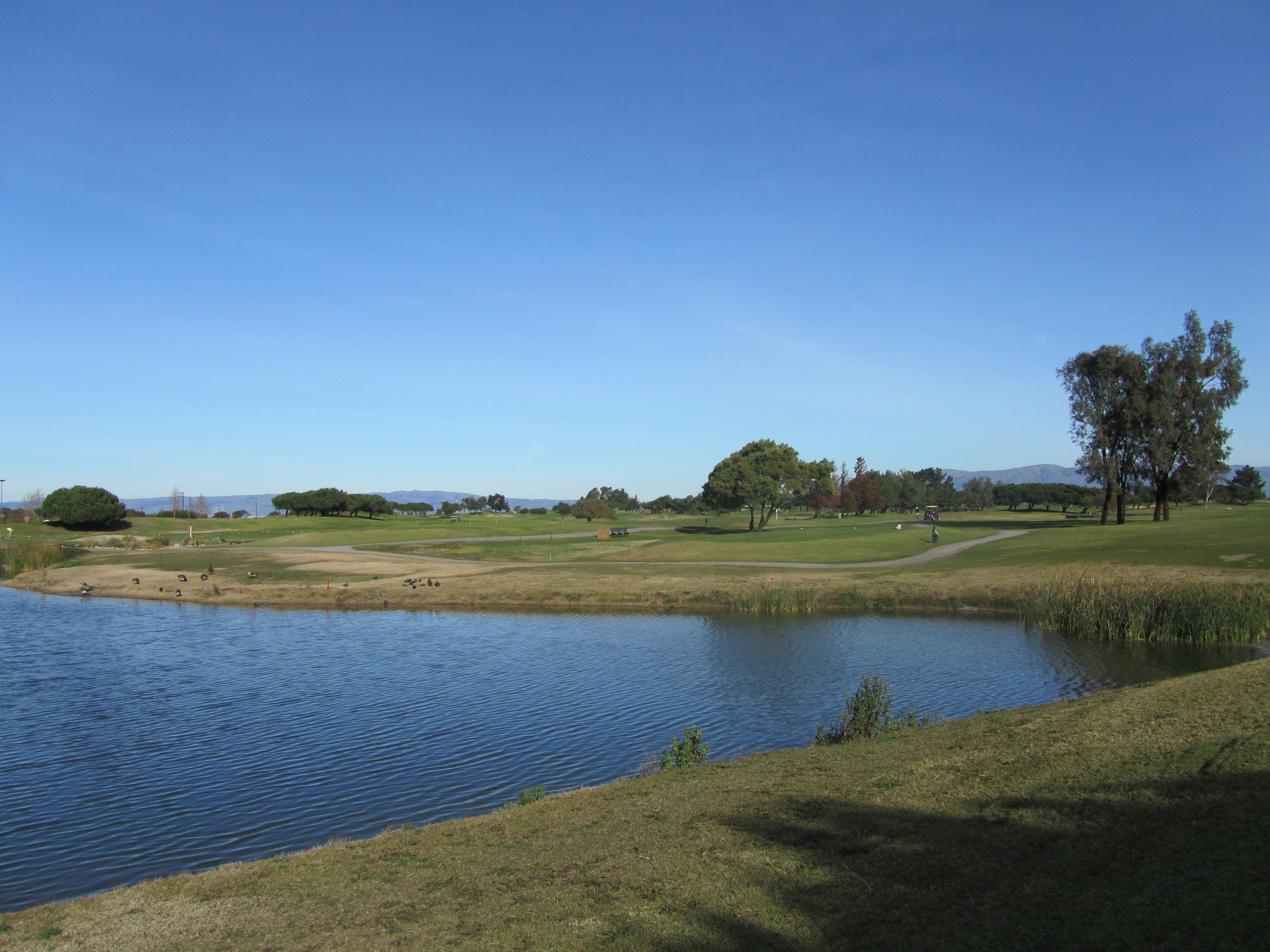
1st Hole - 579 yard par 5
Large Driving Range – Small bucket 5, large bucket 9 – range cards available
Full service pro shop with decent selection of gear and good deals on occasion.
Great bar/grill/snack shop
Resident rate can get you out at twilight for $21 walking (excellent deal for this area; I’ve finished 18 several times with this rate on the weekends)
The downsides:
1) JK and I played this course together when we were both working in Palo Alto. We were both incredibly impressed by the volume of goose poop that littered this course. We both recommended to the pro shop that the course retain a pack of dogs to help reduce the problem. Seriously, this amount of poop could be used to fertilize any number of “green” projects around the state.
2) We played the course in the mid-afternoon. By the time we reached the back nine, the wind had kicked up so violently that we really had no chance to make any kind of score. The notorious Bay wind really bears its teeth in the afternoons on this course.
3) The par 3s are not really that great. As I play more golf, I realize that I tend to judge a course more by the quality of the par 3s than any other holes on the course. These holes tend to be the most scenic and provide the best drama in most rounds of golf. While I love the set of par 5s that this course offers, the par 3s probably equal out the rating. Three of the four are long forced carries. While I have no issue with this kind of hole, I find these three to be rather repetitive. The par 3 eighth hole, however, has a very interesting green and a tricky bunker that make it an enjoyable hole.

Goose Poop
Review and conclusion:
After our initial negative experience, I was hesitant to revisit Shoreline. After moving to Mountain View, however, I had little choice. Time to play golf has become increasingly limited so even a windy round is highly welcomed. After a few weekend rounds here though, I must admit that first impressions can be deceiving Shoreline is as interesting a layout as almost any muni I’ve had a chance to play. When compared to the Palo Alto Muni, it’s certainly the more interesting track. The course opens with a 579 yard par 5 that plays uphill (I almost got there in two!) and does not get much shorter. The back nine has some of the more interesting holes, to be sure, but the par-5 ninth and tenth (back to back par 5s!) offer two major scoring opportunities. The 9th is a paltry 519 yards and its mate is 525. An ace on either par three that bookend this pair puts you in prime position to do what Phil came up just short of at last year’s Masters – three eagles in a row.

Overall, if you are in the area and have time to get round of golf in, I’d highly recommend Shoreline over the other munis in the immediate area. Not to knock the Palo Alto muni, but I’d rather pay less to play a more interesting layout with some goose poop on it than a long, boring track where you can see nearly every single flag from any place on the course. It also probably doesn’t help my bias that I nearly aced the par 3 fourth hole (see below and POTW 6).
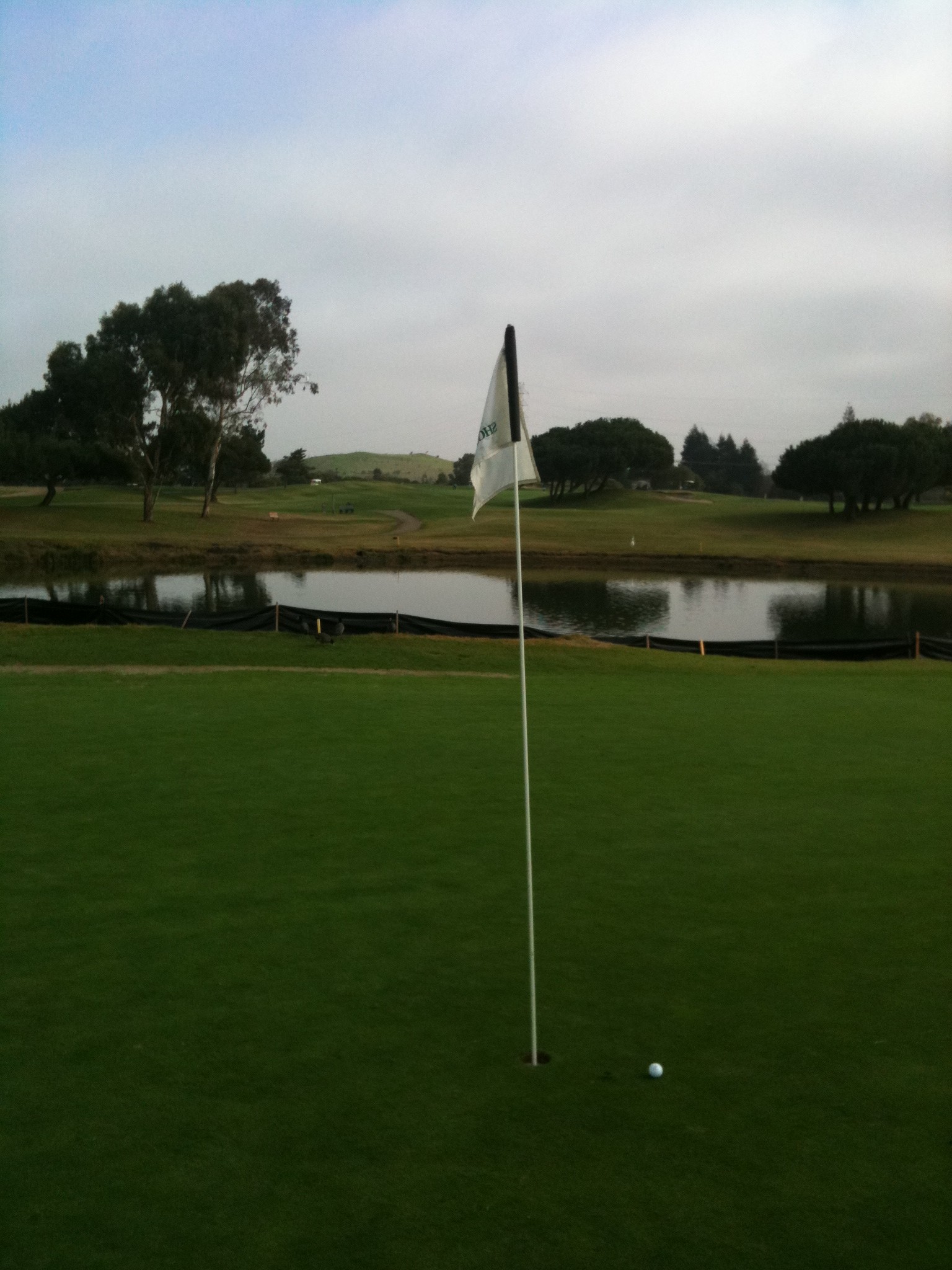
Near Ace - Par 3 Fourth
Greens: 6/10
Fairways: 5/10
Other course maintenance: 3-4/10
Cost: 7/10
Value: 7/10
Pace of Play: 7/10
Pro shop/clubhouse: 8/10
The Verdict: Great casual round, but if you’re looking for high end golf, look elsewhere.
Course Review: Southland (Atlanta, GA)
April 4, 2011
I recently played Southland Golf Course in Stone Mountain/Lithonia, Georgia, and am providing this review to the readers of the PF.
At the PF, we strive to provide (when we can) a review of a course for the average Joe who just wants to get value out his Sunday round. Although a spectacular review, LG’s post about Pebble Beach (located here, if you want to check it out) is the exception for what we intend to review. As such, today’s review will not be in the clouds of playing a spectacular golf course, but rather will be giving the general reader an honest review of a course he or she might play this weekend. Without further ado, I review Southland.

A little background–I grew up not far from Southland. When I was in high school a friend landed a job there and often got me onto the course for little cost. Obviously, I’ve become familiar with the course over time and have an understanding of the layout that comes only with a sustained ability to play a course consistently.
In the 90s, Southland was a private club sustained by the neighborhood surrounding it. It opened its doors to the public around 2000 and was shortly thereafter bought by a group called “Eagle Greens.” Many in the Atlanta area will remember Eagle Greens for its buying and revitalizing of many courses in the area. The business model was to hire young, fresh-out-of-college superintendents so that the courses could pay them lower salaries and, thereby, become profitable. The business model must not have worked in the long run, because Eagle Greens is now defunct. During the height of Southland’s membership with Eagle Greens, the course was spectacular; in fantastic shape, manicured, with lots of perks and inexpensive. They had GPS on the carts (in the early and mid 2000s, when GPS was kind of chic), and the cost of a round was only in the $35-ish range (with cart on a weekend!).
However, long before Eagle Greens went away, the group sold Southland to Korean Air Lines. KAL has a habit of purchasing courses and running them into the ground. They make no attempt to maintain the courses, and they basically make profits off of the goodwill that the courses have had with players before until no one patronizes the course anymore. KAL killed the first course where I first broke 80 (Atlanta International, shooting 77). They ran Southland into the ground. I played it several years ago–2008 or 2009, probably–and was told by the pro shop that the course was in nice shape, only to find that every green had been aerated and was COVERED with sand. I vowed not to go back.
However, nostalgia go the best of me. A friend told me it was getting better, and–frankly–they had the earliest tee time this Sunday, so I decided to bite.

Because I grew up playing the (largely) wide-open public courses in the city of Atlanta, Southland is a course that bothers me. The heavily-wooded course contains a number of blind shots, dead spots, and traps (not sand, although it has those too). For my review, I tend to think that Southland over-penalizes mishits in many cases. A shot that is 10-yards offline could cost you 3 strokes trying to get out of the woods and back into play. Generally, the course is narrow, and the layout can be a little crazy. For example, the 8th hole (pictured above) is a 300+ yard straightaway hole from the white tees–pretty simple, just over water. From the blue tees, however, you actually have to hit down a hill to the area where the white tees are located and then hit from (basically right in front of) the white tees to the green, 260+ yards away. The shot from the blues to the white tees is about 180 yards. So, for me, I played a par 4 hitting 6-iron then 3-wood. That doesn’t make a lot of sense, no matter which course/hole you’re playing. This is but one example. Another would be the 11th hole, where a simply 340-yard par 4 can be a nightmare if you try to “go for it.” Playing a 3-iron off the tee is FAR better, as virtually any shot hit with the driver will be lost (for reasons that are difficult to explain). And the 15th includes a fairway bunker bounded by trees that is less than 100 yards from the green; thus, if you’re in that bunker, there is no way to get out without losing shots–unless you are incredibly skilled at hitting 70-yard cut and punched 5-irons out of bunkers. This kind of course bothers me, as my game is typically not defined by exacting precision, but is closer to a “bomb and gouge” style. If I bomb on Southland, there’s no way to gouge, unfortunately.
Such criticisms could be levied at some of the greatest courses in the world: Pine Valley, Cypress Point, Harbour Town, Bethpage, and Pinehurst could all be called “unfair” for the same or similar reasons; that’s just a gripe that my game is a square peg for the round hole that is this type of golf (I’m working on it, but the process is tedious).

However, KAL did some real damage to Southland. Although it is under new management that is trying to bring it back, it simply isn’t maintained to the level it needs to be. The greens were better than many places in Atlanta, considering many places lost their greens last year. Moreover, Southland doesn’t get much play since many of the patrons were completely turned off by KAL’s management that they wrote the course off completely (and now patronize nearby Mystery Valley, which I will review later). So those are some benefits. However, there is little or no sand in most of the bunkers. The bunker edges are not trimmed and, in fact, show signs of water erosion. There is pooling of water in fairways for no apparent reason. The course is muddy in places and baked in others. Months-old grass clippings are all over the fairways, piled in lines by rainwaters flowing down the fairways at some point. Many tee boxes are unlevel, lack grass, and have inordinate amounts of sand on them. Such maintenance issues make the course difficult and unenjoyable, as it’s nearly impossible to find a consistent lie, even in the best fairway. Also, although the pro shop has a collection of….let’s call them “vintage”….equipment for which you can haggel a deal, there is no food service in the pro shop, cart staff, beverage cart, food at the turn, etc.,etc. At $30 on a Sunday morning with a cart, it might be worth it if you were late trying to get a tee time, but if you’re able to play elsewhere, it’s probably be a better bet not to play Southland.
Greens: 8/10
Fairways: 3/10
Other course maintenance: 2/10
Cost: 7/10
Value: 5/10
Pace of Play: 9/10
Pro shop/clubhouse: 1/10
Overall: 4/10
Crossing one off the bucket list: Pebble Beach Golf Links
December 25, 2010
I was very fortunate to have the opportunity to play Pebble Beach on Christmas Eve of this year. Though it is our aim to review courses that the average joe will be able to play, this is one that every golfer must play before they leave for the putting green in the sky. I’ll spare you the play-by-play and leave you with a recommendation: go play Pebble. There really are no words to describe this place. JK describes Augusta as a place that makes the hair on the back of your neck stand up. I’d say the same about the Old Course. I can confidently say that Pebble Beach fits that very same description. It truly is one of those “religious experiences” for a golfer. The price tag is daunting, but I assure you that as soon as you step up the first tee, you will not regret it. The course was very playable, even when wet, so don’t fear the winter season (usually with better rates than normal $499). One critical recommendation: take a caddie. The caddie fee at Pebble is $75 with a suggested gratuity between $35-50 depending on service. I was lucky to have one of the most experienced caddies in Pebble’s stable. Larry had just cleared 5,000 rounds in March and has caddied at Pebble for 15 years. He was able to provide some great local knowledge (especially around the greens) that proved invaluable. Larry also knew all the good places to take pictures and made sure to point out all the spots on the course where a memorable moment from the tour took place.
I had a difficult decision to make right at the get-go: which tees to play. My goal going into the round was to have a good time and enjoy myself. After all, this was my present for passing the bar exam. I decided on playing the gold tees rather than the 2010 U.S. Open tees on recommendation from the Starter and my caddie. Though it really doesn’t matter what tees you play at this course, I occasionally found myself wishing I’d played the Open Tees just to be able to say I’d played a U.S. Open course. To this effect, I played the 8th Hole from the U.S Open Tee. What a beautiful hole. Though my first ball cleared the gap (just barely), I hit a couple of extra balls just to re-live the experience in the moment. There may be no greater second shot in golf. The only decision I truly regret about my day is hitting Driver on 1. Hybrid next time. No need for anything longer.
I’ll leave you with one story from my trip. It was a beautiful, sunny day. The wind was blowing between 15-17 mph constantly with gusts between 25-30mph. As we rounded the 16th green to the 17th tee, a slight gust picked up. Larry suggested a full five or knock-down 4 into the front right-hand pin position. I teed the ball and rehearsed a nice smooth knock-down swing. I stepped off the shot because a group of tourists began yelling at their small child who wanted to come see what was going on. I aimed about 3 yards right of the edge of the green and trusted my draw to bring the ball back to the green. I hit the ball a little thin and a rocket took off straight toward the flag. Here’s the resulting second shot that I thankfully holed for a nice tweeter on 17:

I recall there being another not-so-perfect swing that resulted in an important kick-in birdie at 17 during a U.S. Open… One day… (for those of you who are not up on your golf history, click here)
Overall: 10/10.
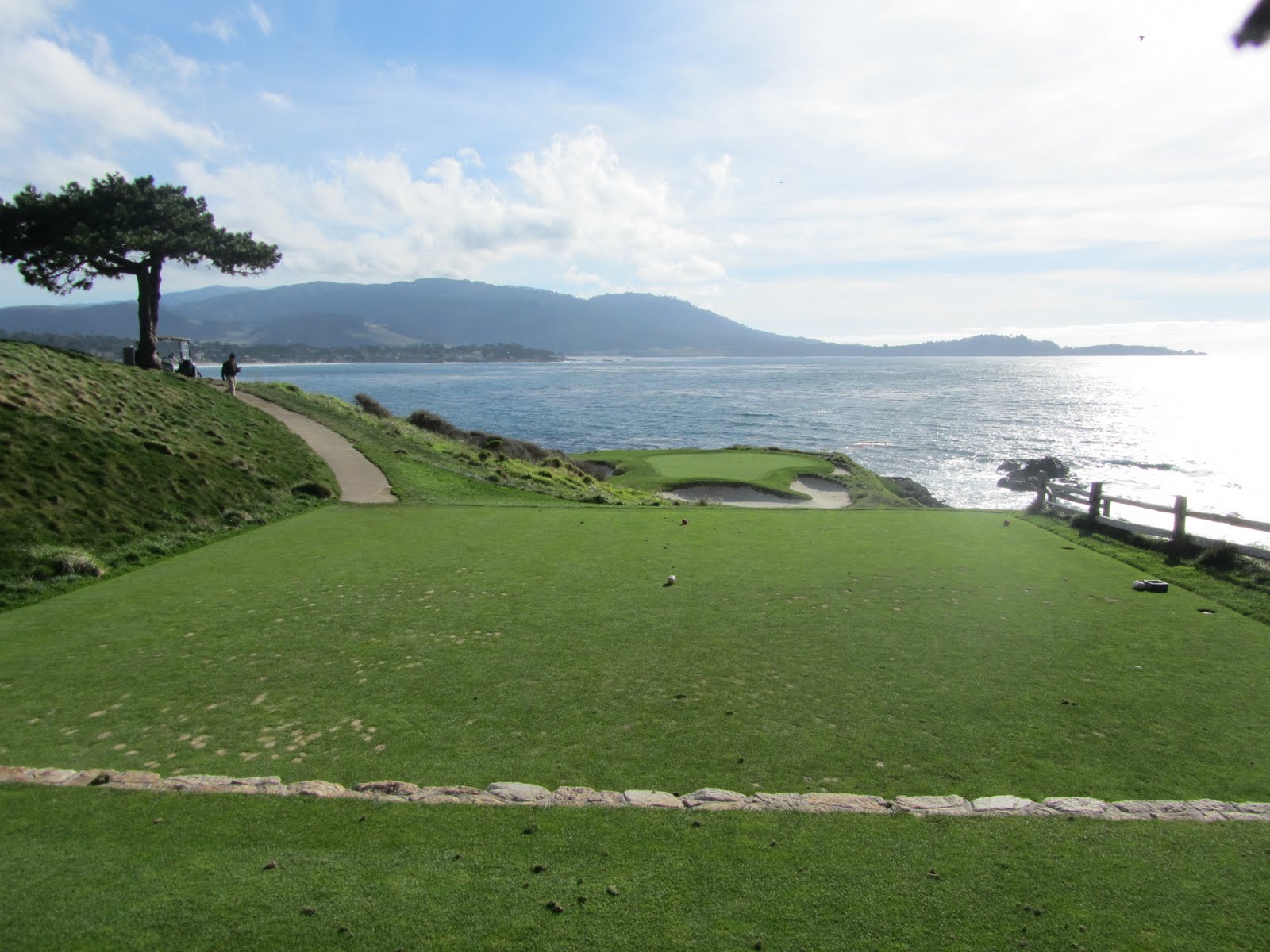
The signature 7th hole. Shortest hole in U.S. Open history and the site of a beautiful LG par. (knock-down 9-iron to a back right hole location. missed the 14 footer for birdie by the roll of the poa; next time, no taking chances, slam it into the back of the cup.)

View from the 8th Hole vista
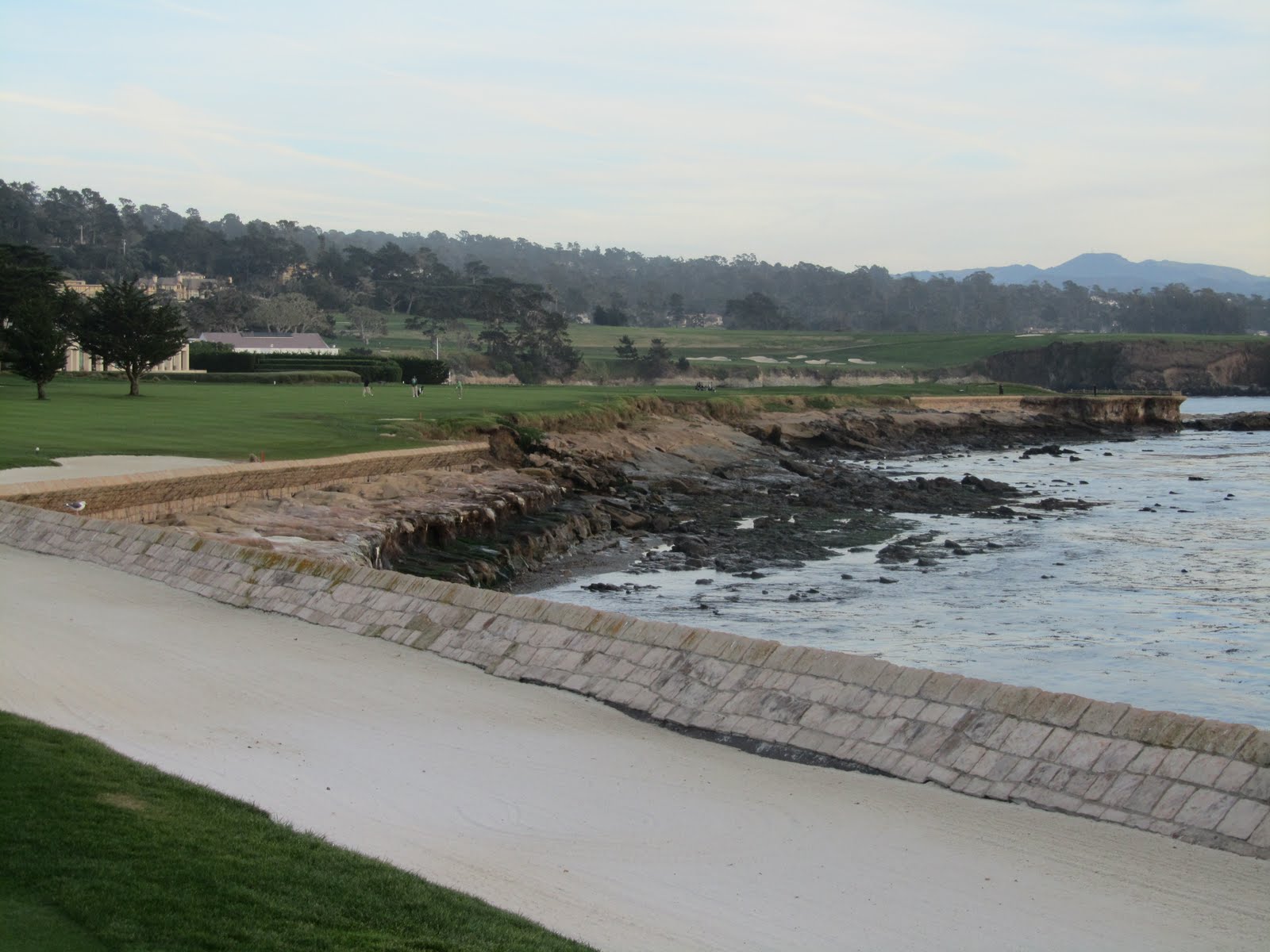
A look back up the 18th from the fairway. Rated the best finishing hole in the world by anyone that plays golf.
Review: Lake Chabot
October 26, 2010
Expectation has a lot to do with perception. How often have you expected something great–either because you heard great things or because you were just excited about it–only to be let down by the experience? The nice thing, though, is that the expectation dichotomy applies just as equally to under-estimated experiences.
With that in mind, one of the most overperforming golf courses I’ve ever played is a dinky little public course called Lake Chabot (in Oakland/Berkeley, CA). I got out there on a Saturday. The first thing I noticed is that the driveway actually runs through the course (the front 9). When you’re playing, you have to make sure no cars are coming–and, when you’re driving in, you have to stop between each hole to make sure no golf balls are flying into your window! Kind of wierd.
The second thing I noticed was how hilly it was. I knew this was going to be a walk.
Other than that, I didn’t expect much. I randomely paired up with some people, paid $25, grabbed my bag, and started out. At $25, the main reason I went to the course was the price. Nowhere else in the entire bay is a green fee so inexpensive.
The course had a lot of short par 4s, which I found to be a lot of fun (trying to hit in 1). At around 68.5, it’s not Read the rest of this entry »
TPC Las Vegas (Part II)
October 6, 2010
Please bear with us while we experiment with the layout and exactly how to format our posts.
Another one of our goals is to juxtapose not only our personal views of the various items we post about, but also our views in light of our handicaps. As the resident hack (a rather bloated 10.7 to JK’s 0.3 (?) ), my opinion will clearly resonate more with the masses.
As mentioned before, this was not our first crack at TPC Las Vegas. I recall two shots in particular from the first trip with particular fondness. Winds reached nearly 35 mph — seriously, we quit after 7 holes because of it. The first was my approach (likely 4th or 5 shot not counting penalties) into par-five 6th. With a stout cross wind, I cut a 5-iron about 135 yards into the green to about 7 feet. Even JK was impressed. The second was the tee shot on the par-three 7th. Playing directly into the now 40 mph wind, JK and I both drew driver (209 for him, 195 for me). After watching two towering draws become two hooks because of the wind, I drew back and nailed what is certainly one of the best drives I have ever hit in my life. Not even a hair off-line, that bridgestone took off straight as a string and cut through the wind. It is somewhat fitting that it would only go 193 yards (that’s golf, right?). It was one of those shots that took felt so good that I could only smile after a ridiculous 4-putt.
Anyway, back to the post-bar round.
First, things I like to know about a course in a review:
From the tees that I played (Tips): 7080 yds – 73.4/136 – Par 71
Green size: average to small
length of par 3’s – 196, 209, 145, 202
Shortest par 4 and 5 – 349 and 544
Number of par 3’s/4’s/5’s – 4/11/3
Second, snapshot of the course:
Style/Architect: Desert course/Bobby Weed & Raymond Floyd
prettiest hole: 18 – Water left makes this a bear too!
most difficult hole: 8 – Long and plays into the prevailing wind. This hole calls for a draw off the tee and a very strong second shot uphill into a two-tier green. Be sure to avoid a deep bunker short and one to the left. Going long is not an option as you’ll be using that desert club that JK mentioned.
best hole to gamble on: 2 – while it cards in at a stout 196, the true beauty of this downhill par three is that it can play 20 yards above or below that number depending on the wind. Trust your club selection and don’t go left.
While I will normally strive to write the narrative of my review from the perspective of a 10-handicapper who works on his game more than he should given his profession, I must confess that shooting a good score was unequivocally the last thing on my mind while playing this round. Having just finished the bar exam and beginning the summer of true freedom that I would have for the foreseeable future, I was dead set on having a good time and enjoying the amazing weather. That attitude notwithstanding, I played several of the holes remarkably well. I’m happy to report that even from the tips, I managed to play the par 3’s at even par. I may have had to venture into the desert on a number of the par 4s and the par-five 4th (a few times), but am happy to report that I finished the round in high spirits and with an even higher score of 89.
Part of the charm of this course was that it generally followed the natural lay of the land. A particular feature to note was the large gorge that divided the 14th and 15th holes. For a 10 handicapper, this course presents not only a challenge off the tee (many forced carries and blind tee shots), but also a strong test for your short game. For those aiming to play for score, my personal recommendation for the 10-handicapper who’s Achilles heel is the driver is to play either the blue tees (6769 – 71.0/128) or the men’s blended (68.7/128) and stick to the trusty 3-wood. For those who’s chipping and putting leads to inflated scores, spending a little time on the putting green to get used to the crazy speed on these greens is must. You’re in luck, you get full use of the amazing practice facilities all day when you purchase your tee time. Also, for even the 10-handicapper with an above average short-game, the bunkers on this course tend to be more punitive than most. Avoid at all costs. One more bit of local knowledge: play in the morning. The wind kicks up in the afternoon.
Other tidbits:
Pro shop: top of the line – as you would expect from a PGA Tour owned facility
Distance from attractions – about 20 minutes away from the middle of Las Vegas Blvd
Deals/Specials: JK and I managed to get tee times for $199 including a pair of Adidas golf shoes (then valued at $85). We even called ahead and got to order the exact colors and size (issue for those of us wearing 14 or larger) we wanted.
Make sure you grab a yardage book for this course from the pro shop. Not only is it immensely useful on the par 5’s and the dog-leg par 4’s, it’s a nice keepsake to remember your round. You can also you use it to write well-informed blog entries (or comments to ours!).

18th Tee. JK on the left, LG on the right.
A Review of TPC Las Vegas (aka, The Canyons)
October 6, 2010
This being the first course review written for this blog, I’m not sure exactly what to write. The caveat to this review: my experience was more than just the course’s describable features.
A little background: my co-author (LG) and I met and became friends as interns working together in Palo Alto, CA. Through some random luck, we found out we both liked golf and, through the next few years, learned more and more about each others’ games. After some time, we started planning trips–a run down to Carmel, CA, to play Spyglass Hill and Spanish Bay, a few trips to Las Vegas to try different courses (including a drive to Mesquite to play Wolf Creek–twice), and a well-planned trip through Alabama on the Robert Trent Jones Golf Trail.
Through our trips, we managed to arrive at TPC Las Vegas twice–first in April 2010. TPC Las Vegas was the third course we had played in 4 days, including two 18-hole rounds at Wolf Creek in Mesquite, NV. Fortunately for my back, we actually had to take a “rain check” due to excessive winds after playing only 9 holes.
Determined to make it back and finish the round, we planned a trip for early August 2010. The timing was not coincidental. We had both finished law school and spent the entire summer studying for our respective bar exams (LG in California, JK in Georgia).
A quick aside for those that don’t know much about the bar exam: each state decides to thoroughly and painfully torture every person who wants to practice law within the state by administering a test know as “The Bar.” This test is like a random sampling of topics that you may or may not have covered over the prior three years of law school. Your inability to answer the questions on this exam means that you will be unable to work as an attorney–or, in other words, you won’t be permitted to earn a living. Imagine it this way: think back to when you were graduating high school. You didn’t take every single course the school had to offer, but you had the basics–English, History, Math, and most of us were afraid of Sciences. But, at least we had had those subjects. Now, imagine that, before you can graduate high school and move on with life, you have to take a test. One of the questions on the test asks you which US ship was referred to as “Old Ironsides.” The next question asks you which elements make up the halide group. The following question asks you what a driver should do if he sees a flashing yellow light. And the next one asks you to find the limit of f(x) as x goes to infinity of f(x)=1/x. Hopefully, the introduction of mathematical formulas has brought enough fear into this description to fully describe the essence of the Bar.
In any case, having taken the Bar, we decided to embark on a journey to Las Vegas to play the course that had gotten away. Did it ever live up to the billing.
Measuring at 7050 yards from the back tees, the course seems formidable at first–until you realize that the ball travels a little farther in the desert air. A beautiful patch of green fairway split the rocky desert on each hole. As intimidating as the rocks be, the fairways and greens were even more impressive. When we played in April 2010, the greens were rolling at 13.5 on the stimpmeter (which the starter volunteered). Although they were considerably slower on this occasion (due to the intense summer heat in the desert), they still were smooth and consistent, rolling at least 10.5.
One of the most interesting aspects of the course: entering the desert to find and play your golf ball is totally permitted–and even encouraged. Rental sets at the course include a “rock club,” which looked extremely knurled and knicked.
Perhaps the highlight of playing the course was the par 3 12th hole. Although only 145 yards, the flight to the green was all carry over a hazard. The hole provided the greatest firework show of the day. Having placed my ball on the green, LG topped his (for a perfect layup short of the hazard), and then laid a gap wedge onto the green. Both of us about 35 feet away, I putted first (because I was borrowing LG’s putter–I didn’t want to bring mine through the airport after having it scratched when traveling earlier). A well-struck putt sailed into the cup as I raised the putter into the air. LG putted next. With the ball only 10 feet off of the face, he harkened back to Family Guy, singing “ball in a cup, ball in a cup, it’s a ball in a cup.” A miraculous birdie and par, and the two of us had made our putts.
The course itself just kept getting more incredible. The Canyon holes were amazing. The course finished on an excellent par 4 with a lake just left of the green.
All-in-all, the course was amazing, and the perfect end to a stressful week. Although I probably wouldn’t play the course again–there are just so many others to choose from–I would definitely recommend this spot to anyone.
Cost: $150 in April, $90 in August
Temperature: 55 and windy in April, over 100 and VERY dry and hot in August
Carts and range balls were included
Check out the course website at http://www.tpc.com/tpclasvegas_58.aspx
And, if you do plan to play there, check out this website–which is pretty hard to find these days:
http://www.tpc.com/lasvegas/faqs/index.html



-
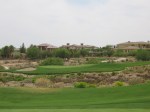
- The 12th
-

- The 12th



-
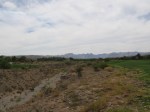
- The Canyon
-

- A view of the Canyon looking back at 15 tee
—————————————————————————-
BTW, for those interested, the answers to the “Graduation Test”:
1. The USS Constitution
2. Fluorine, Chlorine, Bromine, Iodine, and Astantine
3. Yield to traffic from other directions–treat it as a yield sign
4. 0


 The Power Fade Golf Blog