Review: iSwing App
October 16, 2010
I recently added the iSwing app to my list of iPhone apps. I’ve always searched for a way to perform swing analysis easily, quickly, and inexpensively, but I never could find a good system. The iSwing app meets some of these needs, but certainly not all.
My current iPhone is an older version–3g, as opposed to the newest 4g and slightly newer 3gs. The old 3g iPhone did not include a video recorder, but that was no problem for the iSwing app, which has its own method of taking “video.” By recording successive shots of pictures, the iSwing app puts together a frame-by-frame analysis of the swing

Shots are recorded in the swing diary, shown below.
Review Preview: Lesson with Tour Pro Mitch Lowe
October 15, 2010
While JK will be spending the next few weeks reviewing the Titleist Pro-V1 prototype (JEALOUS), I will be hitting the range with a living, breathing PGA Tour Professional! Mitch Lowe is offering discounted lessons at Harding Park just south of San Francisco. Why does that course sound familiar, you ask? The U.S. just won the Presidents Cup there. Yeah. Review to come!
Get your lesson here! ($60/hr at Harding, or 9 holes at Fleming Golf Course for $110)

Introduction to Golf Fitness
October 12, 2010
One of the many things that golf has given to me is an appreciation for the value of good physical health. I will leave at this for the personal anecdote: Prior to golf, the heaviest thing I cared to lift was likely a beer keg. Thankfully that is no longer the case.
Rather than extol the virtues of good fitness for daily life, I hope to convince the reader that it is incredibly useful in the quest to lower your score. My goal is not to lay out a workout plan for the average golfer (not possible); Instead, I will approach this series of posts from the perspective of accomplishing one of a number of goals. If you should find that one of your goals is mentioned, hopefully you will find the content helpful. Future posts will include Power, Consistency, Endurance, and Longevity. This post, however, will focus on the single most important factor for getting into (or maintaining) good golf fitness: Diet.
Diet, like the short game, is the one thing that we actually have a hope of achieving the same level of perfection as the professionals on TV. Much like the short game, however, whenever we get a chance to work on one thing, it’s never at the top of our list. I made a conscious effort when beginning my own fitness regimen to take note of the reasons why certain changes in my lifestyle seemed more difficult to make than others. Diet was one of those that was most difficult. I didn’t want to eat less than I was used to because that particular change was not one that I was willing to make in my quest to lower my scores. More importantly, when I started going to the gym, I became hungrier than I had ever been before! I realized that the only way for me to make a difference was to change WHAT I was eating. Truth be told, when I was fully committed to the diet, I was eating more than I ever had before. The craziest part of the whole change is that I lost more weight and gained more muscle than I have had at any point in my 20’s. How is this possible? Glad you asked.
Before you stop reading, I’m not peddling a book or a program. I’m telling you to eat everything your mom told you to eat when you were a kid: green veggies, fruits, nuts, milk, and lean meat.
Like the other posts in this series, any changes in your diet should be guided by your ultimate goals and your physician. Think about what it is you want to accomplish. Do you want to lose weight? Do you want to hit the ball farther? Do you want to be able to walk 18 without being winded at 9? All of these choices will impact your decision.
I personally took my cues from a diet that worked exceptionally well for other members of my family: the Abs Diet. (Amazon) The premise of the diet is to change the types of food you eat to maximize the nutritional content of what you consume. It further recommends consuming a greater quantity of meals during the course of the day and controlling portion size. What I liked about this particular plan was that it was very flexible (more like suggestions for how to eat well) rather than a strict regimen. The author appreciates the difficulty of maintaining a diet with a hectic lifestyle and makes simple suggestions for how to maximize your food’s benefit to your body. He also provides a very simple list of foods that you should attempt to eat on a regular basis (great for restaurants).
Some of the suggestions, however, did not work so well for me. The amount of milk, for example, that the author suggests was not possible for me to maintain. As stated before, use your common sense to figure out how a particular diet can work for you. As far as recommendations go, change your diet only in ways that you can maintain. Only if you can commit to the changes will you be able to see (and maintain) results.
Regardless of your particular goals, however, the following suggestions will not lead you in the wrong direction:
1) consult a nutritionist – most are trained in sports nutrition and will be able to help you define and achieve your goals.
2) increase your protein intake – protein shakes aren’t just for the meatheads at the gym. Try adding protein powder to oatmeal or making a smoothie. These are simple and tasty ways to increase your protein levels.
3) increase your fiber intake – fiber is incredibly important to weight loss. Eat more whole grains or whole wheat pasta.
4) decrease fat and sugar – this one is important regardless of your goals.
5) take a multivitamin – maintaining high levels of nutrients and minerals will help maximize the effort your are putting into your diet and exercise plan.
6) enjoy your regimen – this point cannot be made strongly enough. If you are not enjoying exercise or are feeling terrible because of your diet, make sure you figure out why and fix the problem. Results will only come if you stay committed long enough to see them, so make sure you are enjoying the journey. For me, this meant cheating one day a week. I ate whatever I wanted one day a week just so I could stay committed to the diet. I eventually got to the point where my new goal was to skip the day off because I felt terrible the next day. Make sure you feel as though success is possible.
Remember, there will be several posts in this series. Next up: Exercising to maximize Consistency.
Titleist Ball Trial
October 9, 2010
Received this in the mail….
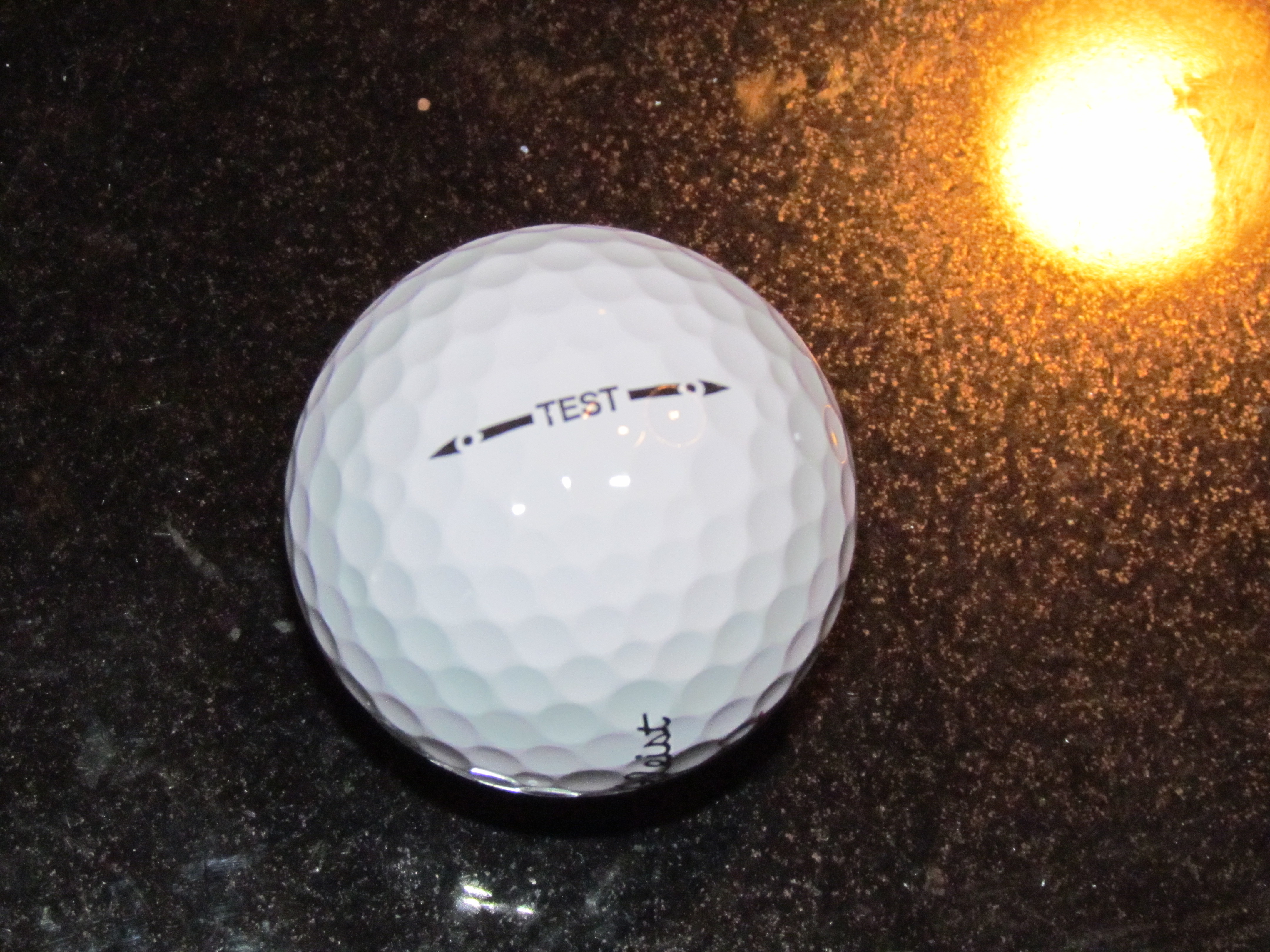
Let’s see how it goes.
2010: The Year of…
October 9, 2010
Having watched the Ryder Cup last weekend, it has become apparent to me that the golf season is officially over. As we here at PF anxiously await the next season of golf, we look back at the season that was.
2009 was The Year of the Letdown.
It started at the ’09 Masters, where Kenny Perry had a two shot lead with only 17 and 18 to play. Now, 17 and 18 at Augusta are no gimmies–in fact, none of the holes are. But, this was Kenny Perry. He had been scorching through the first part of the year, playing years below his age. This was Kenny Perry, who was going to right all the wrongs of his collapse at the ’96 PGA championship.
It was like watching a horrible car crash in slow motion; no matter how much you didn’t want to see what happened, you couldn’t turn away. Perry bogied 17 and 18, bogied the 18th again on the playoff hole, and then double-bogied the 10th to give Cabrera the green jacket.
But ’09 hit us in all of the majors.
The ’09 US Open saw long shot Ricky Barnes, fan favorite Phil Mickelson, and super long shot but fan favorite David Duval in contention. Duval hadn’t truly played competitively in 8 years. He had recovered from severe back injuries, slowly making his way back to professional golf. And we could have been watching a monumental upset. Barnes, the long shot, charmed the crowd with his impressive play and exciting personality.
And then there was Mickelson. Although Mickelson had won two green jackets, he had blown chances at the US Open so many times before: he finished second in ’06 (the famous “I’m an idiot” after hitting driver at 18), second in ’04, second in ’02, and second in ’99 (the famous loss to Payne Stewart at Pinehurst). Moreover, Mickelson’s wife–who didn’t make the trip with him because she was being treated for cancer–told him there was nothing she wanted more than to see him win the trophy.
And who won? Lucas Glover. All three came up short.
Then, the ’09 Open Championship came, seeing an ageless Tom Watson schooling the field at Turnberry where he had won so many years before. Watson, at 59 years old, was poised to become the oldest man in any sport to compete at such a high level. But, although Watson held a one-shot lead on the 18th hole (thanks to Stewart Cink draining a tricky 20-footer on 18), he nuked a 7-iron from 170 yards over the green and failed to get up and down (something he had accomplished all week), leaving room for Cink to win in an anti-climactic 4-hole playoff.
The ’09 PGA was somewhat less of a letdown, unless of course you want to see Tiger Woods win at all cost. Tiger had never lost when leading a major on the final day. Although 2 shots ahead going into the final day, Tiger shot 75 to lose the championship by 3 shots to YE Yang. Letting everyone down.
So, what is 2010? 2010 is the Year of the Euro.
The ’10 Masters should’ve been an indicator to us. Mickelson won, but only a few shots behind him was Lee Westwood (England), who played solid golf the whole week. Westwood had led going into the final day, and Mickelson simply chased him down for the win. But Westwood’s solid play should’ve been an indicator.
In the ’10 US Open, Graeme McDowell (UK) became the first European in 40 years to win the US Open. Although South African Louis Oosthuizen won the British Open, Tiger Woods didn’t crack the leaderboard, no Mickelson, no Furyk. The Americans were gone. Instead, the leaderboard included Westwood (UK, 2nd), Rory McIlroy (UK, T3), Henrik Stenson (Sweden, T3), Paul Casey (UK, T3), Martin Kaymer (Germany, T7), and Luke Donald (UK, T11).
The ’10 PGA Championship at Whistling Straights saw Martin Kaymer (Germany) chase down Dustin Johnson (Mr. Sand Trap) and Bubba Watson, two big-hitting Americans, for the win.
Now, Westwood–who recently took over the #2 world ranking from Mickelson, who never could close the door when he had opportunities to take the #1 spot–is poised to overtake the #1 ranking in the world from an absent Tiger Woods.
So, it should’ve been no surprise to see Europe take home the Ryder Cup in 2010. Even though the Americans fought back to within 1/2 point of retaining, it was never going to happen. It was simply Europe’s year.
Jim Furyk changed my mind, here’s why he should change yours
October 7, 2010
Watching PGA Tour golf is something that every (even semi) serious golfer ends up doing at some point during the regular season. Like the talking heads on ESPN and the Golf Channel, every armchair caddy has an opinion on every golfer. When I began watching golf 3+ years ago, I disliked Jim Furyk’s game. He always seemed out-of-place for some reason. Nearly always finishing in the top 10, but never really being in contention. Super consistent, but with a swing that was once compared by David Feherty to “a squid falling slowly out of a tree.” I just didn’t understand how someone who always placed in the top 10 could never get the W. His game is not particularly dynamic, nor does he really have the presence of some of his counterparts. I’ll admit, having some personality on the course makes me like a golfer, and this was not Mr. Furyk’s strong suit. Nothing about Mr. Furyk’s game made sense to me: the double overlap grip? The insanely long putting routine? come on!
How could someone who falls well below tour driving distance (Jim 276 – Tour 287) compete so successfully on courses that push 7200 yards every week? How could someone with a swing that no professional instructor would dare mess with get a diagnosis when he’s running cold? How could, in short, someone who totally defies the modern image of a Tour professional compete with the power hitters and short game artists that populate the PGA roster?
The answer came to me as I watched this season’s FedEx Cup playoffs: Furyk understands his particular game better than anyone. Earlier I mentioned that Jim does not hit the ball as far as most Tour pros. Now on a good day, this disadvantage is neutralized by pure ball-striking, but what about the bad days? If you’re consistently hitting the ball 15-20 yards short of your “average” playing partners,” how can you possibly compete on courses that are Tour length? You don’t have to be a mathematician to realize that tour pros have bad days like everyone, but they all seem to keep their scores impressively low. Perhaps what has impressed me most is that Furyk can keep up to this lofty professional standard while barely being within squinting distance of the likes of Bubba Watson or Dustin Johnson.
I recently read an article Furyk wrote about course management and understanding your own game. His principles have really resonated with me, and hopefully will help me break 80 this year. When Furyk’s having a bad day, he’s still hitting fairways and greens. When he’s not hitting greens, he’s left himself the most reasonable chip or pitch to the hole. In a word, Jim is a grinder. Like you, my really good playing days on the course are not as numerous as my “damn that should have been a 4” days. What Jim has shown me is that it is possible to hit the ball 270 yards and have a real shot at par. While we can’t all hit the ball a country mile, we can all take a thoughtful look at our own games and figure out what works for us.
What I was unable to appreciate before was the slow, methodical game. I did not understand why Furyk would not change something in his game to try to hit the ball further or work the ball a different way. This year with three victories, the FedEx cup, $10 million, and likely Player of the Year honors, I now understand the value of playing your own game.
See what Jim said to change my mind, I hope it’ll help you out too.
http://www.golf.com/golf/instruction/article/0,28136,1664671,00.html
A March Toward Obscurity
October 6, 2010
Ever notice that guy on the golf course who doesn’t have a single club you’ve ever heard of before? Think about it–you’re out on a Sunday, you’re randomly paired with a guy–let’s call him Joe. You look in Joe’s bag–nothing special, maybe a Titleist stand bag. A no-name driver, a 3-wood you’ve never heard of, irons that look like knock-offs of a set you’ve seen in a golf shop before, maybe a Cleveland or Vokey wedge, but, all in all, a pretty lackluster set.
Then, you see him hit the ball. Joe has a funny looking swing, but he gets the job done. No frills, but he always seems to know where the ball is going. He never loses his cool–he seems to have complete confidence, even when he doesn’t hit a perfect shot. You think to yourself, “Man! If only this guy had some REAL clubs! He’d be, like, 3 under par right now!”
Then, you look at your set. Your Taylormade R9 driver hasn’t hit a fairway all day. You topped your Titleist fairway wood a few holes back. The Callaway hybrid has been hitting solidly, but not as far as you need it to go. Those Mizuno irons haven’t made good contact all day. And, the last time you were in the sand, it took you 4 shots to get out with your Vokey wedge. You’re on the 17th hole and looking at a 95 if you don’t par the next two holes.
What’s going on here?
Golf equipment manufacturers have taught us to believe that the equipment they make can solve your problems. “If you only pay $400 for OUR driver, we can GUARANTEE you’ll get 15 yards more distance;” “These wedges will give you NO PROBLEM getting up and down;” or “nothing quite feels like THESE IRONS.” Slowly–but very surely–OEM equipment manufacturers have taught us to believe that their equipment is the one thing we need to solve our games.
If there’s anything I’ve learned over the years, it’s that mass-produced equipment CANNOT solve your problem. Here’s the thing: every single person is different. We’re different heights, weights, and sizes; some of our shoulders pop, or our backs hurt; some of us have knee issues or hip problems. No matter what, everyone is different. Moreover, people’s golf swings are as different as we our. Some swing more upright, some flatter; some have a loop or hitch; some have pronounced turns or weight shifts; some people are unable to make the right move.
So why would one or two clubs be perfect for everyone? Of course, they’re not–and everyone has to find what works for him or her.
But, unfortunately, most OEM (Titleist, Taylormade, Callaway, Bridgestone, Mizuno, etc) clubs are made the same way. So, it’s very difficult to find something that truly “fits” your game. For example, most OEM drivers (Titleist excluded) are built with closed faces because the average golfer has a problem with slicing the driver. However, a closed face doesn’t “counteract” a slice; all it does is turn your slice into a straight pull (left). Ever wonder why you’re always slicing the ball and then the one time you play for it, you hit it left? Now you know why.
So what do we do? These OEM companies will build you a custom club–if you specially order it from them. But most of us don’t have the money (or time) to go into a golf store, pay the custom fitting fee for the shop, then pay for the custom order fee with an OEM company, then wait 3-4 weeks for the OEM to fill our orders. The answer is what I have termed “The March Toward Obscurity.”
Now, we must take a step back. 18 months ago, my bag included a Cleveland driver (Hi Bore), a Titleist 3-wood (904f), a Mizuno iron set (MP-14), and Cleveland Wedges (588). With this set, I made it to a 1.5 handicap. Today, my set includes an SMT driver (DB Plus), a Sonartec 3-wood (NP-99), KZG irons (ZO), and (still) Cleveland 588 wedges. WHAT HAPPENED!?! The March Toward Obscurity.
One day, I decided I was never going to hit more than 7 fairways in a round with my Hi Bore. I had to get something new. When I started researching, all the usual brands came up–the OEMs. But, when I looked around more, I found a company–SMT Golf (www.smtgolf.com)–that produced high quality driver heads. And, more importantly, they were reasonably priced–under $150 for a driver head; way better than the $400+ for OEM clubs. Moreover, SMT sold their heads in component form (the club heads only), if you wanted to buy them that way. What this meant was that I could put in my own shaft and grip that was specific to my swing, buying my own shaft separately from the club head. Even better, I could call and “custom order” a head that was closed, open, or square, or even one that was at an odd loft–for example, 8.7 degrees (as long as they had it in stock, which they always did). What was the fee for a “custom order?” Nothing. In the end, I got a club that I hit as long or longer than my Cleveland driver, and now I’m consistently hitting 9-12 fairways, just because I was able to get exactly what I wanted–and what worked for my game. I’m now at a solid 1.1 and feel like I will be making progress very soon.
My experience was so great with SMT, I started researching other clubs that I hadn’t heard of before; maybe there were irons, woods, wedges, putters that I had never come across that were every bit as good–or, dare I say, better–than OEM clubs. Turns out, there were.
So, next time you’re on the course, don’t judge the player next to you by the obscure clubs in his bag. Just because he doesn’t have OEM equipment, it doesn’t mean he’s not in tune with his game. Joe may just know more than you.
-JK
———————————————————————————————————————————-
Comments from LG:
JK makes a fair point. This being said, let’s get the full disclosure. You game what putter and what ball? 😛
That being said, I agree with JK’s perspective on this one. The most important thing, for any player, is confidence in your ability to hit the ball well with whatever club is in your hands. If you’ve reached the point in your life (or game) where the name on your club doesn’t create as much confidence as the last shot you hit with it does, consider building your own.
Don’t be afraid to try out something you’ve never heard of just because the latest winner on tour doesn’t have their logo pasted across his forehead!
It’s also pretty nice to be able to build a driver for $50 that you can hit just as far and more consistently than something you buy for $400. I recently built two SMT drivers to try to get different ball flights. The result is one club that hits the ball high and is very forgiving, the other is a “wind” driver that keeps the ball low and provides tons of roll. Total damage? $100. Good luck getting that deal at Golfsmith.
———————————————————————————————————————————-
Response by JK to LG’s comments:
Putter: Titleist Scotty Cameron Newport Beach
Ball: Titleist Pro-V1x
Great comments, LG, but the main point of this posting was to emphasize that players need to find something that works their individual games. In my case, there is no putter like the Newport Beach (I know we’ll debate this later), and, although I’ve tried numerous times–mainly in an effort to save cost–there is no ball quite like the Pro-V1x…..at least for me. I play the best equipment for my game. I suggest that every golfer do the same, if he or she wants to get better.
Miguel Angel Jimenez is…
October 6, 2010
the most interesting man in the world…


TPC Las Vegas (Part II)
October 6, 2010
Please bear with us while we experiment with the layout and exactly how to format our posts.
Another one of our goals is to juxtapose not only our personal views of the various items we post about, but also our views in light of our handicaps. As the resident hack (a rather bloated 10.7 to JK’s 0.3 (?) ), my opinion will clearly resonate more with the masses.
As mentioned before, this was not our first crack at TPC Las Vegas. I recall two shots in particular from the first trip with particular fondness. Winds reached nearly 35 mph — seriously, we quit after 7 holes because of it. The first was my approach (likely 4th or 5 shot not counting penalties) into par-five 6th. With a stout cross wind, I cut a 5-iron about 135 yards into the green to about 7 feet. Even JK was impressed. The second was the tee shot on the par-three 7th. Playing directly into the now 40 mph wind, JK and I both drew driver (209 for him, 195 for me). After watching two towering draws become two hooks because of the wind, I drew back and nailed what is certainly one of the best drives I have ever hit in my life. Not even a hair off-line, that bridgestone took off straight as a string and cut through the wind. It is somewhat fitting that it would only go 193 yards (that’s golf, right?). It was one of those shots that took felt so good that I could only smile after a ridiculous 4-putt.
Anyway, back to the post-bar round.
First, things I like to know about a course in a review:
From the tees that I played (Tips): 7080 yds – 73.4/136 – Par 71
Green size: average to small
length of par 3’s – 196, 209, 145, 202
Shortest par 4 and 5 – 349 and 544
Number of par 3’s/4’s/5’s – 4/11/3
Second, snapshot of the course:
Style/Architect: Desert course/Bobby Weed & Raymond Floyd
prettiest hole: 18 – Water left makes this a bear too!
most difficult hole: 8 – Long and plays into the prevailing wind. This hole calls for a draw off the tee and a very strong second shot uphill into a two-tier green. Be sure to avoid a deep bunker short and one to the left. Going long is not an option as you’ll be using that desert club that JK mentioned.
best hole to gamble on: 2 – while it cards in at a stout 196, the true beauty of this downhill par three is that it can play 20 yards above or below that number depending on the wind. Trust your club selection and don’t go left.
While I will normally strive to write the narrative of my review from the perspective of a 10-handicapper who works on his game more than he should given his profession, I must confess that shooting a good score was unequivocally the last thing on my mind while playing this round. Having just finished the bar exam and beginning the summer of true freedom that I would have for the foreseeable future, I was dead set on having a good time and enjoying the amazing weather. That attitude notwithstanding, I played several of the holes remarkably well. I’m happy to report that even from the tips, I managed to play the par 3’s at even par. I may have had to venture into the desert on a number of the par 4s and the par-five 4th (a few times), but am happy to report that I finished the round in high spirits and with an even higher score of 89.
Part of the charm of this course was that it generally followed the natural lay of the land. A particular feature to note was the large gorge that divided the 14th and 15th holes. For a 10 handicapper, this course presents not only a challenge off the tee (many forced carries and blind tee shots), but also a strong test for your short game. For those aiming to play for score, my personal recommendation for the 10-handicapper who’s Achilles heel is the driver is to play either the blue tees (6769 – 71.0/128) or the men’s blended (68.7/128) and stick to the trusty 3-wood. For those who’s chipping and putting leads to inflated scores, spending a little time on the putting green to get used to the crazy speed on these greens is must. You’re in luck, you get full use of the amazing practice facilities all day when you purchase your tee time. Also, for even the 10-handicapper with an above average short-game, the bunkers on this course tend to be more punitive than most. Avoid at all costs. One more bit of local knowledge: play in the morning. The wind kicks up in the afternoon.
Other tidbits:
Pro shop: top of the line – as you would expect from a PGA Tour owned facility
Distance from attractions – about 20 minutes away from the middle of Las Vegas Blvd
Deals/Specials: JK and I managed to get tee times for $199 including a pair of Adidas golf shoes (then valued at $85). We even called ahead and got to order the exact colors and size (issue for those of us wearing 14 or larger) we wanted.
Make sure you grab a yardage book for this course from the pro shop. Not only is it immensely useful on the par 5’s and the dog-leg par 4’s, it’s a nice keepsake to remember your round. You can also you use it to write well-informed blog entries (or comments to ours!).

18th Tee. JK on the left, LG on the right.
A Review of TPC Las Vegas (aka, The Canyons)
October 6, 2010
This being the first course review written for this blog, I’m not sure exactly what to write. The caveat to this review: my experience was more than just the course’s describable features.
A little background: my co-author (LG) and I met and became friends as interns working together in Palo Alto, CA. Through some random luck, we found out we both liked golf and, through the next few years, learned more and more about each others’ games. After some time, we started planning trips–a run down to Carmel, CA, to play Spyglass Hill and Spanish Bay, a few trips to Las Vegas to try different courses (including a drive to Mesquite to play Wolf Creek–twice), and a well-planned trip through Alabama on the Robert Trent Jones Golf Trail.
Through our trips, we managed to arrive at TPC Las Vegas twice–first in April 2010. TPC Las Vegas was the third course we had played in 4 days, including two 18-hole rounds at Wolf Creek in Mesquite, NV. Fortunately for my back, we actually had to take a “rain check” due to excessive winds after playing only 9 holes.
Determined to make it back and finish the round, we planned a trip for early August 2010. The timing was not coincidental. We had both finished law school and spent the entire summer studying for our respective bar exams (LG in California, JK in Georgia).
A quick aside for those that don’t know much about the bar exam: each state decides to thoroughly and painfully torture every person who wants to practice law within the state by administering a test know as “The Bar.” This test is like a random sampling of topics that you may or may not have covered over the prior three years of law school. Your inability to answer the questions on this exam means that you will be unable to work as an attorney–or, in other words, you won’t be permitted to earn a living. Imagine it this way: think back to when you were graduating high school. You didn’t take every single course the school had to offer, but you had the basics–English, History, Math, and most of us were afraid of Sciences. But, at least we had had those subjects. Now, imagine that, before you can graduate high school and move on with life, you have to take a test. One of the questions on the test asks you which US ship was referred to as “Old Ironsides.” The next question asks you which elements make up the halide group. The following question asks you what a driver should do if he sees a flashing yellow light. And the next one asks you to find the limit of f(x) as x goes to infinity of f(x)=1/x. Hopefully, the introduction of mathematical formulas has brought enough fear into this description to fully describe the essence of the Bar.
In any case, having taken the Bar, we decided to embark on a journey to Las Vegas to play the course that had gotten away. Did it ever live up to the billing.
Measuring at 7050 yards from the back tees, the course seems formidable at first–until you realize that the ball travels a little farther in the desert air. A beautiful patch of green fairway split the rocky desert on each hole. As intimidating as the rocks be, the fairways and greens were even more impressive. When we played in April 2010, the greens were rolling at 13.5 on the stimpmeter (which the starter volunteered). Although they were considerably slower on this occasion (due to the intense summer heat in the desert), they still were smooth and consistent, rolling at least 10.5.
One of the most interesting aspects of the course: entering the desert to find and play your golf ball is totally permitted–and even encouraged. Rental sets at the course include a “rock club,” which looked extremely knurled and knicked.
Perhaps the highlight of playing the course was the par 3 12th hole. Although only 145 yards, the flight to the green was all carry over a hazard. The hole provided the greatest firework show of the day. Having placed my ball on the green, LG topped his (for a perfect layup short of the hazard), and then laid a gap wedge onto the green. Both of us about 35 feet away, I putted first (because I was borrowing LG’s putter–I didn’t want to bring mine through the airport after having it scratched when traveling earlier). A well-struck putt sailed into the cup as I raised the putter into the air. LG putted next. With the ball only 10 feet off of the face, he harkened back to Family Guy, singing “ball in a cup, ball in a cup, it’s a ball in a cup.” A miraculous birdie and par, and the two of us had made our putts.
The course itself just kept getting more incredible. The Canyon holes were amazing. The course finished on an excellent par 4 with a lake just left of the green.
All-in-all, the course was amazing, and the perfect end to a stressful week. Although I probably wouldn’t play the course again–there are just so many others to choose from–I would definitely recommend this spot to anyone.
Cost: $150 in April, $90 in August
Temperature: 55 and windy in April, over 100 and VERY dry and hot in August
Carts and range balls were included
Check out the course website at http://www.tpc.com/tpclasvegas_58.aspx
And, if you do plan to play there, check out this website–which is pretty hard to find these days:
http://www.tpc.com/lasvegas/faqs/index.html





-

- The 12th
-

- The 12th



-

- The Canyon
-

- A view of the Canyon looking back at 15 tee
—————————————————————————-
BTW, for those interested, the answers to the “Graduation Test”:
1. The USS Constitution
2. Fluorine, Chlorine, Bromine, Iodine, and Astantine
3. Yield to traffic from other directions–treat it as a yield sign
4. 0


 The Power Fade Golf Blog