Fail of the Week 9
December 4, 2012
Ok, so it’s been a little while since we did a FAIL. Actually…it’s been a long while…like…a day short of one year (see https://thepowerfade.com/2011/12/05/fail-of-the-week-8/). Buuuuuuuut, this is sadly a great, great time to put together this week’s FAIL.
For this week’s FAIL, I turn to no other than the USGA and the R&A. Within the last week, the USGA and R&A have announced a proposed rule to ban the use of belly and long putters in the game of golf. The proposed ban–summarized at http://www.golfwrx.com/53307/usga-ra-propose-anchor-ban/–would restrict many types of anchoring, although not all. In an odd twist, the USGA/R&A has determined that it is OK to anchor a club to your forearm to make a stroke, or to unintentionally anchor your arms to your body and prevent their movement. As stated in the article, USGA executive director Mike Davis stated “Throughout the 600-year history of golf, the essence of playing the game has been to grip the club with the hands and swing it freely at the ball.”
One problem with this, however, is that it’s 100% false. Bobby Jones, Arnold Palmer, and Jack Nicklaus all putted with the club somehow anchored to their bodies. Just because they used a regular length putter doesn’t make it any less true. Don’t believe me? Look at the photos:


Or… even better, here another respected member of the tour talk about them: (starting at 1:10)
The PGA of America–and many avid golfers around the globe–has publicly come out against the USGA, urging the USGA to change its stance for the advancement of the game. At the very least, the PGA would prefer to allow beginning golfers to use such clubs to advance the interest in the game.
But none of that really matters as compared to the USGA’s handling of the issue. Long putters have been at issue since the 1970s. Bernhard Langer has been using one for almost as long as I’ve been playing golf. My first experience with a belly putter was when a high school friend started using one and I putted with it for a few strokes…that was 12 years ago. In other words, the cat is out of the bag. The USGA has had over 3 decades to rule on this issue and has done nothing, but all of a sudden has an interest now that a few players have won with them. That’s a sad state of the game–allow something until a player becomes good at using it. What’s more, there is STILL no statistical evidence that using a belly or long putter improves a golfer’s performance above and beyond use of a traditional putter. The USGA’s rule is based SOLELY on the idea that an anchoring stroke is somehow contrary to the game as it was intended to be played.
I’m glad the USGA sees itself fit to decide what is the original intent of the game of golf. Were 460cc titanium drivers, performance golf balls, game improvement irons, or, heck, even golf spikes within the “original intent of the game?” Who knows. I guess it’s only a matter of time before the USGA decides that we all have to play in street shoes because golf wasn’t meant to be played with spikes.
If the USGA showed some proof that the belly ban was due to an unfair advantage in the game, it would be one thing. Heck, even if the USGA just SAID that belly putters were unfair, I would take their actions more seriously. But to publicly come out and say that anchoring is just not how it was meant to be–when millions of golfers have invested hundreds of dollars of their own money buying belly and long putters to make the game enjoyable for themselves–I simply can’t understand the logic.
The USGA, once again, is a FAIL. Let’s hope for all our sake that this turns out better than the groove rules.
A Lifetime on the Course: Ace #1
November 28, 2012
Sometimes, sobering moments occur that change your life, your outlook on life, or just the way you think of the things you have. I’ve recently lost two uncles in tragic fashion–both likely heart disease, both well before their times. Although only one of them was a golfer, they both impacted my life positively, and I’m thankful for the experiences I had along the way with them. Of course, it wouldn’t be appropriate–or good for our readership–if I posted my entire life experience on a golf blog, but I felt a little background as to why this series was being presented was important.
What got me thinking about writing this series was my uncle who was a golfer. I visited him in Pennsylvania when I was no more than 14 years old…I actually don’t remember the specifics, just that I was a golf nut and he volunteered to take me to the prestigious Indiana Country Club (in Indiana, PA). During that round, on Indiana CC’s signature par 3 over water, my uncle hit the ball to 6 inches from the hole. I was astounded. One comment he made astounded me even more. As he walked up to tap in his birdie, he stated off-hand “I’ve been playing the game for decades, hit probably hundreds of shots just like this, and never had a hole in one. Oh well. That’s golf.”
As I look back on it now, I wish I had had the chance to talk with him more. I wish we’d had the opportunity to shoot the shit about all things golf and life. No doubt he had a great many stories of life and golf intersecting that I could’ve learned from. But, more so, just learning about the highlights of his life and rounds of golf would’ve been enough. In any career of more than a few years, there are literally hundreds of shots to remember, to ponder, to tell stories about. His are gone forever, and only a few people scattered across the globe will know them. Part of the beauty of modern technology is our ability to capture a slice of ourselves in time and hold it in place in the memory of a computer or the internet. The PF blog helps LG and I communicate with all of you, but it also helps us convey stories to each other and to preserve some of the great memories we’ve had playing this beautiful game.
With that, I think it’s incredibly important to preserve the memories of my aces. You see, at the moment my uncle said those fateful words about never having hit a hole in one, I had already logged my first, and it was its own remarkable story.
Time to go foggy nostalgia on you all for a minute.
Flash back to the summer of 1997. Think about what you were doing, what was in, what was important. The dotcom bubble was blowing to a beautiful inflated awesomeness that we may never see again. Bill Clinton was practicing his indiscretions with White House interns. Me? I was a 13 year old kid going to see his best friend in Arkansas for the first time in years. My very first trip on a plane, and I flew to Little Rock, Arkansas, to then drive several hours to El Dorado. When you’re a kid, you don’t really care where you go, as long as it’s with someone you want to be around. My best friend, BW, was a little older than me. We thought we were so cool. Even though there’s basically nothing to do in the “city” of El Dorado, Arkansas, we found ourselves playing tennis (neither of us knew anything of the game), caring for his Basset Hounds, and–amazingly–playing golf.
I say it was amazing that we were playing golf for a lot of reasons. The obvious was that neither of us were wealthy. I had always learned golf from my Dad, who didn’t really have a great deal of grasp on the finer points of the game, but he loved it always. BW had never really had that kind of leadership. His Dad kind of played, but wasn’t really into the game. So the first hurdle was that BW didn’t really have an interest in the game.
But, more importantly, we didn’t have equipment! BW’s only set was a bunch of Ben Hogan blades and a couple of wooden fairway woods and driver (even in 1997, wooden head fairway woods were pretty obsolete). However, BW didn’t even have a golf bag to put the clubs in, or any number of golf balls. How in the world were we going to play golf?
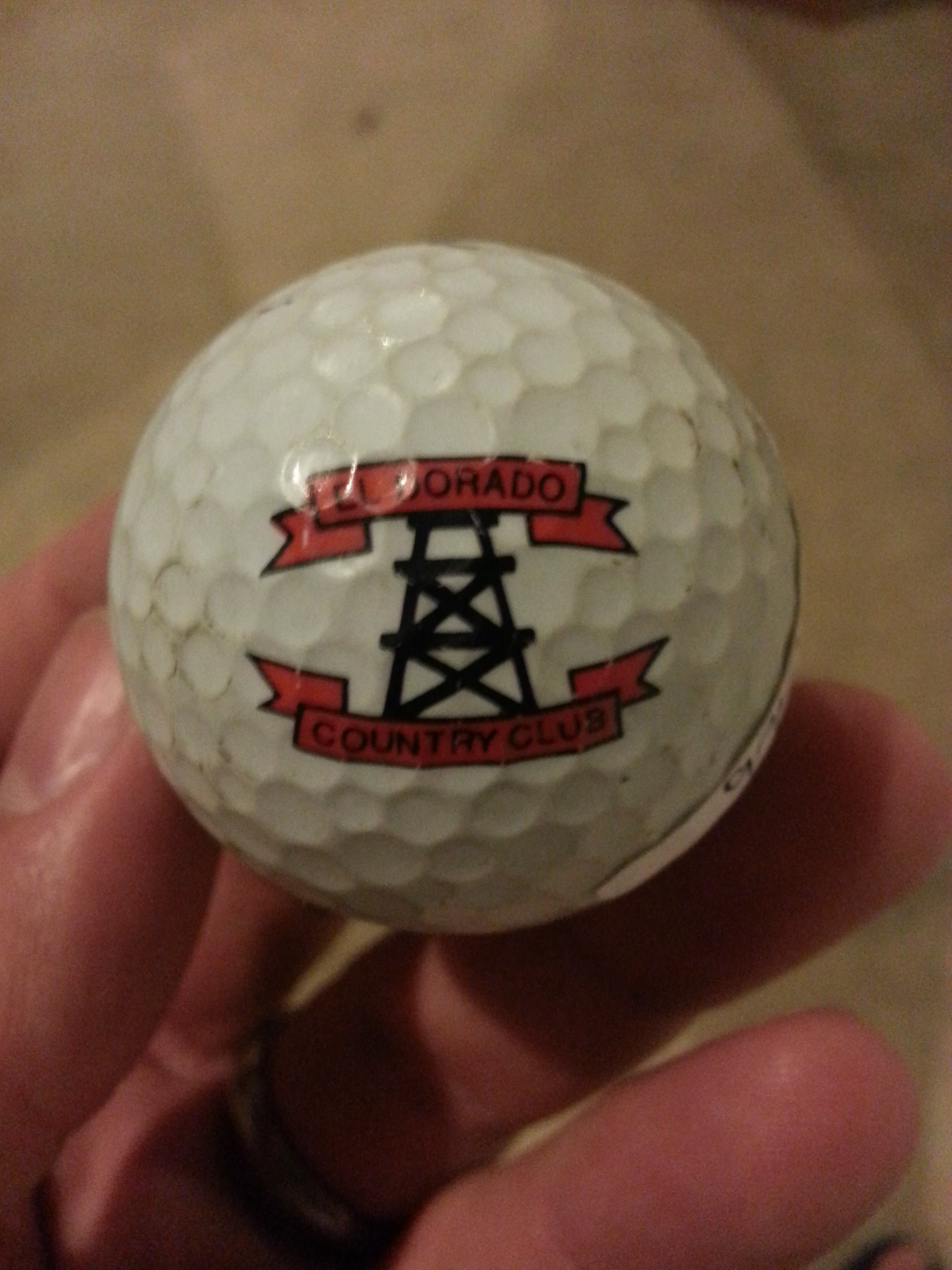
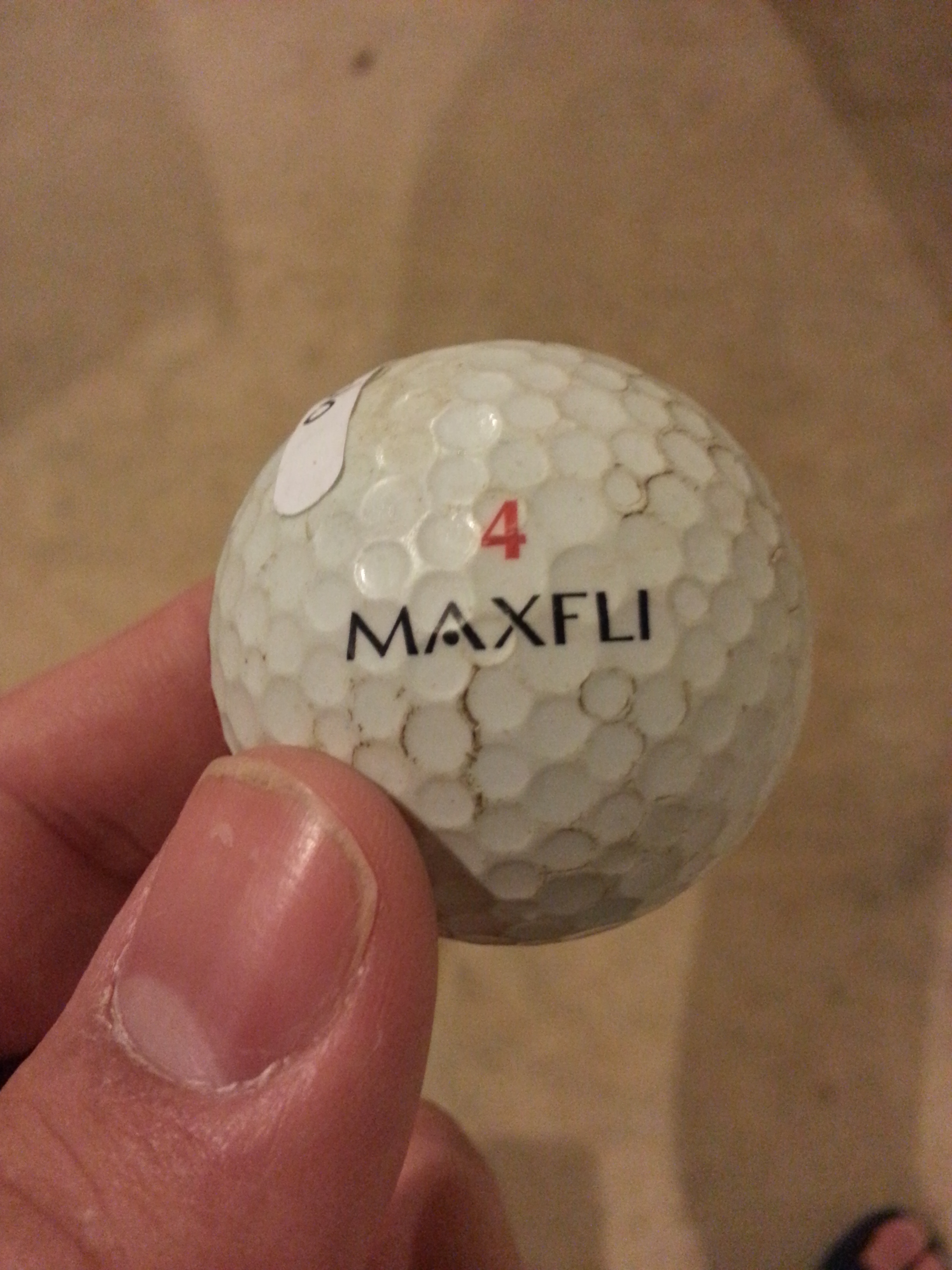
Well, I did get an engineering degree eventually, and my early engineer shone through that day. BW and I put a 3, 5, 7, and 9 iron, driver, and 3 wood in a black garbage bag to take to the course. We didn’t have golf shoes, so we just wore tennis shoes. We had cargo pants, and we put as many golf balls into the pockets as we could find. Each of us had maybe 8 golf balls total. BW made a point to bring his special “birdie ball,” the ball he had used to make his first birdie. I still remember that it was a Maxfli with an “El Dorado CC” logo on the side. Crazy times.
BW and I marched our way up to the Lion Club Municipal Golf Course–the goat track of all goat tracks. To this day, I have still not stepped foot on a worse course. All of the grass on the entire course had been infested with a fungus so that enormous patches were mere dust. The greens…what greens? They just stuck a pin in the middle of a flat part and called it a green, maybe threw down some grass seed that wasn’t growing in the middle of the summer in Arkansas. This. Was. A. Hole. But we didn’t see it like that. BW and I were just being the kids that we were, going out to have a good time, and if that meant golfing, so be it. We each paid our $5 greens fee and walked to the first tee.
Now, neither of us were great golfers at the time, but I could hold my own. I shot under 100 sometimes, but usually under 110, which isn’t bad for a 13 year old. But this day, I was not having it. I topped shots, I sliced shots, I shanked shots…it was the worst round of golf I’d played in awhile. by the 5th hole, I had posted two 9s, an 8, and a 7. Worse, in anger I had thrown the last ball in my pocket into the trees after carding a 7 on the prior hole. I looked at BW for a ball. It was his last one too–the birdie ball. He warned me to be careful with it–in fact, it was his first birdie ball. I assured him that I would.
The par 3 fifth hole was only about 150 yards. On a calm day in Arkansas, that’s really not a tough distance to hit. Nonetheless, as I walked up to the tee, I remembered something I had read in a golf digest magazine. It was a piece about hitting consistent shots, which stated that you should be able to swing and hit the ball 75% of your usual distance to get your tempo set up, and then gradually work back up to the full distance over time. I decided my consistency was off, and I would try to hit this shot 75% or less. I pulled out the 5-iron (usually a 7-iron shot for me) teed up the birdie ball, and swung. The first pure shot I hit all day. It flew up in the air like a baloon, floated high but true, straight at the pin.
BW stated “nice shot……..VERY nice shot.”
the ball landed directly on line with the pin. I thought to myself “It was a very nice shot inde……..WAIT! DID THE PIN JUST MOVE?!?!?!”
I said to BW “I THINK IT’S IN THE HOLE!”
Not even worrying about BW’s shot, I started walking toward the hole, my heart beating fast as I imagined what might be. I slowly approached the green, tiptoed up to the hole, closed my eyes, crossed my fingers, turned my head to look down, and opened my eyes. The ball was in the hole!!!!
Pandemonium erupted. BW and I went crazy. It was unlike anything else I’d ever seen on a golf course. Finally, I had done something special.
But our elation was met with a bit of tempering–the ball was, in fact, the last ball we had. Neither BW nor I wanted to lose that ball. So, we walked past the next two holes, walked into the shack of a pro shop, and called BW’s mom to pick us up and take us home. We had been out for barely more than an hour when we should’ve been out for 4 or 5, but we were not going to lose that ball. I came back to Atlanta. My story was written up in the local paper, with picture from the local junior event. Maxfli sent me a hat. Ben Hogan Company sent me a letter congratulating me on my hole in one. For a little bit, it was pretty special.
Times change, and BW and I have spent less and less time together as the years have gone by, although we’re still great friends and talk every several months or so. He’s endured what many people cannot imagine in his life, and I pray for him often. But I guarantee that the times he thinks of this story, he remembers the joy of being a kid again and that once-in-a-lifetime type moment that we shared together.
I still have the birdie ball here on my shelf. I pick it up from time to time and reminisce about that day. What would’ve happened if we had a few more golf balls? No one will ever know. I still don’t know what the last 13 holes of the Lion Club play like, and I probably never will. Still, I remember that day like it just happened.
All of that said, my uncle’s tragic death helped me realize that I have forgotten as much as I remember about my life and these experiences. I wished his memories were somewhere that I could read them. Hopefully, someday when I’m gone, these memories will be around for my children to read and think about the good times that I remembered.
Anyway, that’s the story of my first ace. Stay tuned…I’ve got 4 more to talk about, and a few other interesting moments too.
Today we’re going to talk about weight. No, I won’t be telling you how unhealthy you are and how you need to work out. Rather, we’ll talk about weight as it relates to putters and how different weights affect the putting stroke.
In golf, there are two types of “weight”–actual weight (which is usually measured in grams) and swingweight (which is not really a weight but more-so a balance of weight). Both are important to putting, although personal theories vary about how much importance should be placed on one over the other.
Swingweight is simply a measure of balance of weight from the grip, shaft, and head of a putter–or any golf club for that matter. If a club has a light total weight, but 70% of its weight is in the head, then the club will feel relatively heavy and have a high swing weight. However, if a club is relatively heavy but has only 30% of its weight in the head, it will feel relatively light and have a low swing weight. As such, swingweight really tells you only about the balance of weight in the club, not the total weight. For putting, some commenters believe that swingweight is an important aspect. While it does play some role in how a putter feels, I have always felt that it is of relatively little importance because the hands do not hing in a putting stroke. If you have trouble preventing your hands from hinging, you may seek out a putter with a higher swingweight to try and make it more difficult for you to force the putter forward. However, it is unlikely that simply balancing the weight differently (i.e., by getting a lighter shaft and grip) will result in any material change.
The far more important feature is head weight. Head weight is exactly what it sounds–how much the putter head weighs without the shaft or grip attached. Putter head weight is typically measured in grams, and most technical spec sheets will say to the gram how much the head weight might be. Most production model putters are 330 or 335 grams. I say “most” because some recent models, such as the Odyssey Black series and some newer Scotty Cameron putters, actually have varying weights for varying lengths. This is an attempt by the putter maker to keep a consistent swingweight regardless of the putter length. Because one inch of shaft length is about the same (for swingweighting) as adding 10 grams of head weight, you will see that many putters now have a 10 gram relationship per inch of shaft length. Scotty Cameron’s 2010 models include interchangeable weights. 35 inch putters are 330g; 34 inch putters are 340g; 33 inch putters are 350g. Obviously, some putter manufacturers believe that swingweight is important, and they try to keep this consistent among the series.
However, how Scotty Cameron believes a putter should feel should not dictate what you like. Many players today are opting for heavier putter heads in general, realizing some of the benefits that “heavy” provides. What is “heavier?” Well, that’s up to you.
For starters, the standard for smaller, custom-made putter heads has risen to 350g. Most players using Sunset Beach, Kari Lajosi, Byron Morgan, Tom Slighter, and a host of other “custom” putter manufacturer’s models are opting for 350g as stock weight. In addition, many putter makers are going even heavier. Piretti offers putters heads at 370g stock weight, and LaMont Mann customs go upwards of 400g on occasion.
The trend in increased head weight can be attributed to a number of factors. Most notably, better greens mean faster greens, and faster greens need higher head weight.
wait…what did he say?
You read that right. Fast greens need heavier putters.
Many people don’t understand this. They inherently think that if a putter is heavier, it will automatically force a ball harder because of “conservation of momentum.” Well, first, there’s not really such a thing as conservation of momentum. But, even if you have a hard time following that, here’s how it works–there are two explanations; one is scientific, one is not. Either way, I think you can understand. But since I have an engineering degree, I’ll start with the science.
First, force is equal to mass times acceleration. Look up Sir Isaac Newton for more reading.
F=m * A
Next, kinetic energy of any object in motion is equal to one-half of the object’s mass multiplied by the square speed the object is traveling. See Newton, again, for reference.
E= 1/2 m * V^2
Energy must be conserved at all times, so the amount of kinetic energy the putter head travels with will be very important for determining how hard you hit the ball at impact.
so here’s how it works. Most people, mistakenly thinking that higher weight leads to a harder hit on a putter, believe that they will accelerate the putter with the same acceleration regardless of how heavy the putter is. Well, let’s try this out. Take a wiffle ball bat and try to swing it. Now take a cinder block and try to swing it the same speed. The amount of force you have to put in to accelerate the objects the same way is so great that it’s virtually impossible to do. Of course, this is an exaggeration to show the point, but it works the same with smaller differences in weight as well. Simply put, it is very difficult to change your force input on a putter to achieve consistent acceleration regardless of the weight.
So if acceleration isn’t constant, then what is? If we assume that force the user imparts on the club is the same from one stroke to another (which is much easier to accomplish), then a heavier putter head will lead to less acceleration (see F=m*a). If there’s less acceleration–and we’re starting from a still position, which we are in golf–then there is less velocity. Because velocity goes down, energy goes down (see E=0.5*m*V^2), but the energy goes down at a proportion squared to the decrease in velocity. Now, because we have higher mass, the energy will go up per the increased mass, but it only goes up directly with the increase in mass. In other words, velocity is much more important since any change in velocity will have a squared result on the energy. Thus, the increase in mass is easily negated by the decrease in velocity. This leads to less energy at impact, resulting in a slower ball speed coming off of the putter face.
science explanation over
For those who skipped below, the second (easier to understand) answer is that a heavier putter head is simply more difficult to move, which is what you want with a fast green. Fast greens require very small putting strokes to keep the ball from getting away from you. It is much easier to make small movements accurately with heavy weight, as lighter weight tends to float around and get jerky.
As such, the trend toward heavier weight has a lot to do with modern greenskeeping making even the local muni course run at speeds that would be tour-caliber just two decades ago.
As with all other sections we’ve described, it is very important that you don’t lock yourself into thinking that one weight is good and another is bad just because someone else says so. You must play with the equipment that gives you the best chance to play good golf. Mark O’Meara recently had a putter made that was 315 grams, an absurdly light weight by today’s standards. Why? His old PING Anser putter that he grew up with was right around that weight, and he felt most confident that he could make putts with that weight. That’s a full 35 grams difference (3.5 swingweight points for those that were paying attention) away from what I play, but if it helps him make putts, it’s the right move.
What this section is meant to show you is twofold. First, you must know that there are other options out there besides what you might see in a big box store. Take some time to test out different options. You might really like that new Scotty Cameron, but it might be that the only reason it feels so good is that it’s so much heavier than everything else on the rack (some new 2012 Scotty Camerons are as much as 360g head weight!). Even with your own putter, you can experiment by adding lead tape to increase the head weight. If the other specs of your putter are properly fit (as we’ve been discussing throughout this series), then you should be able to dial in the head weight without much fanfare.
However, the second point is that you should find weights that work for you, but be willing to mix it up if the green speed is dramatically different. I recently played on greens that ran upwards of 15 on the stimpmeter. I wish I had had a little extra lead tape in my bag to help me slow down the putter head for those greens. Similarly, when I play a particular muni down the street from my house, I always bring a back-up putter that’s a good 15 grams lighter than my current putter so that I can properly hit through the shaggy greens on the course.
Now, you may find you play better on slow greens with a heavier putter and vice versa for fast greens. If that’s the case, go with it, and understand that that is your game. This post, however, shows you the reason for the common knowledge as it stands today.
Review: Leather Scorecard Wallets
November 15, 2012
Generally, we here at the PF find golf “accessories” to be unnecessary. We all know “that guy” at the range with the staff bag and matching “tour” uniform (complete with white belt). On the other end of the spectrum, there is “that guy” with everything including sharpie, bag tags, ball cleaner, towels, beer dispenser, groove sharpener,ball retriever, cigar holder, portable disco ball, and stereo system dangling from his 14-way cart bag that it looks like a Christmas tree. I say this, and look over at my own bag with a towel, bag tag, and brush hanging off the side… In any event, there is one “accessory,” however, that never seems out of place. We see the pros using them on TV every day, but really don’t think twice about it until we wish we had it. The scorecard holder.

Today, we review a golf necessity that truly stands the test of time and is worthy of any true golfer’s bag – Stanley Mayhem Scorecard Wallets.
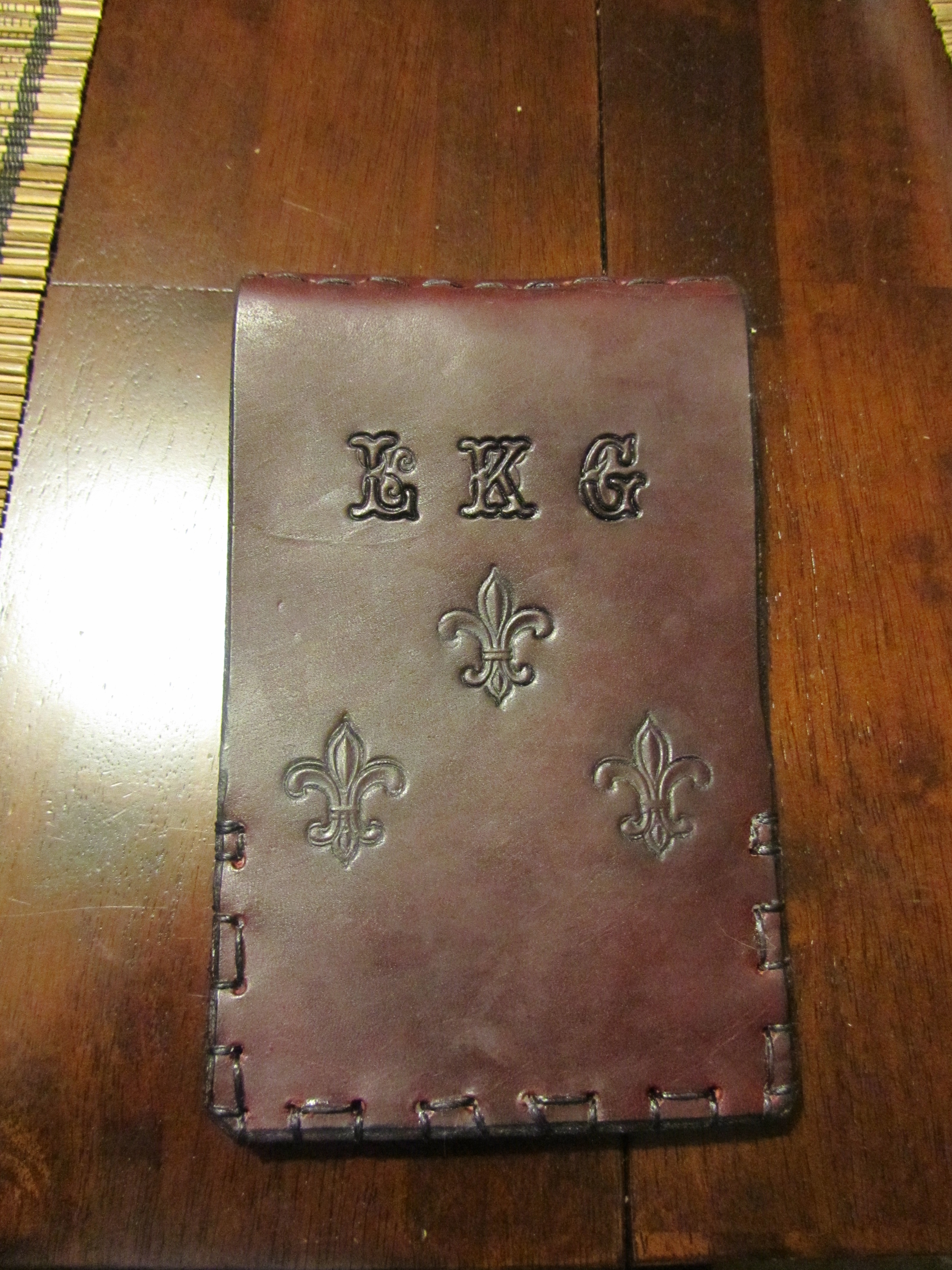
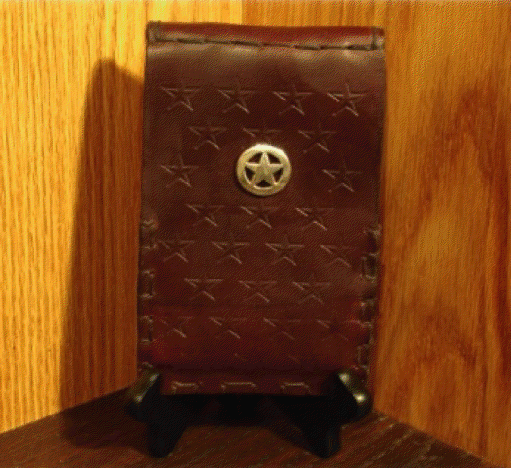
Greg, the designer and manufacturer of these beautiful wallets, makes a wonderful product. Above is an example of one of a pair of custom-designed scorecard wallets that he worked with me on in record-breaking time. I must say, he was was great to work with. He took my totally unreasonable request to make these wallets in a half his usual time and made it a reality. A quick story: I had planned a trip to ATL to spend some time with JK and play a course (to review for this blog). I wanted to have these wallets as a thank you for getting us out to the course, but the plan eventually fell through. In any event, Greg was very accommodating and had the wallets in my hands prior to when I was scheduled to leave for ATL.
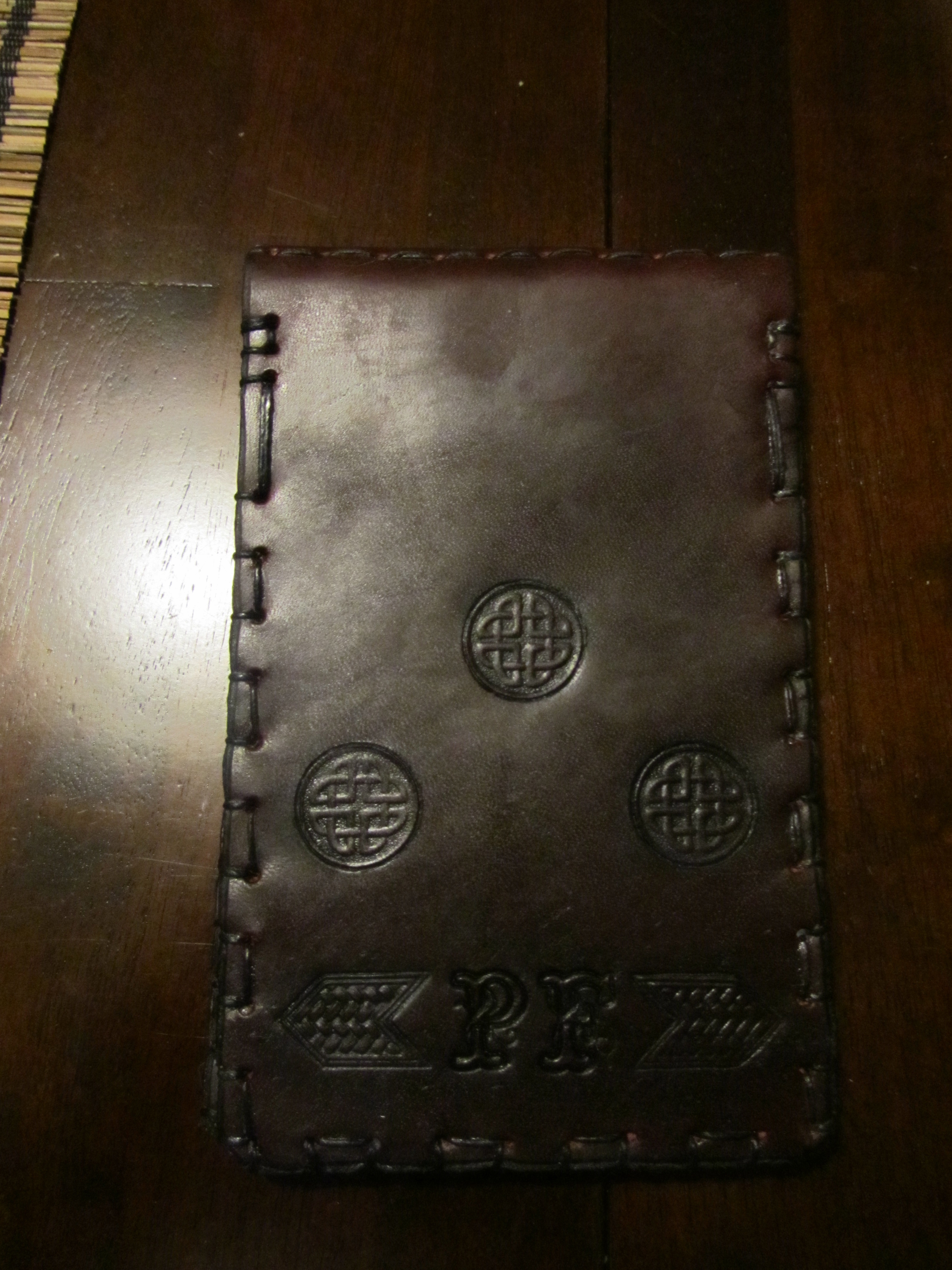
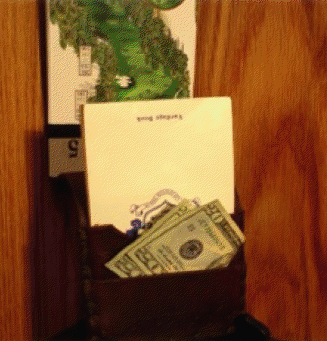
This picture is a little darker, but I wanted show the depth of the color of the dye used in this wallet. It is a very rich dark brown color. The letters on the bottom are “PF” for this blog. This particular model is called the “storyteller.” Other models include multiple pockets, custom insignia, and other amenities. I just wanted a basic model that used elastic, had a pencil holder, and provided a solid writing surface. The interior pocket on the flap is nice a nice bonus; I use it for holding my NCGA cards and a small amount of cash for on-course refreshments :).

Greg was nice enough to add a customization to the interior pocket – the two turtles. This was a shout-out to JK for something he said one of the first time we played a round of golf together as summer associates.
Another example taken from Greg’s catalogue: The Nettle:
Other options include choice of colors of leather: Bison Brown, Charcoal Black, Scarlet Red, Forest Green, Deep Blue, Sunset Orange, Natural, and Deep Purple. Greg notes that each wallet is dyed three times and sealed to prevent leeching of the dye onto clothing. He cautions that the wallet should not be used in light colored clothing the first few times that you use it, but I never had an issue with leeching.
Once you make the very difficult decision to forego picking up a belt from Greg as well, he makes the process very easy. Send him an email (greg.dibble@yahoo.com) with your idea and he’ll draw up an electronic design for you. You make any changes, and wait until Greg hand makes your custom design. Once your design is complete, Greg packages it up (very nicely, i might add) and ships it off to you. It’s that simple.
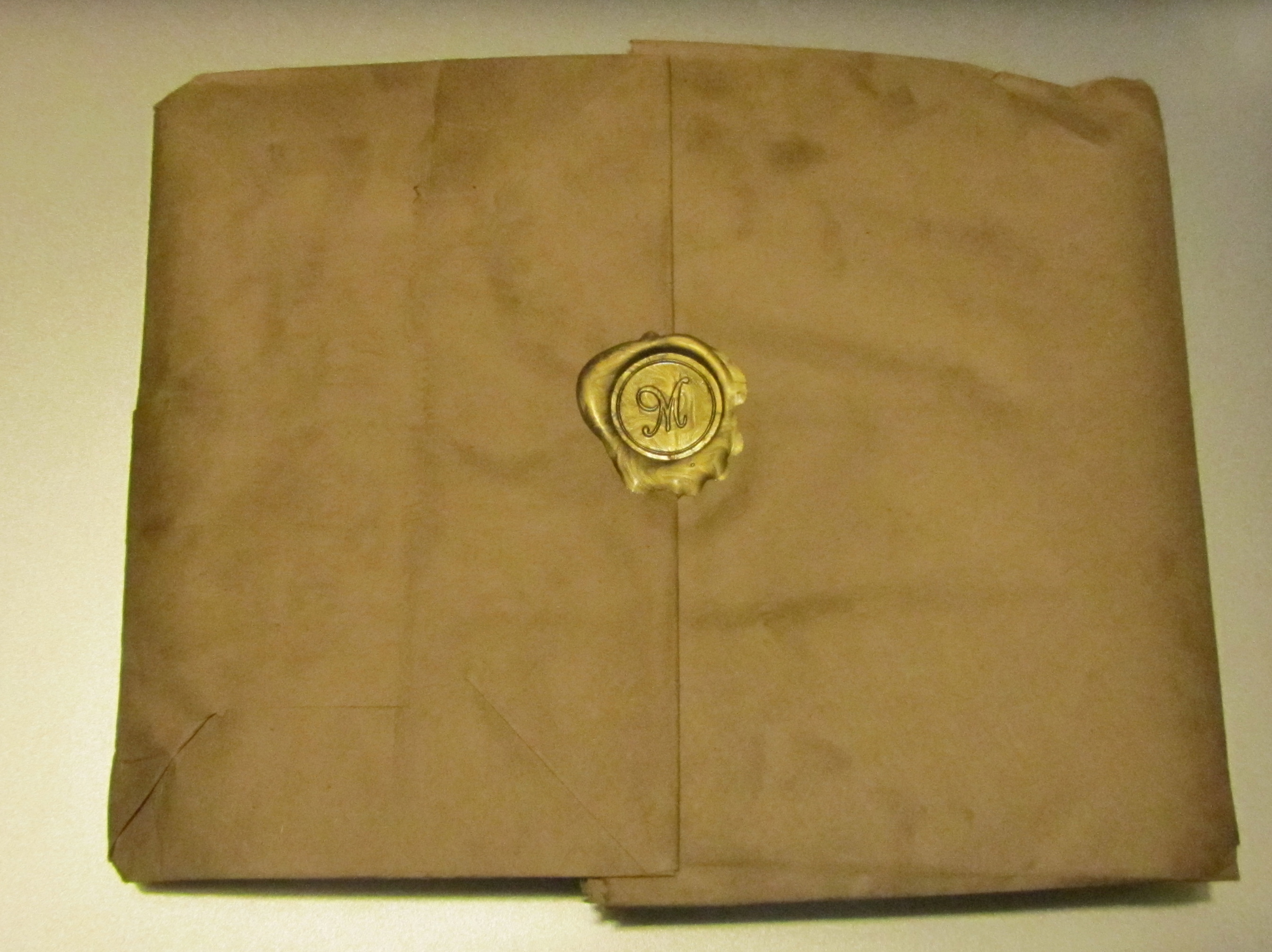
Total cost for 2 custom-designed PowerFade golf wallets – $160. Look no further for true golf luxury and craftsmanship. I have used this wallet since about April and will never use anything else. It has worn in well and only looks better with time. To get your own, get in touch with Greg:
greg.dibble@yahoo.com
Course Review: The Course At Wente Vineyards (Livermore, CA)
November 1, 2012
First, I would like to extend a sincere apology to our readers for not having posted in such a long time. I have unfortunately been travelling too much to post regularly, but have also accumulated a wealth of other material for reviews that should keep the posts coming through the winter. Now, on to the review!
Today, I review the Course at Wente Vineyards. Wente has been a long time coming for me. I heard about this Greg Norman design course when I moved down to the Bay-Area from the Sacramento area, but I never managed to make it out there because the rack rate was too high and Poppy Ridge was right around the corner. But, in the spirit of reviewing new courses for our readers, I decided to scour Golfnow for the best possible rate and was able to get a discount of $25 from the rack rate of $115 and make it worth my while to check out Wente. By way of comparison: Poppy Ridge (just around the corner – and reviewed here by the PowerFade) is $87 for 27 holes on the weekend at NCGA rates. I have also seen exceptionally good offers at Costco from time to time that bundle Wente with another course that might actually put the price below $90.

Wente does, however, make up for the difference in price with service, facilities, and wonderful conditions. The picture above is a view of the putting and chipping greens that sit next to the largely apportioned clubhouse. These greens were probably the fastest I’ve played in Northern California. I was playing Titleist Pro-v1s because I heard I’d need the extra spin on these greens, and boy, they were not kidding. By way of example, my first pitch shot on the green pictured on the right was from near the tree to the middle pin. The ball hit about 4 feet short of the hole, checked up, and rolled out another 10 feet. With that feel in mind, we head to the driving range.

One of the awkward things about Wente is how far away the driving range is from the rest of the course. The cart ride from the clubhouse to the range took about 7 minutes. The nice thing though, is that the drive is beautiful. The picture above is part of the route between the clubhouse and driving range. The other part meanders through the back nine and heads to the top of a high cliff where the driving range is situated. The range is noticeably more exposed than the rest of the course and probably provides a good sense of the worst of the conditions you will face throughout the day. The view below is from the driving range back down to the course.

Now, for the actual course. Some stats:
Black – 7181 yards – 75.8/145
Gold – 6840 yards – 73.9/141
Blue – 6266 yards – 71.6/131
White – 5637 yards – 68.7/124 or 73.4/130
Red – 4866 yards – 69.4/122
I played this course from the gold tees on a hot, slightly breezy day in August. The course was in phenomenal conditions and the fairways were running out. Even then, however, the course felt much longer than 6800 yards. I found myself hitting much longer clubs into holes because of carries near the green, hazards, or uphill shots. On the back nine, the infamous Livermore wind picked up and really had the last 4 holes playing long as they were straight into the wind. On the last hole, a 457 yard par 4, I hit my best driver of the day to the right fairway and had to hit a perfect 3 wood to get to the front of the green. Fortunately for me, I was able to get up and down for a solid par there while a large wedding party was watching nearby. Some more views:

First Tee – Par 4

Fifth Tee – Par 5

Fifth Fairway – Par 5

Seventh Tee – Par 3
One of the most unique features of this course is “Little Lombard.” This meandering part of the cart path goes up one of the steepest hills I have ever seen on a golf course. The switchbacks that make up this part of the path give the feature its name.

The course was phenomenal. The tee shots provided a very clear view of how to play the hole, and a long, accurate drive was a must to have a chance at getting to the green in regulation. Hitting the rough at Wente meant you were probably hacking back into the fairway. To me, the views on the back nine were not as nice as those on the front, but the holes were more interesting. In particular, I recall the risk-reward 10th. This drivable par 4 (plays much shorter than the yardage) could have you tempting disaster, especially if you are in the middle of a good round. I decided to lay up with a 7 iron off the tee instead of hitting driver or 3 wood, but would consider going for it next time because there was more room behind the green than I thought.
Overall, I would call Wente a great course, but not somewhere I could play every weekend. My main reason for this comment is that the course is not really walkable (see Little Lombard). This is the kind of course where I would play a special round, or bring a client from out of town. From a purely financial perspective, Wente is not your best bet. Poppy Ridge, on any given weekend would provide you with a wonderful 27 hole experience for less than a good rate at Wente. The price does have some advantages. The course play relatively quickly because of lower traffic. I played my round in about 4 hours with a cart. Many notable names play this course often. Jerry Rice is known to frequent Wente regularly, and Annika Sorenstam hosts her charity tournament at this venue each year. In the end, I would not turn down an invitation to play at Wente, but would not think of it immediately for my weekend 7am tee time.
Scorecard: http://www.wentevineyards.com/images/headers/The_Course_Scorecard.pdf
Website: http://www.wentevineyards.com/golf/
Understanding Putters: Head Styles and MOI
October 2, 2012
You may have asked yourself at some point in the last decade, “why am I seeing so many putters that look like space ships? I guess people are really into mallet putters.”
If you’ve said this to yourself, your observation is certainly accurate. In recent years, mallet putters have started to take greater and greater market share from more traditionally-styled putters like the PING Anser and Wilson 8802 styles. The reason? Well, that’s a bit more complex.
As pointed out in the last chapter (see https://thepowerfade.com/2012/09/17/understanding-putters-offset-face-progression-and-various-neck-styles/), traditional Calamity Jane style putters were heel-shafted blades, just like every other iron. This putter was used by virtually everyone–Bobby Jones, Bobby Locke, Walter Hagen, etc. Aside from the advances already mentioned in this series (toe hang, offset), the Calamity Jane style putter was, well, tough to hit. Anyone who’s tried to roll a heel-shafted blade (i.e., Wilson 8802) knows the feeling. You think you’ve hit a good putt, but the feel is like you missed the face, and the club twists so much in your hands it almost falls out. In all honesty, I personally have great admiration for anyone that can play well with the true blade style putter. It is an extremely difficult piece of equipment to use effectively.
In the late 50s, Karsten Solheim joined the game of golf. Perhaps his greatest contribution was in crafting the PING Anser. Karsten learned golf later in life, but was not good at putting. He did what golf equipment lovers everywhere have been searching to do since–fix the equipment rather than the stroke. Now, a good stroke works with a lot of putters, and every person who reads these posts is encouraged to take a putting lesson with a PGA pro just to make sure you’ve got everything right.. However, this entire series is about maximizing the stroke you have by choosing equipment to match it, so we agree with Karsten’s approach (at least to some degree).
With an engineering mind, Karsten reasoned that he could make putting easier if he changed the balance of weight on the putter. He reasoned that if he moved the weight from the center of the putter to the outside, the putter would not twist as much if it were not hit perfectly. His “Anser” was to make a putter with a cavity between two weight pads. It’s now the standard of design for putters:

What Karsten reasoned was actually a concept known in engineering as “Moment of Inertia”–“MOI” for short. Without getting too technical, MOI is an object’s ability to resist twisting based on its geometrical shape. Typically, this is achieved by rearranging weight. If you think of it this way, think of a bar with two 5 pound weights. Put the weights at the center and then try to turn it with your hand; it’s not too difficult. Now put the weights on the end of the bar and try to turn it. The task becomes more difficult. Even though nothing has gotten heavier or lighter (the weight is the same), you have made it harder to turn. Or, think of it this way: grab a club by the grip and try to swing it; then, grab a club by the head and try to swing it (with the butt end facing the ball). Which can you swing faster? The weight hasn’t changed. The arrangement of the weight has.
In engineering, MOI is the counterpart of mass in an angular analysis. When you’re pushing an object, the more mass, the harder it is to push. When you’re turning an object, the higher its MOI, the more difficult it is to turn. Mass plays a part in MOI, but the arrangement of the mass can greatly change the result.
So, you’re saying “OK, once again JK, what does this have to do with putters?”
If a club head is designed with higher MOI, it automatically becomes harder to turn than a club head with lower MOI. If it’s harder to turn, that means that a less-than-pure strike of the club will not cause as bad of a result. Here’s an example: let’s say two putters are identical except for the fact that putter A has a lower MOI than putter B. A player using either putter can strike either one purely and the result will be similar. But no one (not even the pros) hit every ball perfectly. So, let’s assume the player hits a putt one-half inch from the center of the putter face. This is where the difference shows up. Putter A will twist more, go further offline, and lose more energy than putter B in the same situation. Because putter B has a higher MOI, a miss is less costly than with putter A.
But what does this all have to do with odd-shaped putter heads?
Typically, putters with more weight balanced away from the center of gravity result in higher MOI. Since a typical putter is about 330 grams, a blade putter (like a Wilson 8802) is made of steel, with all the mass right beside the ball. Since there’s less volume, a relatively high density material (like steel) is needed to get enough weight to make the putter usable. See photo below:

With a typical mallet, the material might be aluminum, have plastic parts, or be some other lighter material with heavier weights positioned at extreme points on the putter head. For example, the TaylorMade Ghost Spider, LG’s putter:
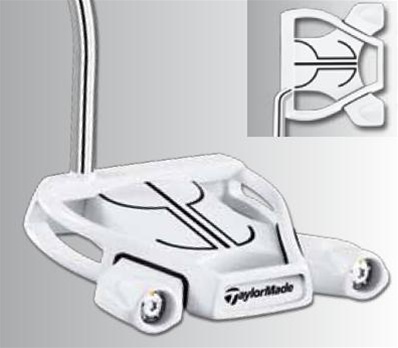

Do you see how, looking from the bottom, the putter is hollow with some plastic (i.e., lightweight) material filled in? Do you see how the putter has air gaps in the middle of it? Do you see the two weights in the back? Those two weights are tungsten weights–they have very high density and represent a large part of the mass of the putter. The body of the putter is made of aluminum, which is very low density . All of this helps the putter resist twisting by increasing its MOI.
The reason why these putters are getting so big, therefore, is the attempt to move the weight to the perimeter of the club, as far away from the center as possible, to prevent twisting on off-center hits.
Many people mistakenly believe that a mallet putter has higher weight than a blade putter. Many people will buy them because they think they want something heavier than they’re used to. However, most mallet putters are about the same weight as blade putters–right in the 330-gram range. The reason for this is that the typical putter manufacturer wants most putters to feel about the same in the player’s hands regardless of head shape. The distribution of the mass, however, changes.
Now, none of this is meant to say that you’ll be a better player with a higher MOI putter. I personally use an Anser-style putter and prefer its look and feel to almost any mallet. However, for someone who may be having a bit of trouble making a consistent strike on the center of the putter, the following options may be helpful…


for those looking to learn more about MOI, please visit Wikipedia, http://en.wikipedia.org/wiki/Moment_of_inertia
Predictions: Ryder Cup
September 25, 2012
This year, Team USA and Team Europe converge at Medinah to play in one of golf’s greatest traditions: The Ryder Cup. Team USA is captained by Davis Love III, while Team Europe is led by Jose-Maria Olazabel.
The teams:
USA
Keegan Bradley
Jason Dufner
Jim Furyk
Dustin Johnson
Phil Mickelson
Matt Kuchar
Zach Johnson
Webb Simpson
Brandt Snedeker
Steve Stricker
Bubba Watson
Tiger Woods
Europe:
Nicolas Colsaerts
Luke Donald
Sergio Garcia
Peter Hanson
Martin Kaymer
Paul Lawrie
Graeme McDowell
Rory McIlroy
Francesco Molinari
Ian Poulter
Justin Rose
Lee Westwood
It should come as no surprise that given the depth of the US’s team and the recent success that they have had including Snedeker’s capture of the FedEx Cup, The PowerFade predicts that Team USA will be victorious!
USA! USA! USA!

Predictions: Tour Championship and Fedex Cup 2012
September 18, 2012
UPDATED 9/24 in bold
After watching Bill Haas stun Hunter Mahan last year with his Jesus shot (see https://thepowerfade.com/2011/09/26/play-of-the-week-24/), it became apparent to me that the Tour Championship is every bit as important (maybe more) than most majors, if for no other reason than what it pays. So, without further ado, LG and I predict the future below:
JK:
Who wins the Tour Championship: Louis Oosthuizen T-23. Congrats Sneds
Who win the Fedex Cup: Louis Oosthuizen
Rory McIlroy (1) will: Finish 15th T-10, two shots from T-15
Tiger Woods (2) will: finish 2nd T-8, five shots from T-2
Nick Watney (3) will: finish <20th 28th
Phil Mickelson (4) will: T-2 with Tiger. T-15
Brandt Snedeker (5) will: finish where he started, 5. won it
Story of the tournament will be: Rory falling while Oosthuizen putts his way to victory. Sneds solid play on the back 9
Tiger Woods will be: upset he didn’t win because his putter let him down yah
Phil Mickelson will be: happy he just got a chance to play in it this year yah
Dustin Johnson will: double-hit a ball chipping out of the bermuda. finish <20 T-10, better than i thought
Will you watch? Maybe parts of it over the weekend and the end on Sunday. exactly
Who is most likely to Hunter Mahan it? Tiger. no one really did
Will the weather hold out? It will rain all weekend. it was awesome all weekend
Number of references to Bobby Jones during the telecast on Sunday? I’m putting the over/under at 5. no idea, due to the answer three question above
LG:
Who wins the Tour Championship: Dustin Johnson T-10
Who win the Fedex Cup: Dustin Johnson
Rory McIlroy (1) will: Make Cut there is no cut. LG FAIL
Tiger Woods (2) will: Top 10 T-8, so yes
Nick Watney (3) will: Make Cut
Phil Mickelson (4) will: Top 10 T-15, so no
Brandt Snedeker (5) will: Make Cut I’ll say
Story of the tournament will be: Phil giving it away…again.
Tiger Woods will be: contending Saturday, forgotten by Sunday. how did you know????
Phil Mickelson will be: 2 stroke lead going into Sunday, giving it away on the back. not even close
Dustin Johnson will: WIN
Will you watch? If I’m not at the office
Who is most likely to Hunter Mahan it? Phil.
Will the weather hold out? I’m not even sure what this question means.
Number of references to Bobby Jones during the telecast on Sunday? 25.
Understanding Putters: Offset, Face Progression, and Various Neck Styles
September 17, 2012
Piggybacking on our discussion of toe hang, this section will describe another important aspect of the shaft and head interaction: offset and face progression.
“Offset” and “face progression” are the same thing but going in opposite directions. Many golfers have heard of offset because it is fairly prevalent in the golf industry. 50 years ago, golf clubs were made however the manufacturer could tie the shaft into the head. Usually, this involved the leading edge of the club aligned with the front of the shaft axis. In some cases, the face of the club progressed beyond the front of the shaft axis. For example, most persimmon woods included a shaft entering the club head somewhere near the center of the head (see below).

The same was true for irons and putters. For nearly all irons and putters, the shaft and club head met with the shaft entering the blade directly on the heel. There was no room for doing anything else. The prime example of such a design is the Calamity Jane putter.

When Karsten Solheim designed the PING Anser, it marked one of the most stark breakthroughs in the history of putter technology. Some features of this groundbreaking design will be discussed in later parts of this series. However, pertinent to the current discussion, Karsten Solheim’s design revolutionized the interaction of the shaft and the head of the putter (and, later, the golf club).
Karsten’s groundbreaking design was the “plumber’s neck,” which is given the name because of its resemblance to residential piping. The plumber’s neck putter provides a number of advantages over prior designs. First, it allows the shaft axis to be moved from the heel of the putter, allowing for some ability to modify the putter’s toe hang based on the placement of the plumber’s neck (see prior discussion regarding toe hang). More importantly for this discussion, it allowed for the concept of offset to be introduced to the golf world.
Karsten’s Original Anser:
A plumber’s neck by itself

don’t be confused, the plumber’s neck does not come separate for most putters; the photo above is included to allow the reader to see a detail view of what we’re calling the “plumber’s neck” on the original PING Anser
The plumber’s neck was a breakthrough, as stated already, because it allowed for the concept of offset to enter the putter world. Compare the two images below. What do you notice is different between these two putters?


If you look at the address pictures, you can tell a stark difference between the two putters. Even though the head shapes are fairly similar, the location of the face of the putter with respect to the shaft is remarkably different. In the first picture, the face of the putter aligns with the left edge of the shaft, as the shaft actually inserts into the center of the head (termed a “center-shafted” putter). In the second picture, the face of the putter aligns with or perhaps to the right of the right edge of the shaft. This occurs because the putter in the second picture has a plumber’s neck, which gives it offset.
So why is this beneficial or harmful? The answer has to do with your eye dominance.
Every person has an eye dominance that is usually (but not always) the same as that person’s dominant hand. As such, right-handed players are more often right-eye dominant and vice versa. However, the extent of the eye dominance may range from very slight to very strong. Many people don’t actually know what their eye dominance is, and there are not many reliable ways to tell. One way I’ve found is fairly reliable is what I’ve learned as the reading test. Begin reading a block of text with both eyes open. It helps if the text is small, repetitive, and relatively uninteresting, like credit card terms and conditions, or a printout of a cell phone call log, or one of LG’s PF posts (just kidding!). Read a few lines of text and then close one eye, taking note of how difficult it is to continue reading with that eye closed. Open both eyes and repeat the test, but this time with the other eye, taking note of how difficult it is to continue reading with that eye closed. Repeat as many times as you find necessary. Your eye dominance is whichever of the two eyes resulted in an easier read. For some people, the difference will be immediately noticeable. For others, the difference may be very hard to tell. There is no right answer–it’s only information.
However, where your eye dominance falls in the spectrum will determine if and how much offset or face progression/onset (the opposite of offset) you need. If you notice that you have about the same ease reading with either eye closed, your eye dominance is considered neutral. As such, you need a putter with a neutral offset position, meaning the face of the putter should be aligned with the center of the shaft. Assuming a right-handed putter (it would be backward for lefties), if you are left-eye dominant, you need a putter with the face progressing to the left of the shaft axis. In the pictures above, the center-shafted putter is a great option for a fairly strongly left-eye dominant player (assuming the toe hang is correct for your stroke type) because the face of the putter is aligned with the left edge of the shaft axis, which is a fair amount of face progression. Some putters–for example, some SeeMore putters and the Odyssey Backstryke–actually have progression of the face BEYOND the left edge of the shaft, accommodating a strongly left-eye dominant player. Similarly, if you are right-eye dominant, the plumber’s neck option will work better for you. In the pictures above, the face of the putter is aligned with the right edge of the shaft.
Why is this important? When setting up for the putting stroke, your dominant eye will guide your alignment. If the ball is not under your dominant eye, your setup will twist and torque to try to get it back in line. This will lead to improper setup alignment and missed putts. A left-eye dominant player playing too much offset will usually pull his putts; a right-eye dominant player playing too much face progression will usually push his putts.
In essence, we want every player to set up the same way: with the putter set up so that the hands are at the bottom of the stroke at impact. For most people, this occurs when the hands are in the center of their stroke. As such, the player should set up with the hands roughly in the center of his stroke. A putter with face progression will allow the left-eye dominant player to set up with his hands in the middle of the stroke and the ball toward his left foot, under his left eye. A putter with offset will allow the right-eye dominant player to set up with his hands in the middle of the stroke (just like the left-eye dominant player, promoting consistent mechanics between the two) but with the ball toward his right foot, under his right eye. As such, the amount of face progression/offset can be an important factor for getting the most consistent putting stroke in concert with your own individual eye dominance.
So how do we get this? Well, there are more options than just plumber’s necks. Here are some examples:
Heel Shafted:

Long Neck:
Center Shaft/Straight Shaft:
Goose Neck:

Flow Neck (aka Santa Fe or 1.5):

Double-Bend Shaft:
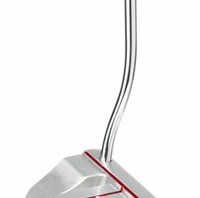
Single-Bend Shaft:

Modular Center Shaft:

And More!


Keep in mind, the location of the shaft affects not only the offset but also the toe hang of a putter, so many of these variations are attempts to get both an offset and a toe hang that matches a particular player’s specifications. However, the point here is that, if you know what you need, you’ll be better prepared when you take your game to the course.
Comments are welcome.
Understanding Putters: Toe Hang
September 12, 2012
One aspect of putter fitting that was often misunderstood years ago but has recently gained some good press and understanding is the concept of toe hang and what it is there for. It seems like when I was growing up, every new putter coming out was face balanced, and advertised as such, as if face balancing were some sort of great thing that cured all ills of the putting stroke. In reality, little is further from the truth. Face balancing only helps people whose stroke fits a face balanced putter. We’ll talk more about this in a few minutes. What this doesn’t mean, however, is that a particular style of putter will work for everyone.
Now, we need to be clear on this: the theory posted below is only general theory. There is no hard and fast rule that someone follow the advice below. If you find something that works for you, go with it. However, the theory below will help you maximize the chance that your putter works for you. The thoughts below will help you select a putter that works with what you do rather than you trying to fit your stroke to make a certain putter work.
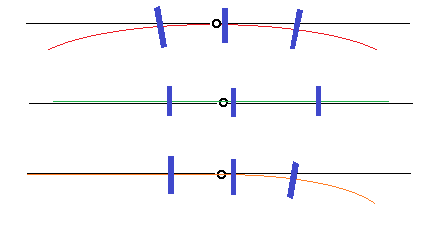
There are generally accepted three types of putting strokes: Straight Back Straight Through (SBST), Arc Stroke (or “gated”), and Inside Then Down The Line (IDTL). Although there are many different ways to swing a putter, these are the three that are most common and are most taught. Teachers like Dave Pelz advocate for the SBST stroke, which is exactly what it sounds like; the putter travels straight back on the backswing and straight through on the follow through, and the face stays square to the target at all times. Other teachers like Stan Utley advocate for the gated stroke, which is called “gated” or arc because it resembles a gate swinging on a hinge. The putter face opens and comes inside the line of the putt on the backstroke, closes until impact where it is square to the target and on the target line, and then closes and travels through impact to the inside of the line. IDTL may be the most used option (see e.g., poll at http://www.golfwrx.com/forums/topic/646692-which-stroke-type-do-you-use/). For this stroke, the putter travels inside the line of the target on the backswing and then down the line on the follow-through. It allows the player to combine the best parts of the swinging gate and the arc stroke. Many good putters use this method. A comparison of stroke types is shown below (arc in red, SBST in green, IDTL in orange).
Which stroke type you choose is up to you, and this blog is not here to give instruction or to pick a preference for one stroke type over another. But, you might be asking: what does this have to do with face balancing?
Well, the answer is pretty simple: toe hang and “face balancing” should be chosen to match the stroke type you use.
But you might be asking “what is toe hang?” Toe hang is, simply put, a quantification of where the toe points if a putter is allowed to hang naturally. It gives the player an idea of where the shaft axis is located compared to the center of gravity of the putter head.
That’s a lot of jargon, so I’ll take it one at a time.
The Center of Gravity (COG) of any object (literally anything, not just a golf club) is just the center of its mass–or, in simpler terms, it’s the balance point. If you take an ink pen and try to balance it on your finger, the point where it balances is the COG. This is because the mass (or weight) of the ink pen is evenly distributed on both sides of that point. If there are 10 grams of weight to the right of your finger, there are 10 grams of weight to the left, and the ink pen balances perfectly at that point. If this is not true, there is no way the pen can balance on your finger. The imbalanced weight will make the pen rotate so that the heavier side dips and the lighter side raises up in the air until the pen falls off your finger.
While a pen is just a thin line, the COG can be found on any object. When you see a waiter balancing a set of plates on his arm, he has lined the COG of each plate directly over his arm (very skillfully) so that he can carry multiple plates. Just like the plates, a putter head has a COG, which is the point where the mass on the heel side is about balanced with the mass on the toe side. This point may not be in the exact center of the putter head in some cases.
The toe hang is a representation of how the COG of the putter head interacts with the axis of the shaft. When describing toe hang, the typical way of measuring it is based on how the putter head hangs as related to a clock. If the putter is face balanced, there is essentially no toe hang because the face points to the sky when it is allowed to sit freely. In other words, the toe of the putter does not hang down, meaning that the toe of the putter points to about 3:00. This occurs when the COG is in line with the shaft axis (more on this later). If a putter has toe hang, then the toe falls down so that the face does not point directly up when it is allowed to sit freely. In some cases, where toe hang is pronounced, the toe will point toward the ground and the face will point along the horizon. In other words, the toe points to about 6:00.
The picture below represents the toe hang of a putter:

(see, http://www.golfwrx.com/forums/topic/402148-what-is-toe-hang/)
As you can see, when allowed to fall freely, this putter aligns itself so that there is about a 45 degree angle made. This is typically referred to as “1/4” toe hang or “4:30” because, if the putter head were the hand of a clock, it would point to 4:30 on the clock.
For a face balanced putter, the face will point directly to the sky, as seen below:

For a putter with toe hang, the face can point “1/4” as shown above or a number of other places. For example, the putters shown below have “full” toe hang, meaning they can’t hang any further, or nearly full toe hang (the putter on the right is about 5:00):

Putter makers have many different offerings of toe hang along the spectrum of what one might need, as seen below. One old Scotty Cameron putter even had some HEEL hang, meaning it was beyond face balanced!
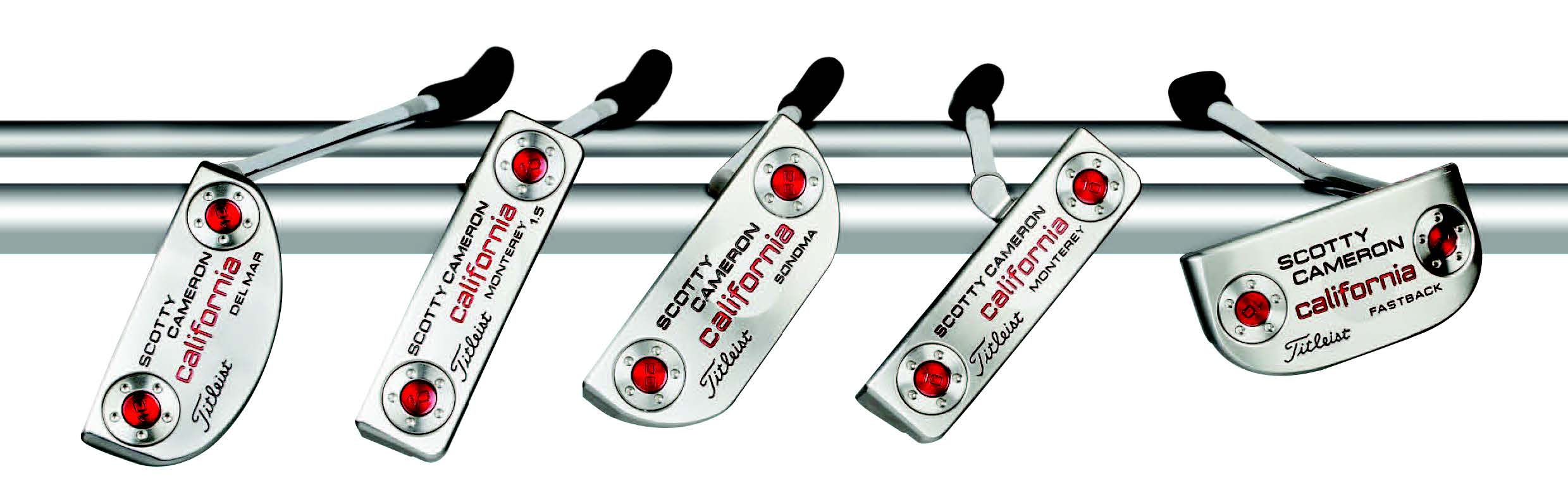
(see http://media.titleist.com/images/titleist/pdfs/US/2012/sales/2012_Art_of_Putters.pdf)
The way toe hang occurs is that the shaft axis is offset from the COG. If the shaft axis and the COG are aligned, the putter is face balanced. If the shaft axis and the COG are misaligned, some toe hang will occur. The extent of the misalignment determines the amount of toe hang.
This makes sense, if you think about it. No matter what object you hold, if you let it go freely, it will fall in a way that the center of mass points toward the ground. As seen with reference to the 1/4 toe hang picture above, if the COG is offset from the shaft, the COG tries to get underneath the shaft when it is allowed to fall freely. As such, when the COG is aligned with the shaft, it is already under it and the toe of the putter does not need to hang down to align the shaft and the COG. If the COG is misaligned with the shaft, then some rotation occurs when the putter is allowed to fall freely so that the COG can line up with the shaft axis. (don’t worry if you don’t understand this explanation–it’s not necessary to understand this part).
So what does this have to do with putting?
Well, as we reviewed earlier, players using various stroke types should select putters with different toe hang to match their strokes. If you putt SBST, a face balanced putter will help you make your SBST stroke. An SBST player will not want to feel any torque in the putter head due to the offset of the shaft and the COG. The SBST player won’t know what to do with this information. It will only tell him that he’s doing the putting stroke wrong, when really he is not. Having the shaft axis aligned with the COG prevents the SBST player from feeling torque which would be negative feedback for the type of stroke he is using.
Meanwhile, a player that swings the putter with a strong arc stroke should select a putter with more toe hang. A strong arc player wants to know that the face of the putter is opening and closing during the stroke. The torque the player experiences by virtue of the shaft being offset from the COG tells that player that the face is moving, which is what that player wants to know during the stroke. If a strong arc player uses a face balanced putter, he will get no feedback on the location of the face. As such, he’ll be lost in the stroke and won’t know how fast the face is opening or closing. This lack of knowledge will prevent him from timing the release of the face with impact to the ball. Players between SBST and strong arc (for example, IDTL and weaker arc players) should choose putters with less toe hang but not fully face balanced.
As stated earlier, the whole point is to get the ball in the hole. If you are an SBST player and use a heel shafted blade (like a Wilson 8802, which has a lot of toe hang), you can surely putt with that putter AND be successful. Likewise, if you have a strong arc and use a face balanced putter, nothing says you must follow the rules. However, if you are looking for a putter and don’t know what to select, the best advice you can get is to select a putter with toe hang that matches your stroke so that you maximize the chance of finding a putter that works best for you.
Comments are welcome.


 The Power Fade Golf Blog