Removing a Grip — Without Damaging It
December 31, 2011
This is a post that I put together in February of this year (2011). I never got around to posting it because the results were not great. However, I do think my experiences would be beneficial for someone out there looking to do this.
With this post, I was attempting to remove a putter grip without damaging it. Iomic grips can be $25/grip. As such, finding a cost-effective way of removing them from old putters can be a beneficial way to save money, as putter grips tend not to wear out as quickly as others. I had a putter with an Iomic grip, and I am not a fan of Iomic grips. I decided to pull it both because I had a friend I could give it to and because I thought it might be a good topic for the blog.
Here’s what I used:
1. mineral spirits
2. an old paper towel roll
3. a large plastic bag, preferably zip-lock (must be sealed to fluid–shopping/trash bags will not work)
4. a sink drain
5. a prop (in this case, a wire rack and a cutting board)
6. a screwdriver
Typically, when I install grips, I use standard grip tape. I place mineral spirits on the grip tape to loosen the bond, slide the grip on, wait 15 minutes, and I’m ready to go. I decided that this process might work in reverse–if I could get the mineral spirits inside the grip, perhaps I could slip it off.
To do this, I took the large plastic bag, and put it over the grip end of the shaft. I placed the bag and the putter grip (still over the end of the shaft) into the paper towel roll as a means to restrict the expansion of the bag, thereby requiring as little mineral spirits as possible into the bag. I then filled the bag up with mineral spirits until the level of the fluid was higher than the edge of the grip. I let it sit for 20 minutes to allow it to “soak in.” See photos below.
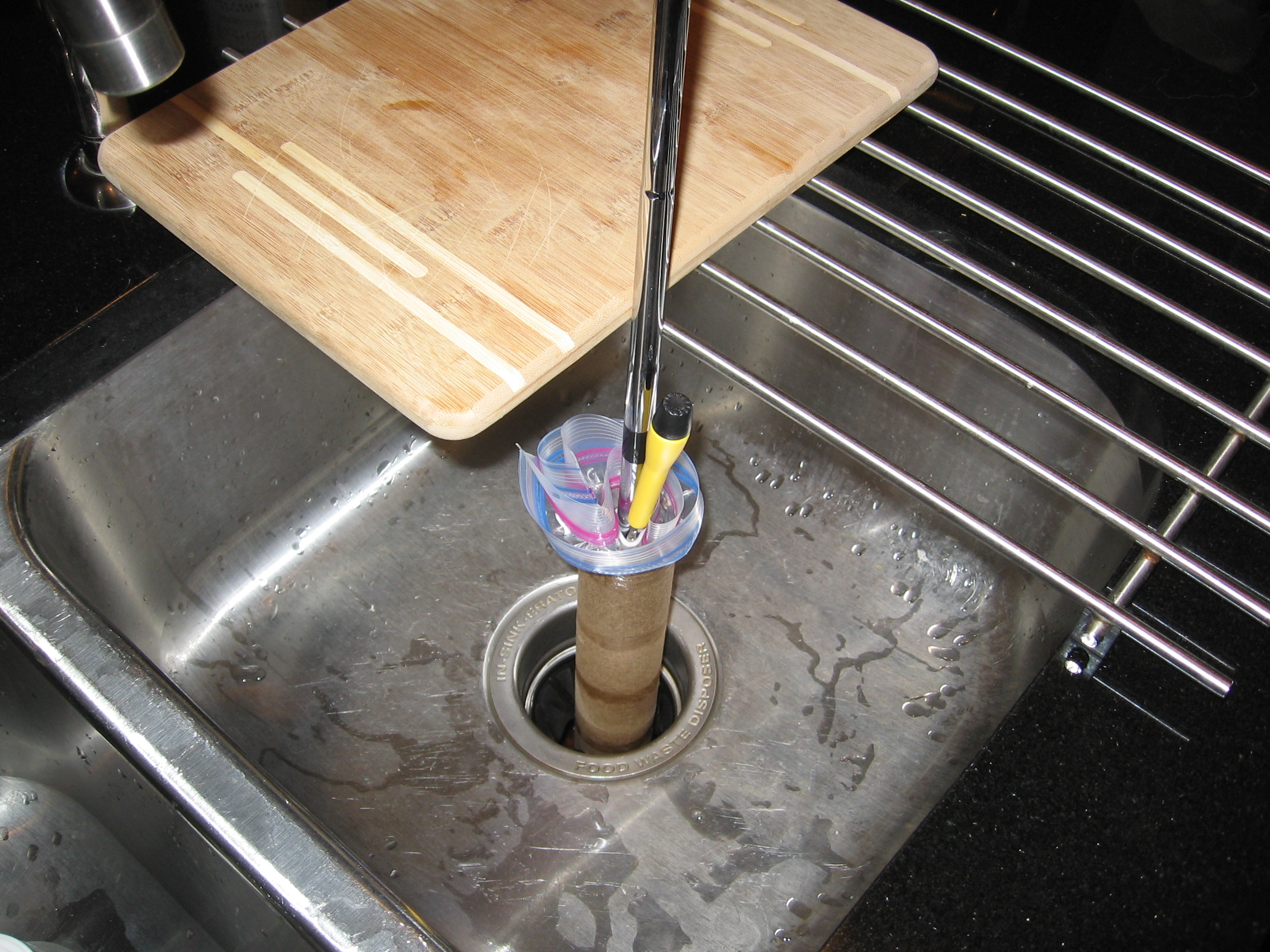


What I failed to realize is that the mineral spirits does not penetrate well. I’ve heard of others using WD-40 because it penetrates small spaces better and contains mineral spirits in it–I might try that next time. Regardless, my vision of the grip slipping off with ease was nowhere near reality. Instead, I worked the mineral spirits down into the grip using a screwdriver to GENTLY pry away the grip from the shaft (be careful–I’ve broken more than one grip trying to do this). Eventually, enough got in that I was able to twist some parts of the grip relative to the shaft. I worked at it for 15 or so minutes, which was an enormous amount of effort. Eventually, the grip came loose.
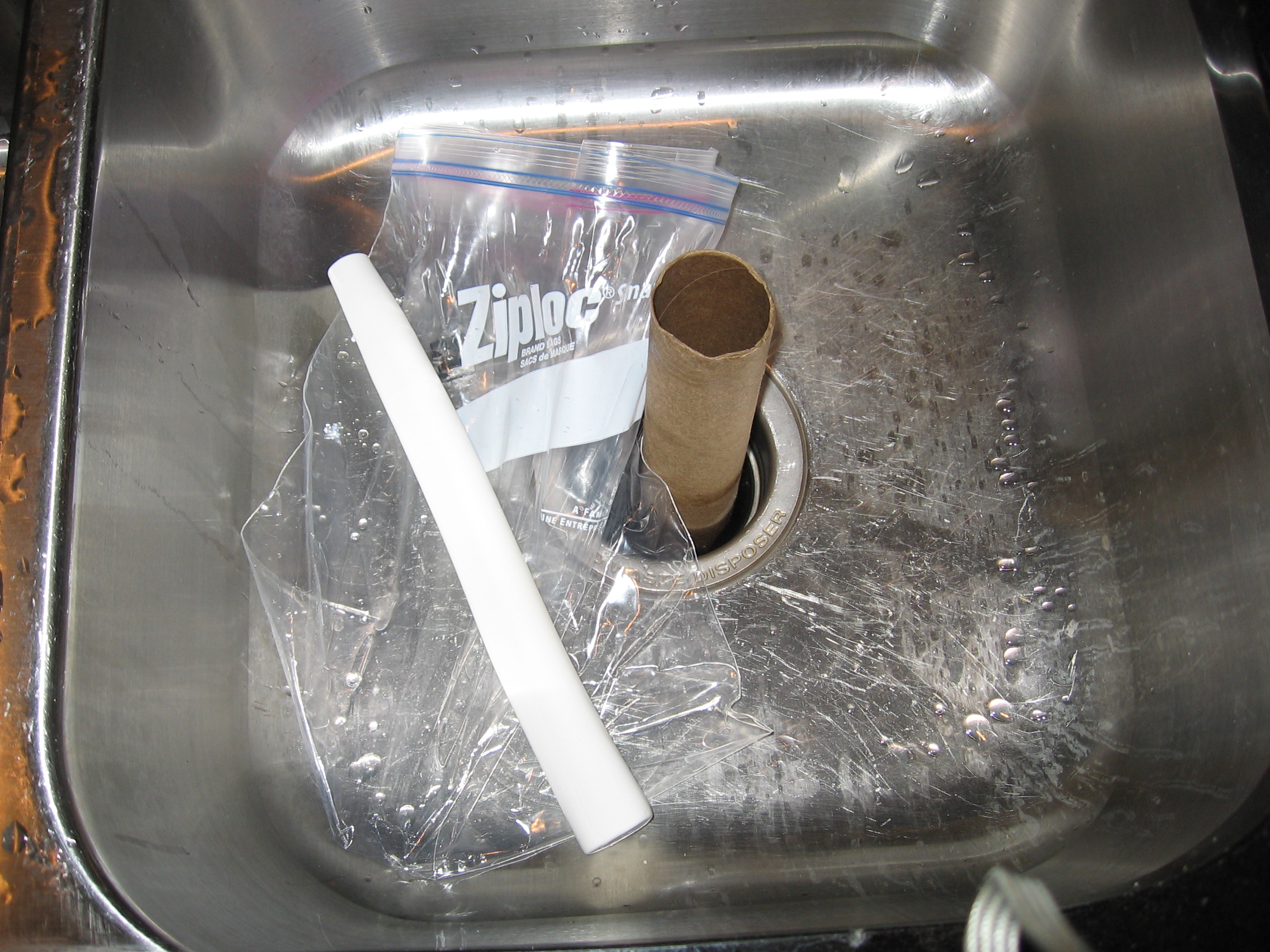
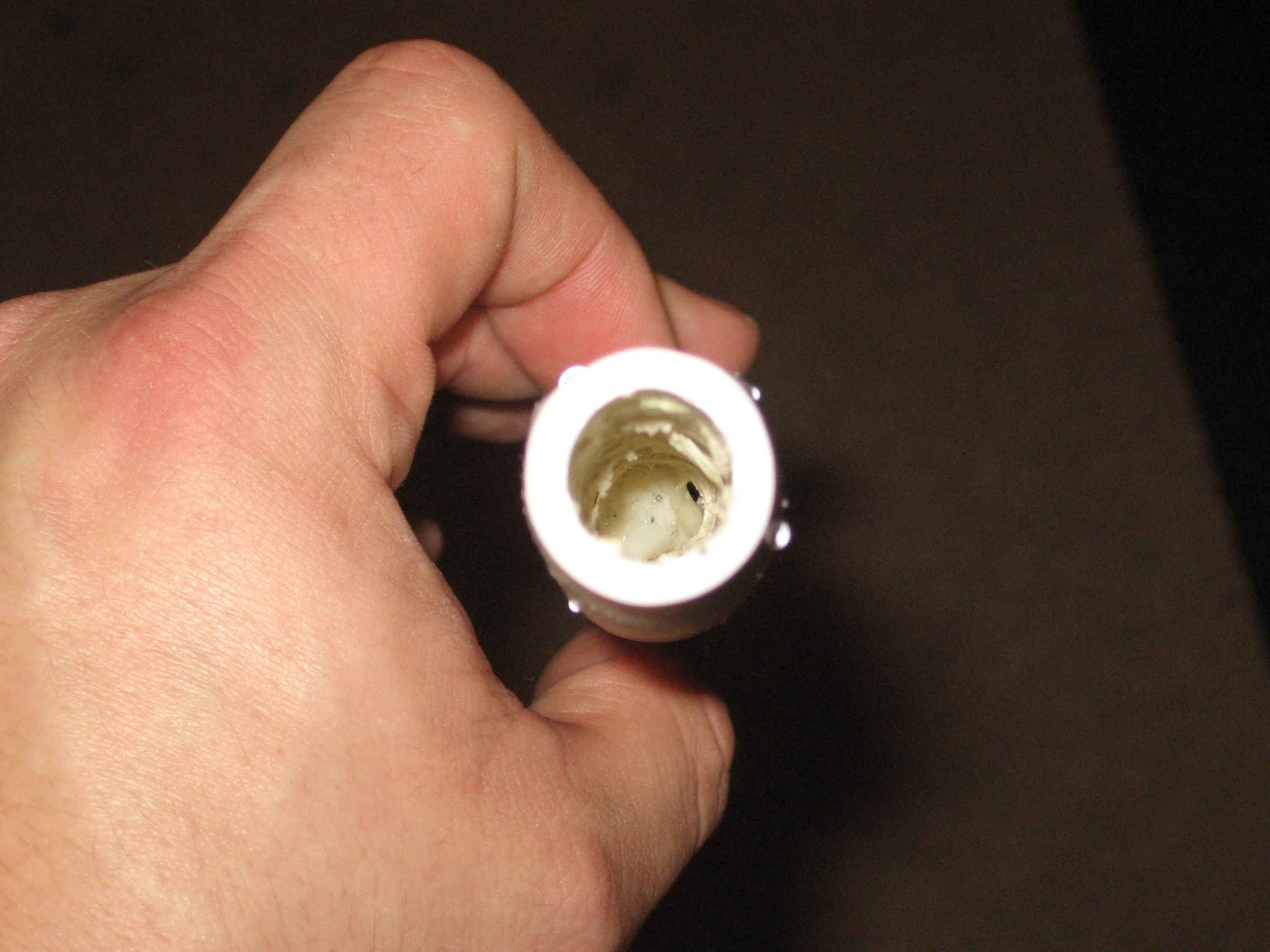

If I had another Iomic grip, I could probably do this again with better success if I tried WD-40 instead and/or if I had a better tool to work the mineral spirits down into the grip. Something thin, fairly rigid, and as long as the grip would work best–perhaps a portion of an old shaft? Regardless, the method did work, but it was not as simple as I expected. It probably would not be worth the effort for a $4 Lampkin or Golf Pride grip.
If you have access to an air compressor, use that method (blowing into the hole on the end of the grip). However, if you’re like me and prefer an at-home DIY method, this might be a viable method, assuming you make a few tweaks.
——————————————–
12/31/2011 Update
I tried this method again recently, except I did two things differently. First, I did not soak the grip as shown. Instead, I just used a small screwdriver to pry the grip away and squirted fluid between the grip and shaft, working the grip around until it came off. Second, I used acetone instead of mineral spirits, which worked MUCH better. Some photos are shown below.
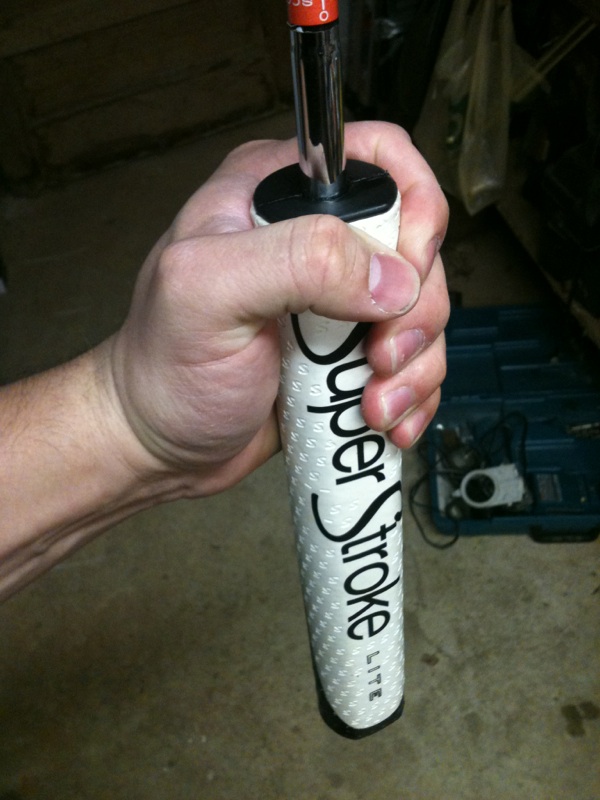
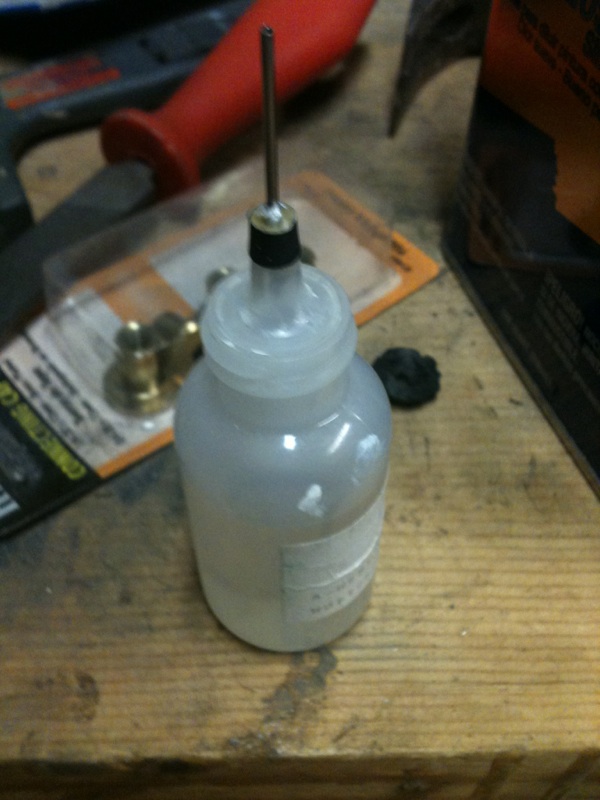
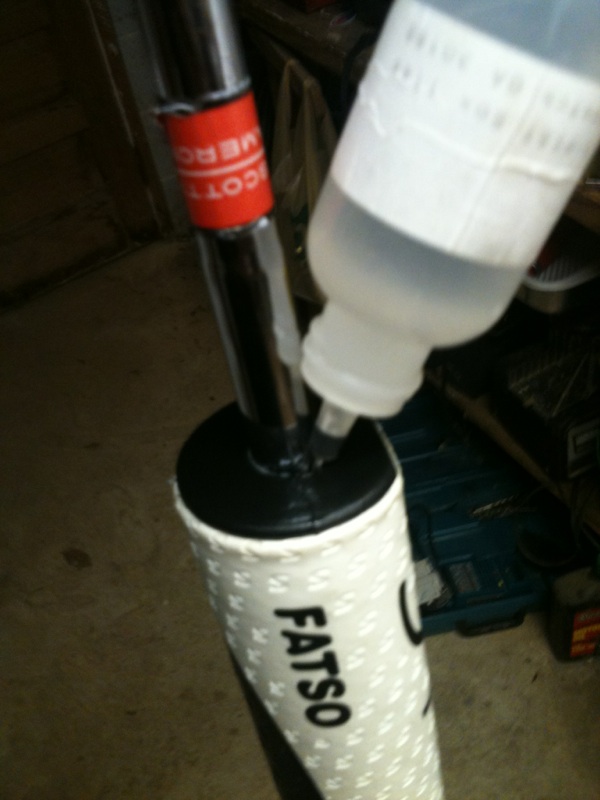
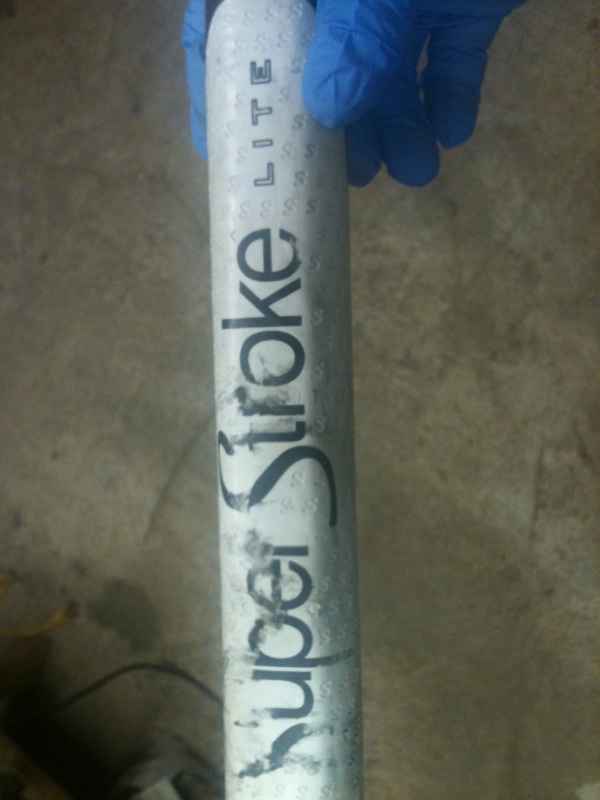
The issue with this method is shown in the last photo. If your grip has anything painted on it, acetone may loosen the paint and cause some damage. However, for most grips, this isn’t an issue, and you’ll be able to save it without much loss–or, you can simply repaint the portions missing.
Review: Iron Factory (Jim Kronus)
December 28, 2011
Anyone who reads the PF regularly knows how LG and I feel about our golf equipment–utterly superstitious. Inexplicably, we feel a connection to certain equipment that gives us more confidence. Whether it’s good balls numbered 7 or fairway woods that are 7 years old, LG and I have the things we each like.
For me, once I find something I like, I tend to stick with it. In accord with that, I REALLY like my wedges. I have figured out how to set them up correctly for me and my touch. The only problem is that I’ve basically worn them out. See photos below.


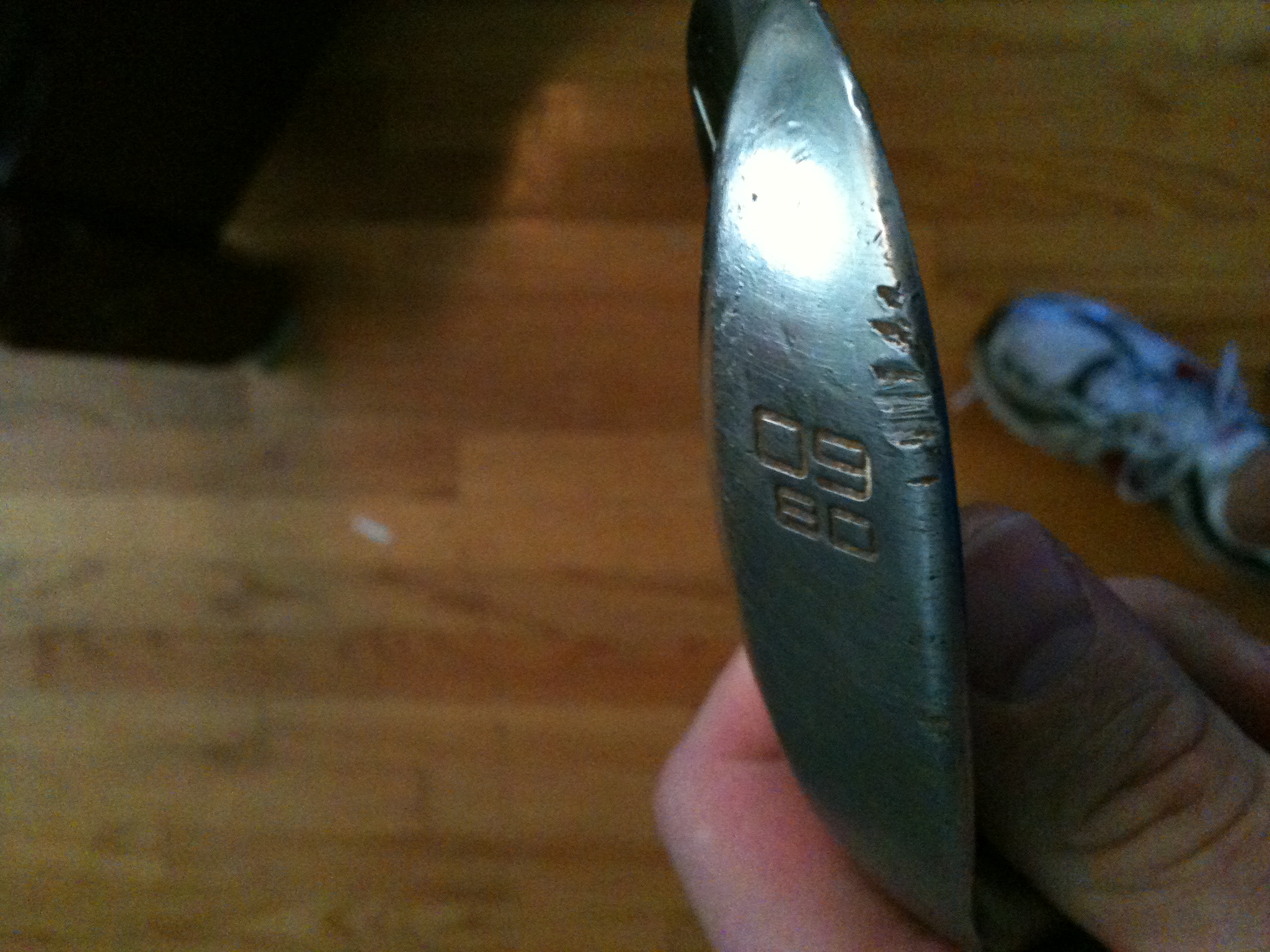


In accord with it, I looked at replacing them. However, I got such a good deal on them, there’s no way I could afford $190/head to replace them new (see http://www.fourteengolf.com/product/detail.shtml?P=53 and http://www.tourspecgolf.com/Fourteen-2010-MT-28-V5-Forged-Wedge). Them, I found out about rechroming.
Several places do it, but for price and quality (based on reviews), I chose to use The Iron Factory (http://www.theironfactory.com/) and well-known iron restoration specialist Jim Kronus. Kronus provided chroming services to many OEMs years ago but now provides services for orders as small as $30. When I contacted his business, I got a personal call from the man himself to discuss my order and to answer my questions on the process.
Placing an order is as simple as providing a letter stating what you want Jim to do, putting the heads in a box (small flat-rate box from the post office is $5.00), and sending them away to the address on The Iron Factory website. When the heads arrive, Jim will call you personally to confirm your order, take your credit card information, and answer any questions you may have. We discussed the need for the grooves to remain conforming to the new 2010 groove rule, and he informed me of some ways he could make it happen.
About a week and a half later, I received my rechromed wedge heads, as shown below:
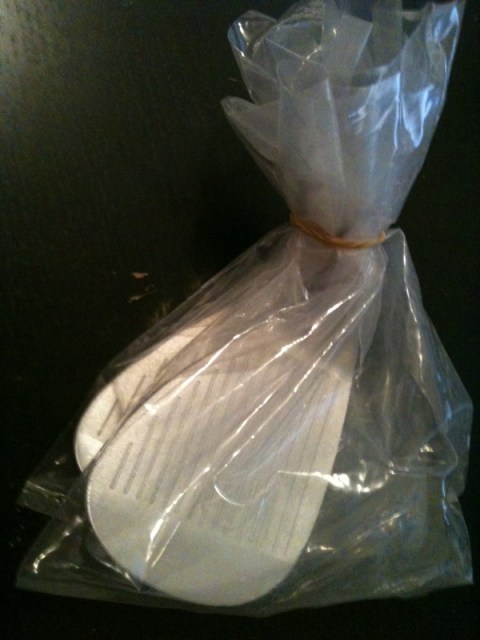
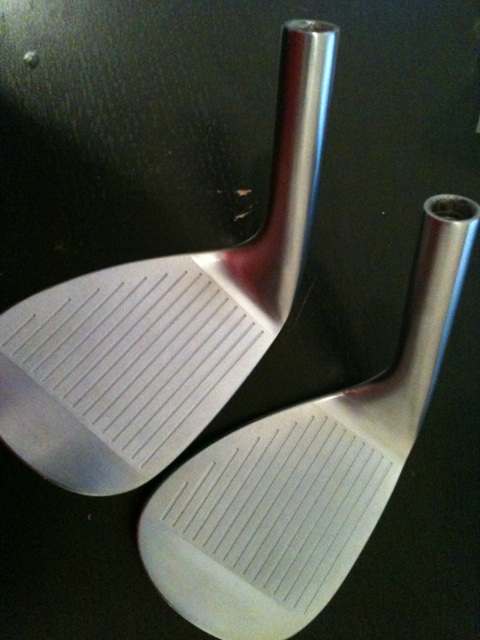
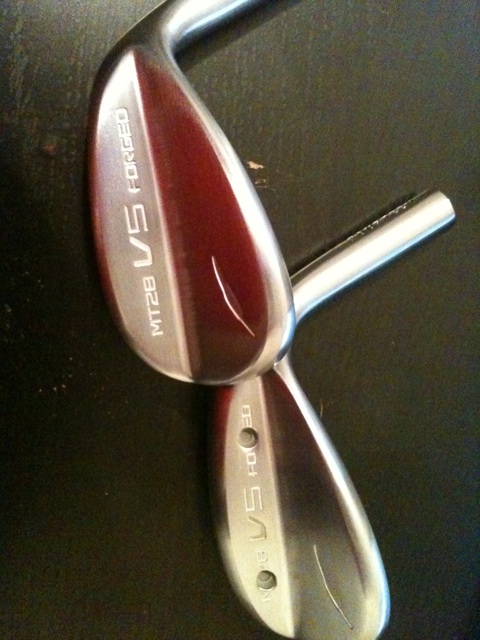
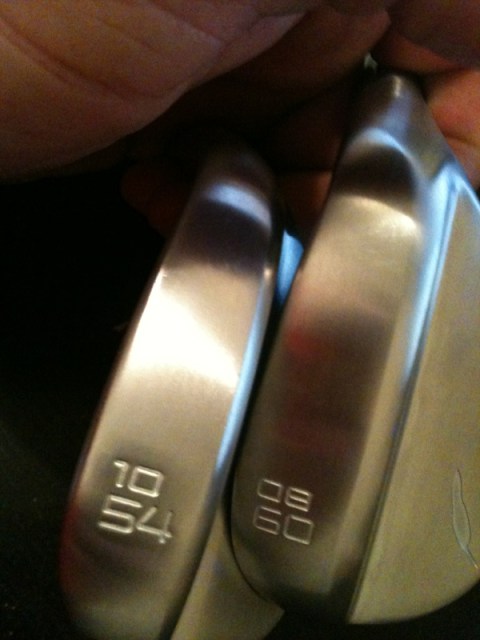

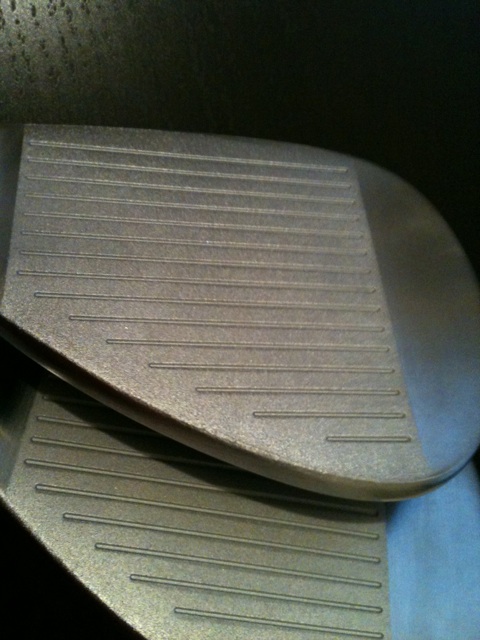

Yes, those are the same clubs. I couldn’t believe it. Jim did a fantastic job. Not only do they grind out all of the dings and dents to make the soles smooth again, Jim adds back the requisite chrome to keep the head weight the same as when they came in.
Drawbacks, they weren’t super cheap, but they weren’t expensive either. At $38/head to regroove, restore, and rechrome (shipping included), I can’t really complain. I will say that I believe I asked at one point for bright chrome and I believe I received satin chrome, but I am not concerned: these look great, and bright chrome may been a bit too reflective for wedges. The last thing is that Jim sends all his orders out with signature confirmation. Since I wasn’t there to sign for the box, I had to go to the post office to get my box, which was a hassel given that it’s nearly Christmas.
However, the communication was great, and the final product was beautiful at a reasonable price. I’m very happy, and I’m looking forward to getting out there with these.
Price: 7
Value: 9
Communication: 9
Customer Service: 7
Quality: 9
Overall: 8
Merry Christmas
December 24, 2011
From us here at the PF, we wish you a merry Christmas.
-JK & LG
Review: Black Oxide Service (BOSgolf.com)
December 19, 2011
Today I review Black Oxide Service, provider of metal finishing services. bosgolf.com
BOS is well-known in the golf industry–particularly in the putter world–for their outstanding finishing of some of the best-looking clubs in the game. BOS is responsible for the finish of Scotty Cameron’s original Gun Blue Classics line of putters, the line that put Cameron on the map. BOS also has worked on Scratch clubs recently, providing some special finishes for their wedges.
After tinkering around with the idea of refinishing/reworking clubs myself, I got in touch with BOS to clean up some Cameron putters for me. Consistent readers will know that I restored a Cameron TeI3 putter (see https://thepowerfade.wordpress.com/2011/03/16/restoring-a-tei3-long-neck/) but was unhappy with the cold-blue finish, even after several tries to get it right. Although I learned a lot from the restoration process, I decided I wanted something unique, so I sent my putter to BOS for their “Aquamarine” finish, a green-blue hued finish.
Coincidentally, I was able to pick up a Cameron Newport Oil Can putter for a good price. Although the putter did not need much work to repair dings or dents, its finished had been stripped because–according to the prior owner–“it had been left in a garage and was all rusty, so some stuff was put on it to take the rust off.”
Below is what the Newport Oil Can looked like before sending to BOS. Look at the post on restoring the TeI3 (here: https://thepowerfade.wordpress.com/2011/03/16/restoring-a-tei3-long-neck/)for photos as to what that putter looked like before.
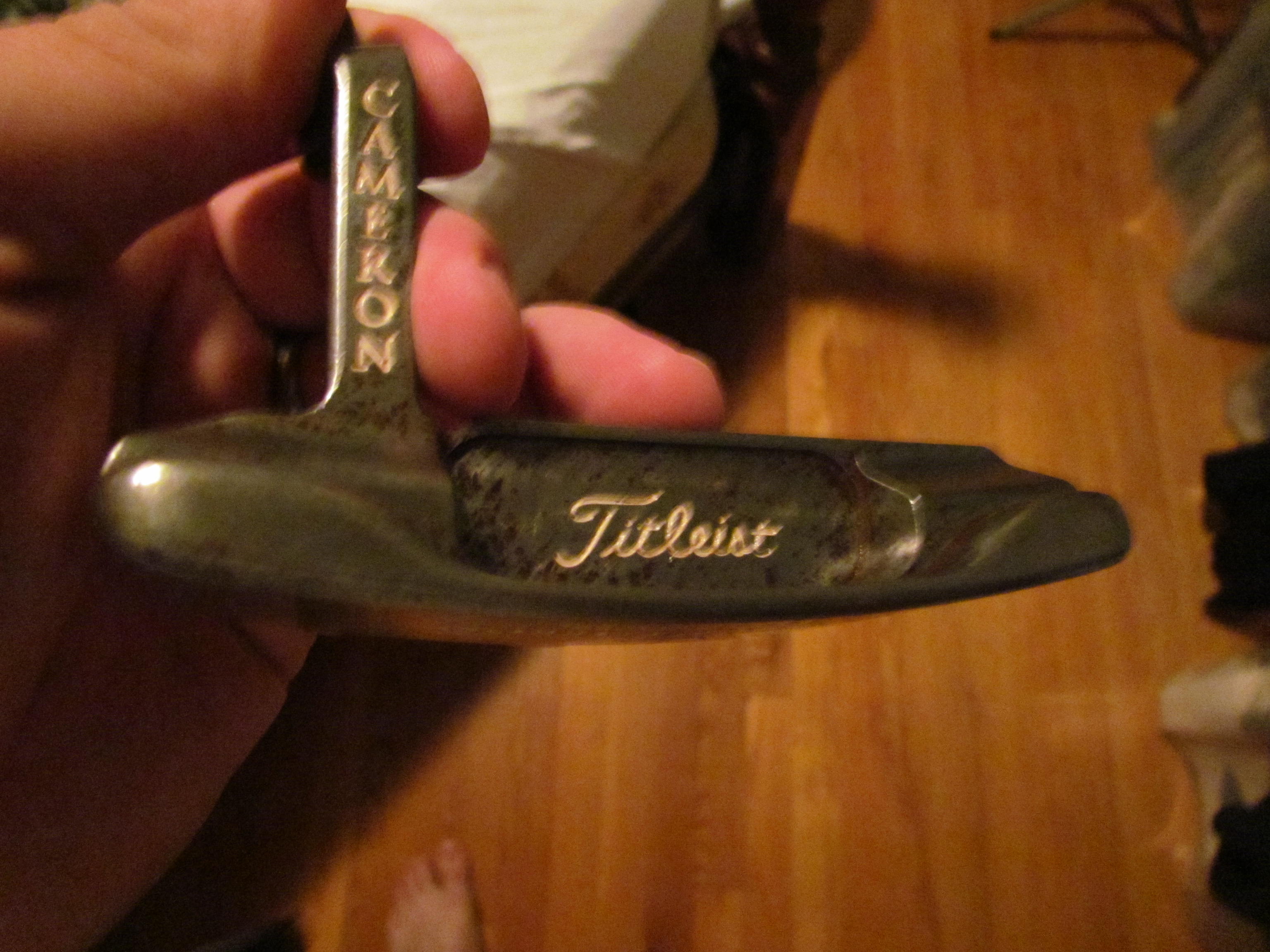


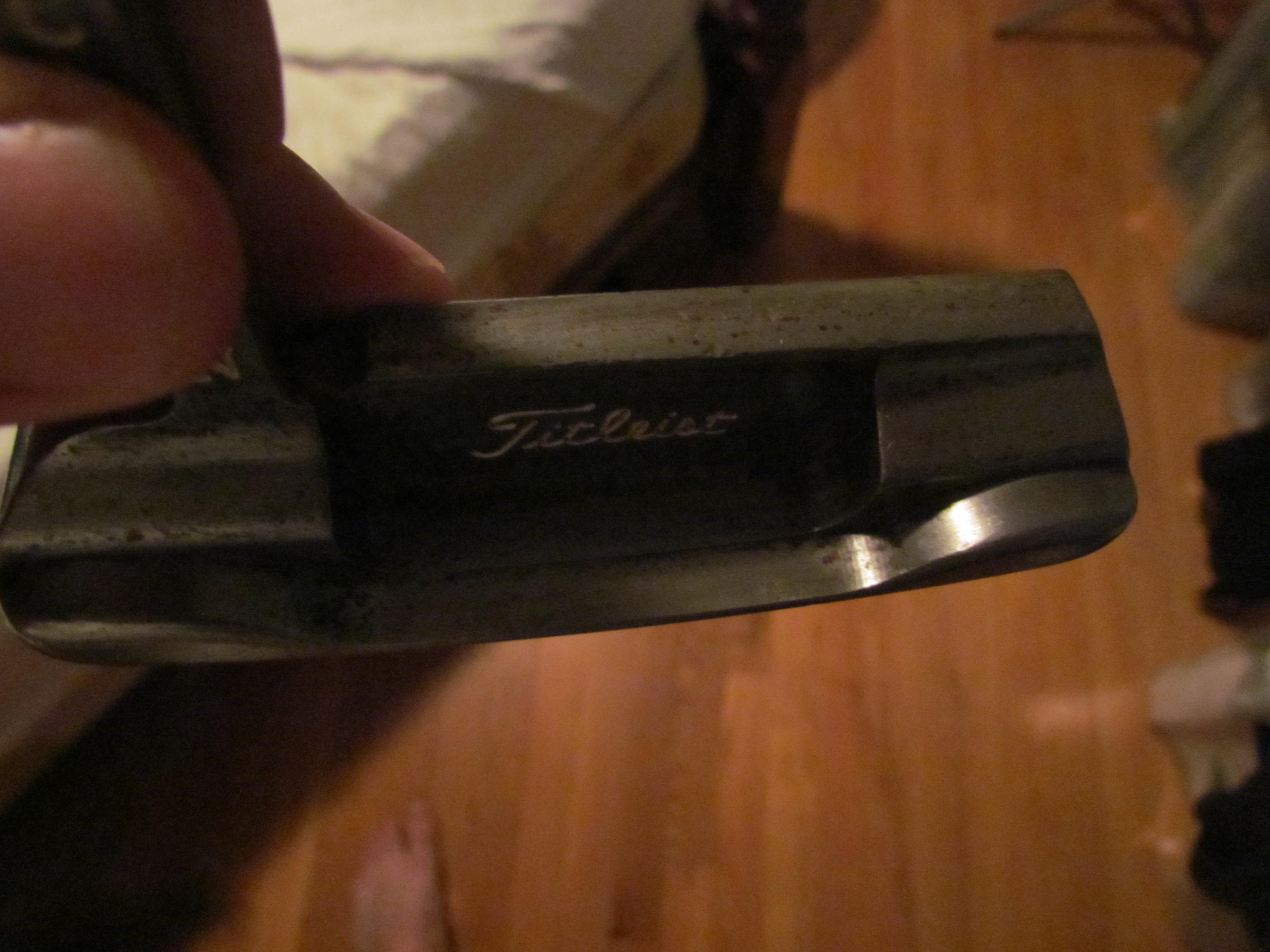
The result was utterly stunning:
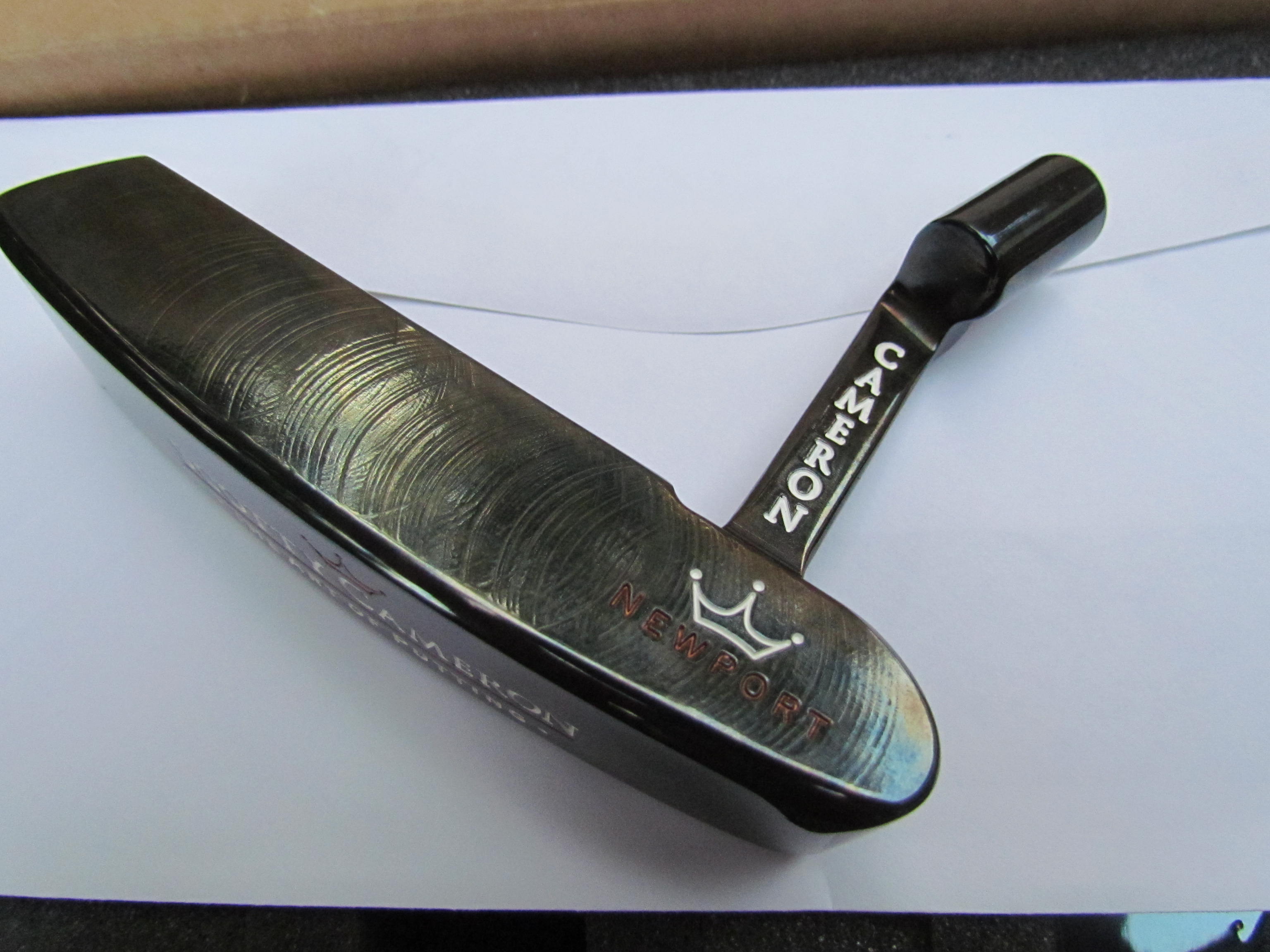
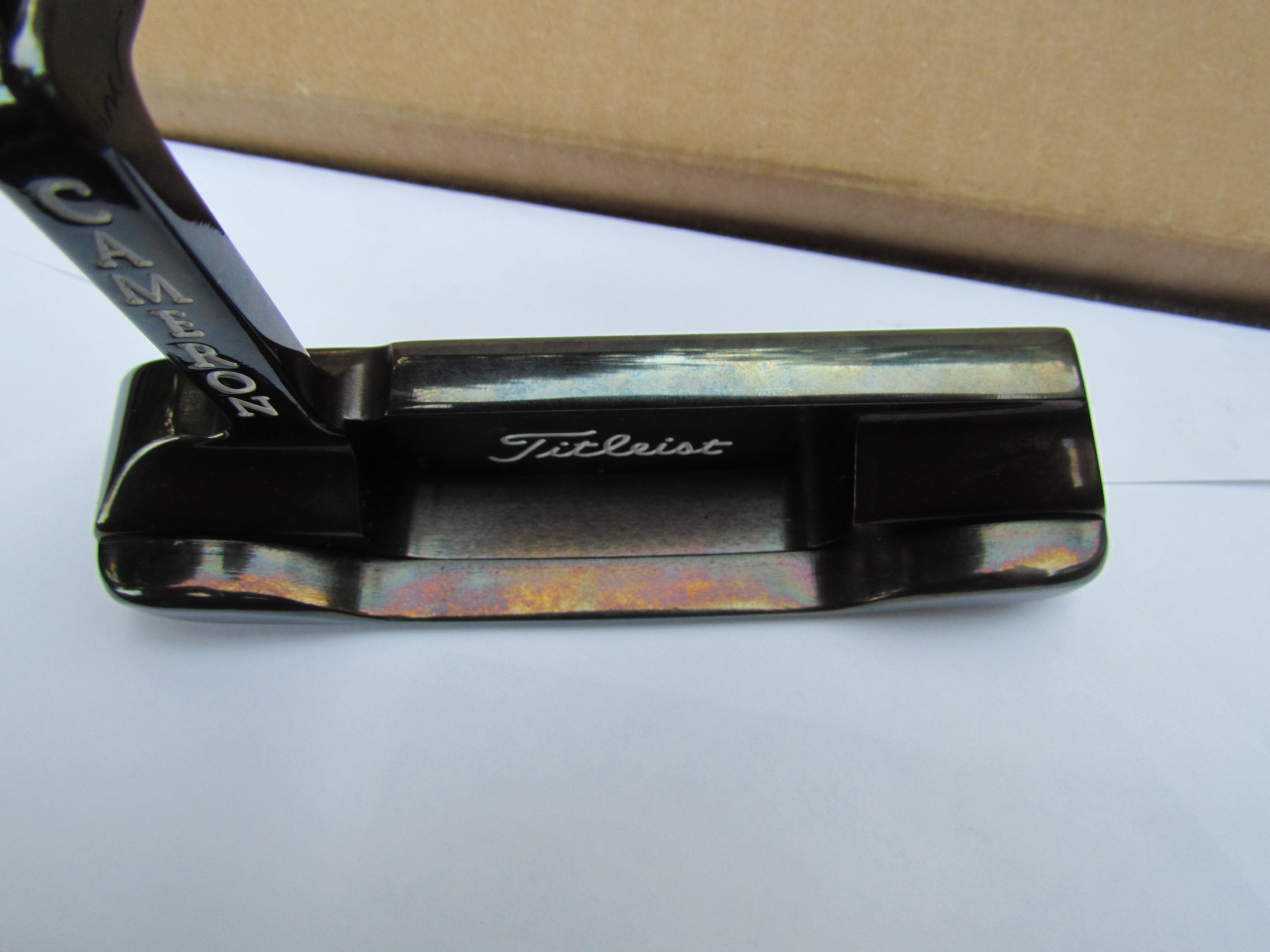
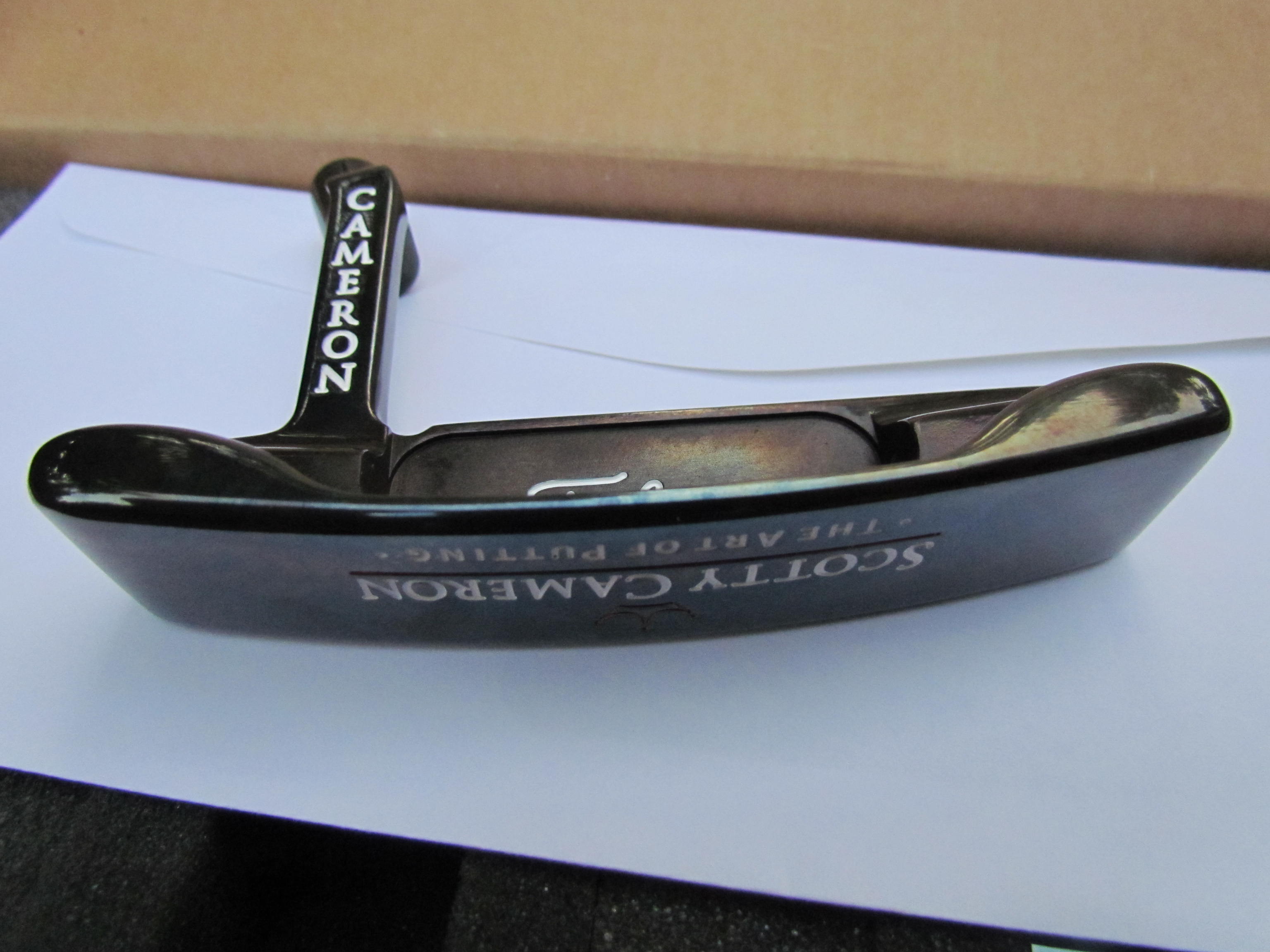

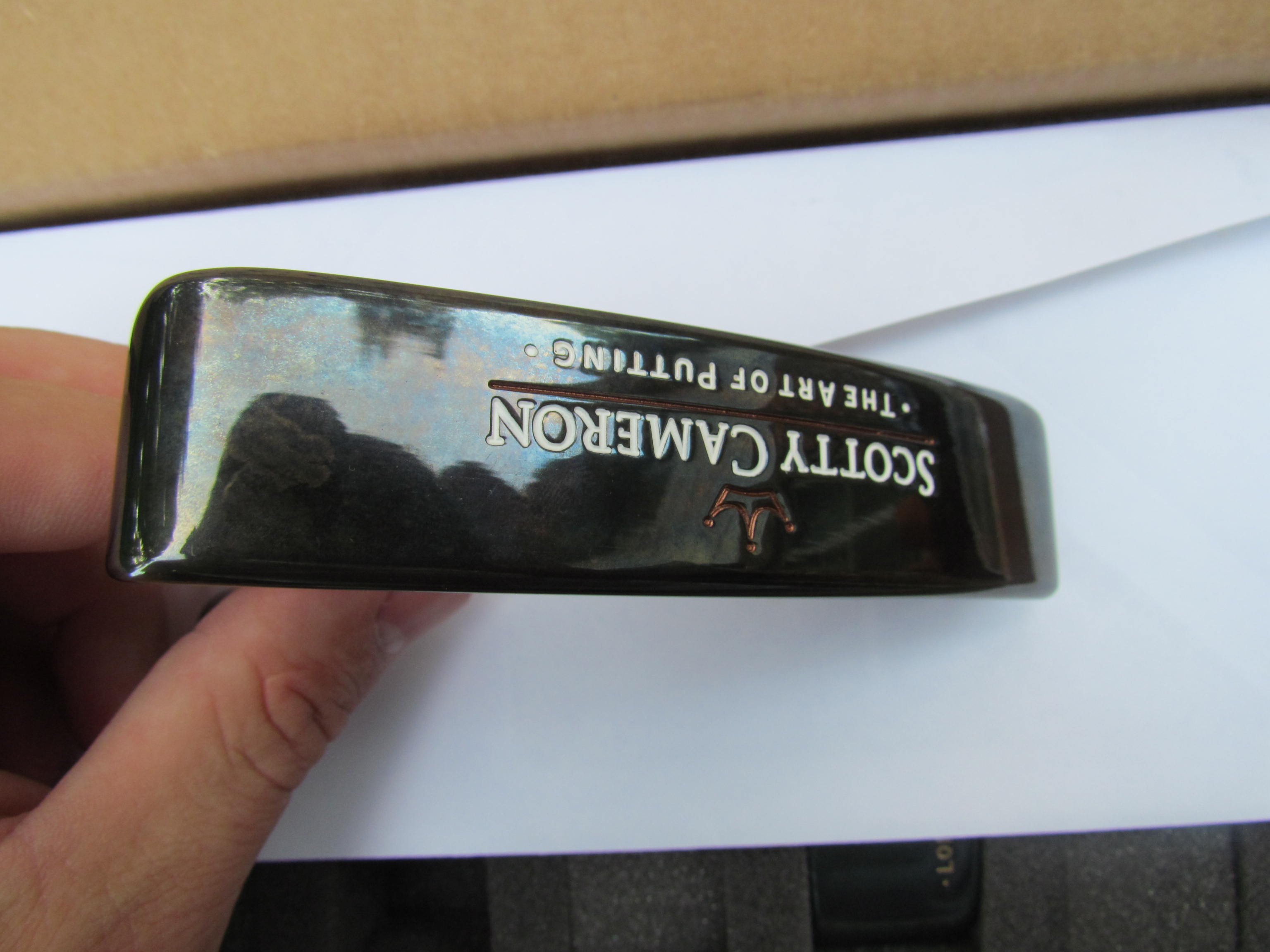
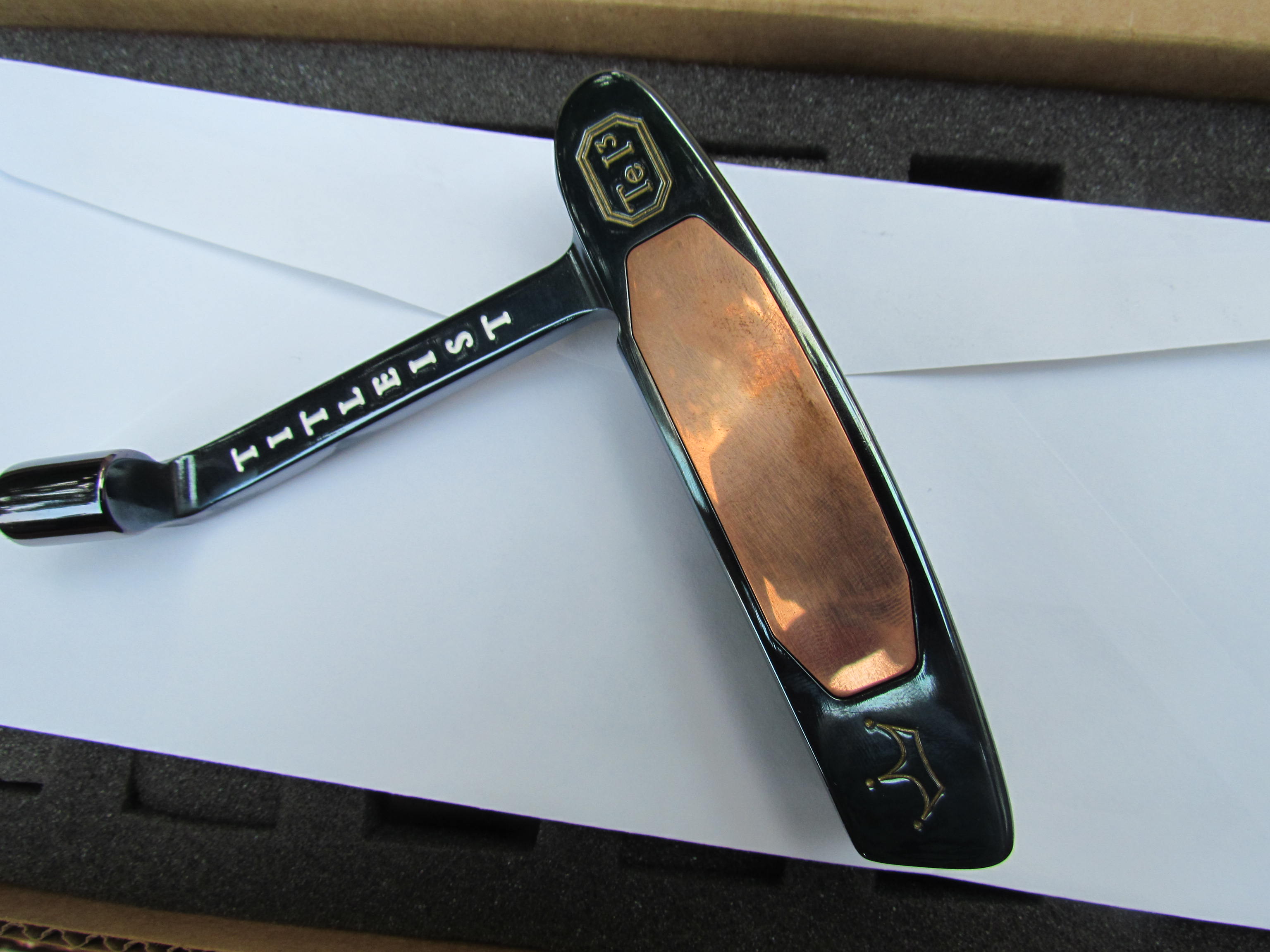
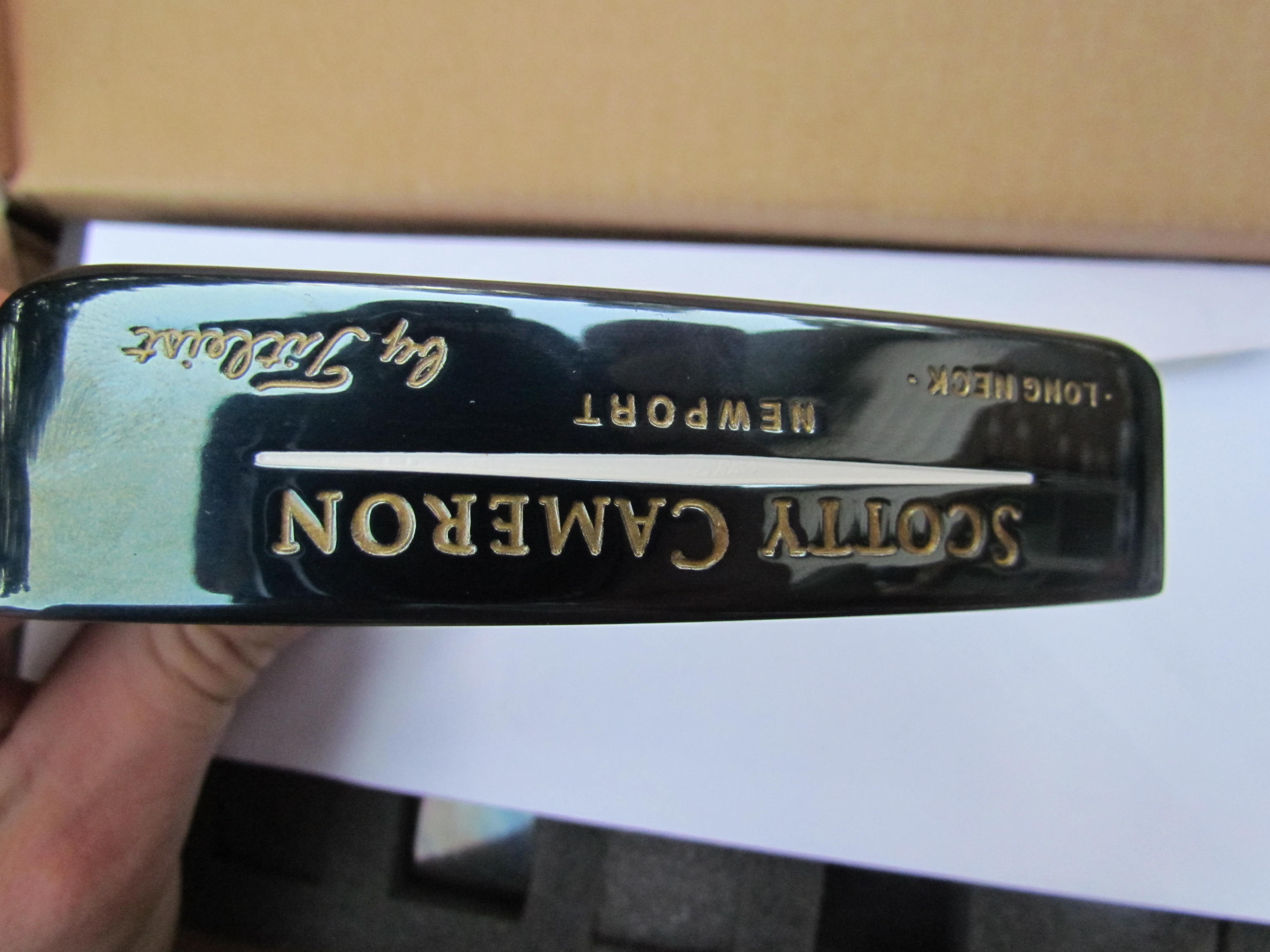

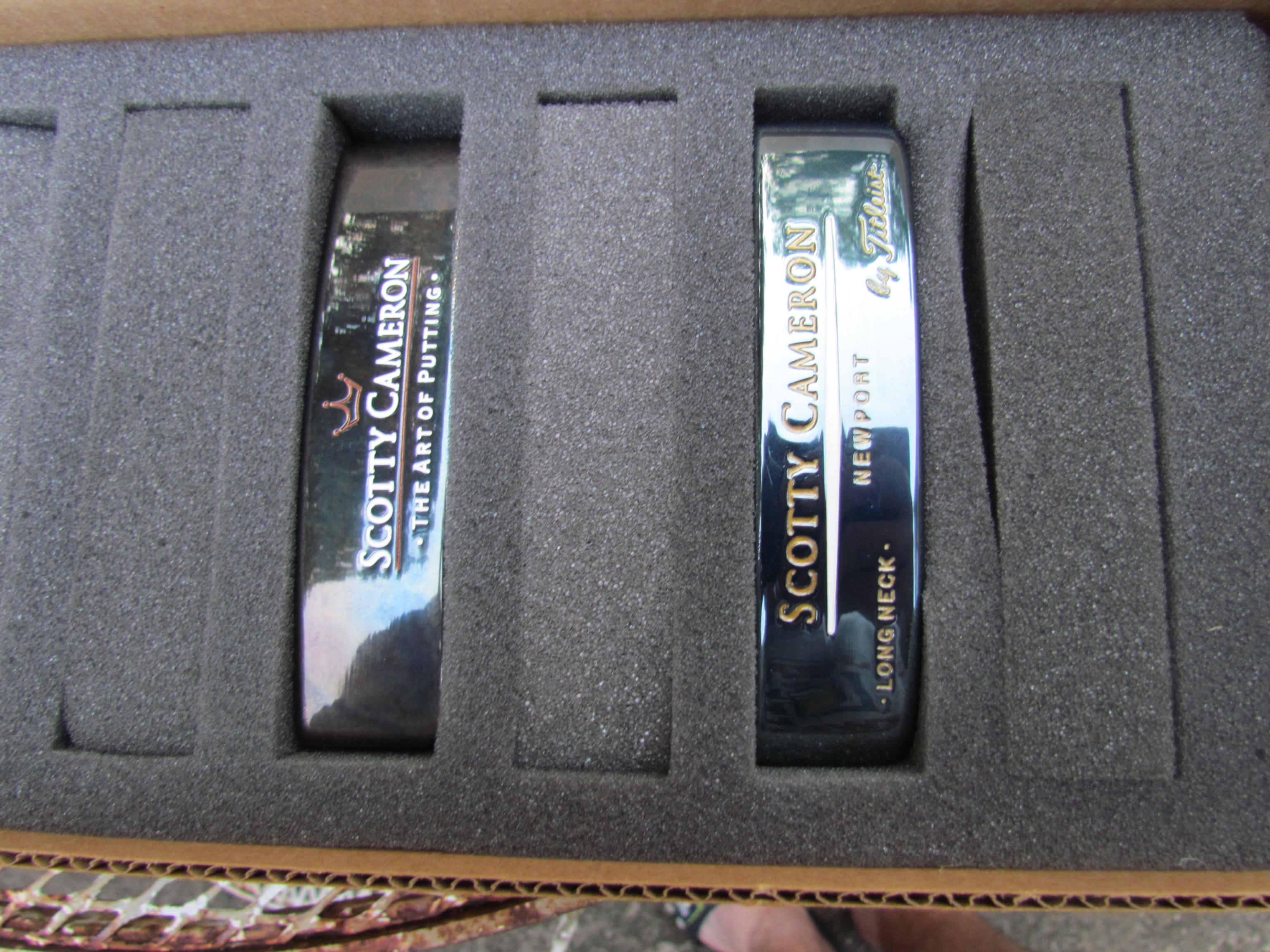

Refinishes from BOS are not cheap (see http://www.bosgolf.com/finishes.html) However, if you can find an old Scotty Cameron putter for a good price, they can be a cost-effective alternative to the Cameron Custom Shop and can even allow you the ability to customize the finishes yourself–putting something like Aquamarine on a Cameron putter would never be allowed from the Custom Shop. Further, if you just wanted a nice putter that was basically new but didn’t want to spend the $300 for a new Cameron or much more for an old one in good shape, a refinish by BOS can be a great way to get that putter of your dreams for a fraction of the price.
BOS’s customer service was great as well. For the TeI3, some of the finish peeled off. BOS repaired the problem at no charge, and it looks good as new.
Downsides, the cost is pretty high. They refuse to ship anything other than UPS, so shipping is $17.50 for a single putter head (yikes!). But their customer service is fantastic, and although some have complained of long lead times, they got my putters back to me in just a few weeks.
Price: 4
Quality: 8
Turnaround: 7
Customization: 8
Customer Service: 9
Ovarall: 7
Course Review: Poppy Hills Golf Course (Monterey, CA)
December 14, 2011
Today, we review the home course of the NCGA – Poppy Hills in Monterey, CA. One quick note about this course prior to the review: JK and I had planned on playing this course during our first trip to Monterey, but never got around to it because we were both exhausted after playing Spanish Bay. After this round, JK, I can tell you we made the right decision. Not because the course isn’t worth playing–it definitely is, but it would have kicked our butts and likely not been the ocean course experience we were looking for during this trip. Had the weather been like this during our trip though, there’s very little doubt in my mind we would have been out there. The pictures tell the story. Onward!

Poppy is a beautiful Robert Trent Jones designed course located in the heart of Pebble Beach. Driving there gave me a heightened sense of excitement as compared to the usual round of golf because the last time I drove down 17 mile drive, I was on my way to play Pebble. Rather than take the scenic drive down toward the water, however, the road twisted and turned back into the hills and opened up to this wonderful 18 hole facility.

The course, pro shop, and practice facility at Poppy are outstanding — there is very little I can say that hasn’t been said by the prizes that Poppy’s pro shop has won don’t already say. The layout is interesting and challenging. Some of the holes feel a little tricked up, but others are simply stunning. An example of the former is the par 4 5th hole. At 428 yards from the black tee, the hole’s principle defense is a giant bunker on the left side, water on the approach, and a subtly tiered green. The second shot is a demanding one, but for some reason, the man-made pond on the right makes this hole feel more contrived than natural. Call me critical. Full disclosure — I dropped one right into the middle of this lake after skying a driver short into the fairway. The par 3s on this course, on the other hand, were some of the best I’ve played in a long time. The second hole, on the other hand,was reminiscent of Pasatiempo with an absolutely enormous bunker short of the green. Below is a view from the green back to the tee:

And now from the tee to the green:

The scorecard shows just how stout a challenge this course can provide. My sense is that, despite its absence during my visit, the wind is a critical factor that brings the true teeth to this course on some of the shorter par 4s.

If I am being fair to myself, however, I must say I was disappointed. The biggest downside for this course may well be the fact of its location. Were this course near my home in the greater Bay Area, I have no doubt that I’d be the first in line to get a membership. Because this course is next to Pebble Beach, Spyglass Hill, Spanish Bay, Bayonet and Blackhorse, PG Muni, and a slew of private courses, however, it would not be even my 5th choice of courses to play if I were going to Monterey. When I think of a Monterey golf experience, inevitably, I think of cypress trees, ocean winds, and, well, the ocean!! While Poppy is a great course, the lack of ocean views, even on as clear a day as I had, sort of diminishes the experience for me. Knowing what I know now, I would be much more enthusiastic about returning to Poppy, but would have tempered expectations based on my previous experience. At $72 for the NCGA rate and complimentary gate access to 17 mile drive (normally $10), the deal is nearly impossible to pass up for a fantastic day of golf.

All in all, I enjoyed the day at Poppy. The weather was, pardon the phrasing, picture perfect. I couldn’t help thinking though, “man, I wish I’d gone to Spyglass with weather like this…”

Review: Club Covers by DelilaH
December 7, 2011
Today’s review focuses on a niche in the golf industry: customization. In this case, custom club covers.
That’s right, I said custom golf club covers. Although it sounds over the top, many golfers like to customize their bag. Your clubs should fit you like a glove–lofts, lies, grips, shafts, and more. Customizing the appearance of your clubs is an extra step many golfers take to stand out and to put their own personal stamps on the game they love. For example, looking at LG’s bag, he even has his own custom ferrules (see https://thepowerfade.wordpress.com/2011/07/01/whats-in-the-bag-lg-edition/ for LG’s custom blue ferrules, seen best on the photo of his wedges). And, would Tiger really have been as great without his notable friend, Frank?
Personally, I haven’t ever believed that I had a good enough game to customize my own bag–and, quite frankly, I didn’t have a good enough bank account. However, this year, I’ve settled into my equipment, and, as a Christmas gift to myself, I decided it was time to customize my golf bag. Having just had my second child, a custom club cover dedicated to my two children was what I wanted.
The first thing I needed to do was find someone who could make it. For that, I can tell you–look no further than DelilaH at GirlyGolfer (http://www.girlygolfer.com/CLUB%20COVERS%20MEN.html).
I emailed the contact information on the website stating I had an idea and wanted to make a cover dedicated to my children. Delila responded in no less than a week–starting with an apology for how long it had taken to get back to me!
Delila (the H is for her last name) contacted me asking whether I had a specific idea, which I did not. I pointed out a few things I thought would be important for a personal cover: (a) I wanted yellow to match my bag, which is generally yellow in honor of my alma mater, Georgia Tech; and (b) I wanted an elephant and a giraffe somewhere on the cover because those animals signify my two children. Maybe I would add my initials, but it wasn’t required. Within two days, Delila was back to me with three different design options with various pricing. After about a day of deliberation, I picked one of the options and offered a few tweaks.
Delila sent me an invoice which I paid the following morning. By the evening, I received the following picture of my completed club cover:
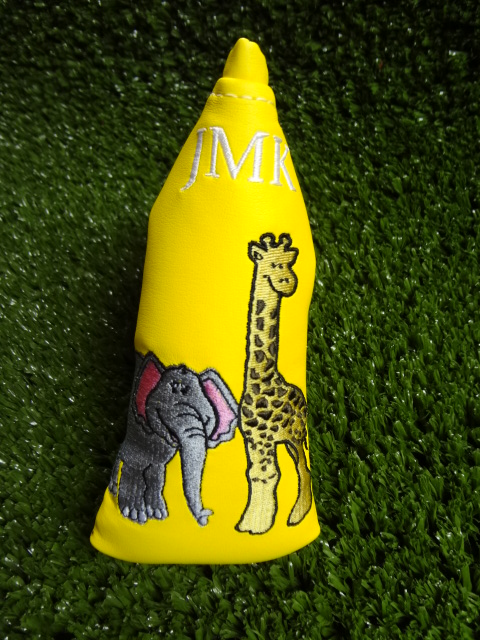
She boxed it for shipping that night, and I had it two days later.
Soup to nuts, from the “hey, I think I’ll get a custom club cover” to having the finished product in my hand it took Delila 10 days, and she was apologetic that it took as long as it did!
All of my reviews have a drawbacks section to highlight at least one thing I did not like about the process, the course, the application, whatever. The only thing I can say was a drawback was cost. As with any customization, the cost will not be a bargain. The custom cover shown above was $70 shipped ($64 for the cover + $6 shipping). However, Delila did an excellent job conceiving the design, making it, and putting it together, and it is an extremely high quality cover. I cannot complain about $70 for all of that work that she did. Some of the seams are not 100% straight and aligned, but I expected some variation as the covers are sewn, not mass-produced, and the small “imperfections” that might bother some purchasers give it the custom-made look that I prefer.
Altogether, I got EXACTLY what I wanted: a custom-made cover that is exactly my style and is the perfect accent to my golf bag (look for it in my upcoming What’s In The Bag post). The process was unbelievable, quick, and I could not envision it running any smoother than it did. Thanks, Delila!
Turnaround: 9
Design(s): 10
Quality: 9
Communication: 10
Price: 7
Customization: 10
Overall: 9
Fail of the Week 8
December 5, 2011
It’s been awhile since we pointed out the failing of society. With all of the governmental fails distracting us from sports-related fails, we haven’t had any items we could add to our blog (we do not discuss politics). But, this week, we can finally end that streak.
This week’s FAIL is the BCS. Shocker, right? Try not to get too emotional about this one.
For all the heat that the BCS has taken over the years, I have largely been a proponent of it over a playoff. The reason I have defended the BCS is that college football has the greatest regular season of any sport anywhere. If a playoff were instituted, in my understanding, it would destroy and devalue the regular season. The most beautiful part of the college football season is that one, maybe two, maybe three weekends a year where the latest “Greatest Team of All Time” loses to some unknown, some huge underdog, or some rival, effectively ending that team’s national title hopes. Although it’s not a grid, the regular season is a national championship playoff because, just like a playoff, one loss can take you out of the hunt permanently. By and large, the BCS gives us a matchup that we want–maybe not THE matchup we want, but at least one better than the old split championship system with bowl allegiances for certain conferences (e.g., Nebraska and Michigan splitting national championship honors in 1997 because Michigan was forced to play in the Rose Bowl). And, in the end, the national champion is usually a team that everyone agrees on (except for the AP splitting from the BCS in 2003 to give the championship to USC instead of BCS winner LSU – see http://en.wikipedia.org/wiki/College_football_national_championships_in_NCAA_Division_I_FBS for references).
But this year, the BCS has failed. Well, I should caveat–it’s not the BCS that has failed. It’s the implementation of human polling in the BCS that has failed.
This year’s BCS national championship will feature a rematch of a great game from the regular season of college football, LSU and Alabama. Both teams are defensive juggernauts, Alabama’s only loss coming in the overtime game against LSU. Indeed, people were pitting these two teams for a national championship rematch even before the first game was played.
And that, my friends, is precisely why it SHOULDN’T happen.
By putting LSU and Alabama in the national championship game, we’re saying three things that are completely antithetical to the BCS working at all. First, we’re saying that the first game didn’t matter. If you can play a team, lose the game, and then play that same team again for the championship, it means that the first game didn’t matter. for all the hype and hooplah about the “Game of the Century,” at the end of the day, it didn’t even matter! The result would have been exactly the same had the game not been played or had the outcome been the opposite, with Alabama beating LSU! There are 119 FBS teams that each play between 10 and 12 regular season games. There is no way all of those teams can play each other in a meaningful way, so why do we have games on the schedule that don’t matter? Why did we play this first game? Basically, we’re saying that Alabama deserves two bites at the apple while another team (Oklahoma state) never gets a shot. Moreover, it actually penalizes the winner of the game because LSU had to go play the SEC championship game–which it might have lost, a la Oklahoma and Nebraska losing (in different years) several years back while Alabama could sit on their couch and wait to be named a competitor for the national championship game. And even though Oklahoma State destroyed its rival Oklahoma–which is a solid team and one that OK State has not beaten in years–there is effectively nothing they could’ve done to get into the game.
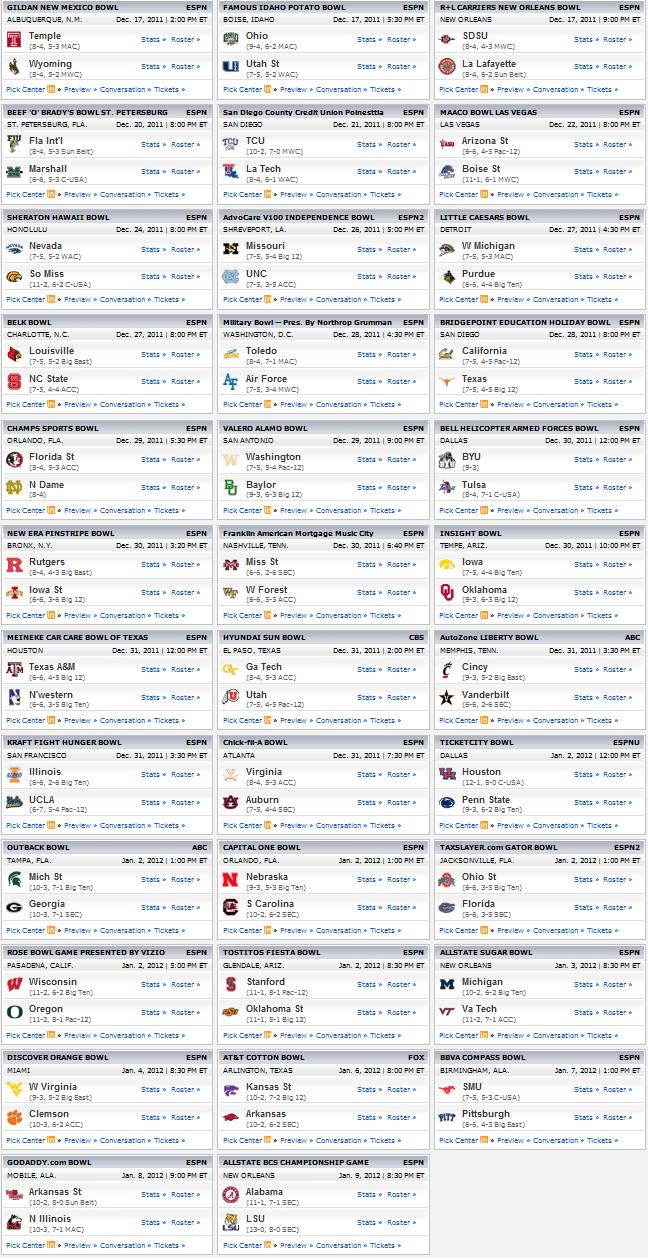
Second, it means that no conference other than the SEC matters. It goes against what bowls are about, which is pitting conference against each other. Yes, LSU beat West Virginia and Oregon, and Alabama beat Penn State in non-conference play. But Penn State didn’t win its conference, West Virginia won its conference but is in what is probably the worst conference in America (and I’m including the MAC and the Mountain West in that analysis), and Oregon won a conference championship over a UCLA team that went 6-7 and only managed a streak of two wins in a row! Non-conference schedules are really not the point I’m trying to make here–really, it’s about the bowls. The whole purpose of a bowl game is to match conferences that we don’t see playing each other. The reason that the Rose Bowl always matched the Big10 champion against the PAC champion is that those teams NEVER played each other. And that is how all bowls are supposed to be–a matchup to see how the conferences would fair if they played against each other in games that we rarely see. However, we see LSU and Alabama play every year! Look at the list below of this year’s bowl games. The ONLY one that includes teams from the same conference is the national championship game.
The final problem is that you are giving a team that didn’t win it’s own division of a conference–let alone the conference itself–a chance to call itself the champion of the whole nation. I fail to see how it’s reasonable to say you are not the champion of your own league but, at the same time, you’re the champion of the world.
This actually is not a problem of the BCS itself. Looking at the chart below, 6/8 computers ranked Oklahoma State ahead of Alabama.
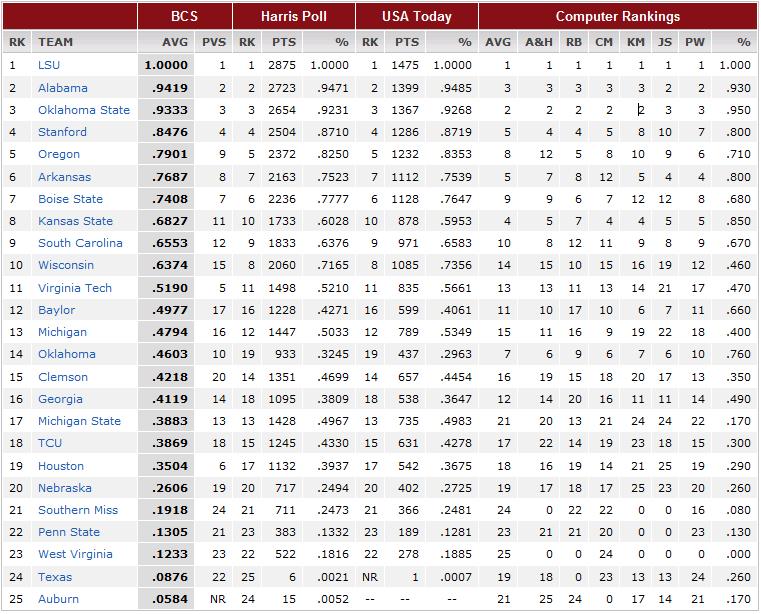
The problem is, both human polls ranked Alabama ahead of OK State. Why?
I get a lot of answers to this question. None of them convince me that this is the right matchup. A few are highlighted below, with responses:
I want to see a matchup of the two best teams, and Alabama and LSU are the two best teams
Really? How do you assess that? Are you omnipotent? Or is this just your opinion? I have a bunch of computers that tell me OK State is a better team than Alabama. I’m pretty sure computers don’t have any single conference bias.
Here’s what I know: I’ve already seen LSU and Alabama play, and LSU won that game. I haven’t seen OK State play either of those two. Does it make any sense at all to see LSU and Alabama play–which we’ve decided on the field already–instead of seeing OK State play LSU, a matchup we haven’t seen yet. Yah, OK State may get destroyed by LSU, but at least we wouldn’t be sitting around wondering if they could beat LSU. We already know Alabama can’t–in fact, DIDN’T! Why do we need to see that they can’t again?
I’ve got a great idea–why don’t we just scrap the entire season. Take LSU and Alabama and have those two teams play every week. Forget about who wins each game. Just take the last one, and whoever is the winner will be called the national champion.
Oklahoma State’s defense is terrible
Alabama’s offense is terrible. Who decides which is more important? Last time I checked, the game is about scoring more points than the other guys, and OK State scores A LOT OF POINTS.
Oklahoma State lost to unranked Iowa State in overtime. If they wanted to be in the national championship game, they should’ve won that game.
While it may be true that OK State would be a lock for the national championship game had they beaten Iowa State, the same goes for Alabama–they would be a lock if they had beaten LSU. Now I know you’re going to tell me that LSU is better than Iowa State, and that’s definitely true. But OK State lost in double overtime on a call that kind of screwed them. It was on the road in a hostile environment on a night when things didn’t go their way, and right after learning that a prominent coach had died tragically. Alabama lost at home by missing four (not one, not two, not three, FOUR) field goals in the game against LSU. Those comparisons at least balance the losses a bit, if not tipping in favor of OK State.
But the caliber of the opponent to whom a team lost should not be the determining factor for all things. The caliber of the teams that you beat should also matter, and OK State beat great teams (Baylor, Texas–heck, even Oklahoma is ranked 6th by the computers with three losses!). The fact that OK State won its own conference (Alabama didn’t win its own division) should count for something as well. They have a great QB, they have the top WR in the country, and the body of work they put together is more deserving than Alabama. While that is opinion, it’s the only way this thing can work.
So, to the BCS, we solute you. You FAIL, and this time, you’re failing one of your biggest supporters.
Play of the Week 28
December 4, 2011
This week, the PF salutes Tiger Woods. Winning again is one thing, but to win as Tiger did was, well, Tiger-esque. Down one shot going into the final round to the mind-numbingly consistent (and boring) Zach Johnson. Grinding it out one hole at a time. Drawing even on 17 with a clutch 15 footer for birdie. Smashing an iron passed Johnson on 18 and draining the 6 footer to put away the W. Hell yeah. Golf in December, baby! Are you watching this? We are. Congrats, Tiger.

Conversation: Putter Lines
December 2, 2011
LG and I have debated this subject before, but it’s time for us to have one of our famous on-line debates.
This time, we’re talking about putter lines. Not just a line on a putter, but all the different ways lines can influence putting. From sight dots to cavity lines to naked look putters all the way to lines on a golf ball, players have preferences on how they sight up their putts.
Putting, although the simplest physical task in golf, can be one of the most frustrating mental tasks. A golf ball is 1.680 inches in diameter. A cup is 4.25 inches in diameter. If we assume that a typical “makeable” putting range is up to fifteen feet, understanding the difficulty of putting becomes clear. If we say the “object” to be shot is a golf ball, a person putting a golf ball must attempt to hit a target roughly two and a half times larger than the object from distances ranging up to 110 times the size of the object. Moreover, there is no one single way to do this. The pace at which a golf ball is putt greatly affects how much break it will take between the starting point and the hole–a softly hit putt taking more break than a firmly hit putt. Moreover, there are numerous variations on putter head shapes (blade, Anser-style, mallet, cavity, heel shafted, centershafted, plumber’s neck, flow neck, face milling, etc.), and even the putting stroke can vary (swinging gate, straight-back-straight-through, inside and then down-the-line). As such, we understand no one method will work for everyone, which is why want to show our own views on how lines affect putts.
JK’s View:
For years, I had a putter that was an Anser-II style. It had a squared look and a line on the flange, a plumber’s neck, and offset, much like the photo below. The putter was a beautiful specimen, one that I really treasured. I was proud of it and took great care of it. The putter felt great, and the ball coming off the face was like butter. There was just one problem.
I couldn’t putt for crap.

I broke down in 2004 and bought an Anser-style putter with no sight aid of any kind. The putter had flowing lines instead of a squared look. See the photo below of the Newport Beach, which was my gamer for many years. My putting improved, but I was never a truly great putter.

Although I loved the feeling of my Newport Beach, I didn’t realize how out-of-whack my putting stroke was until LG showed me how to putt with a line on the golf ball. I’ve always known that I was a swinging-gate stroke putter, but I didn’t realize how much I was cutting across the ball until LG showed me the ball with the line. On every putt I made, the line would flip over and skew. I had to work very hard to get the ball to roll end-over-end.
Eventually, I did learn how to roll the ball end-over-end. It turns out, this is all I really needed to become a decent putter. I have been around the game long enough to be able to read greens. My putting was suffering not from poor alignment or poor understanding of pace and line but rather from an inconsistent contact with the ball that could not have been detected without the aid of the line on the ball. I still use the line today, and I putt on average around 30.5 putts per round, which I’m very happy with.
When I got my custom putter made (see https://thepowerfade.wordpress.com/2011/05/02/review-sunset-beach-golf/), I got it without a sight line. Why, you may ask, would I get a putter without a sight line if a line helped my stroke so much? The answer is a little counterintuitive.
Although a line on the ball helped me, a line on the putter does not. The line on the putter distracts me from the ball, which is the true focus of my attention in the stroke. I start thinking about what the line is doing. If the line is ever not pointed at the hole, for some reason I get nervous. So, when I’m swinging, I actually tend to manipulate my hands subconsciously to get the line “correct.” It leads to inconsistent contact with the ball because, in my view, the hands should not move at all in the putting stroke.
More importantly, however, I reasoned with myself that a line on the putter does not help me, flat out. No club in my bag has a line on it. From driver down to PW, nothing has a line on it. Yet, somehow, I am able to line up the ball with a target hundreds of yards away and, more often then not, hit it pretty close to that target. Why, then, would I need a line on my club to aim a target a few feet away?
I understand that putting is largely mental, and I have had many friends and fellow-golfers tell me that there is no way they can line up their putts without a line on the putter. I understand that sentiment, but few of these people are what I would call good putters. To me, the game is easiest when it is made simplest by the player. In the golf swing, instead of thinking about rotation and placement of the hands in the backswing and plane angle, it is best if the player looks at the ball, lines himself up, and trusts that his stroke will work. Instead of picking a line on the golf course that requires a high draw to a tight fairway, pick the place that it doesn’t matter what flight you get and hit it confidently at that spot. It just makes sense that way to me. Thus, when viewing a putter, the one with the simplest setup that does not distract me from what I am trying to do is the best.
Moreover, some recent research by Bruce Rearick at the United States Golf Academy shows how lines affect the average golfer:
At the United States Golf Academy we have measured over 30,000 putting strokes – about 2000 players on our PuttLab system.
92% perform better with their eyes closed during the stroke. (Elimination of visual interference)
Less than 40% can aim the putter within 2 degrees of their chosen target with an alignment aid on the putter. (Putt missed at 12 feet) This improves to 70% without the visual references on the putter.
Only 60% can match the line on the putter to a line on the ball (within one degree). It is much worse when the sight line is in the cavity behind the face. The number improves to over 90% when there is a line on the ball no line on the putter and they square the face to the line (again within 1 degree).
If 90% of people can line up one way, to me, that is the easiest way to go. That also happens to be the way that I use lines when putting. And, lately, I have become a “good” putter.
What say you, LG?
LG’s Response:
Actually, JK and I are not that far off from one another. At the end of the day for both of us, putting is all about confidence and making a good stroke. We both believe (JK because I proved it to him) that a line on the ball is the best diagnostic tool for learning about an individual putting stroke. We both believe that the only way the ball has a chance of going in the hole is if the person striking it believes it will go in the hole. In fact, I’d argue we both believe that, whether there’s a line on the putter or not, a person will putt best with whatever putter he or she thinks will make the putt. However, this would not be much of a debate if I did not engage JK on this point. Before I do that though, here’s my putting background:
I consider myself to be a good putter (at least when my head is on straight), and I think JK would agree that I probably putt better than the usual 9 handicap. From my first 33″ Studio Style to my beloved 35″ Monterey to my most recent 35″ spider ghost, each and every putter has an alignment line. This may have been a product of circumstance because every putter I had ever tried before buying my first one had a line on it. I simply felt more comfortable looking down and seeing a line on the putter. JK’s own story about why he got rid of the line suggests that he got rid of his because he lacked confidence in his putting and thought a change would benefit him. Conversely, I always focused on getting good, end-over-end roll with my lined putter and lined ball, and was able to do so very quickly because I had ample time to practice in law school. As a result, I developed confidence with a lined putter because I saw that it produced the roll that I desired. Now, onto the argument.
I think the statistics JK cites are misleading. As an initial matter, we don’t know how these tests were conducted. All we know is that some people missed 12 foot putts. Were these straight? breaking? Moreover, were people told that the test was to determine whether a line on the back of the putter helps? I think this might have people focusing on the wrong things, and as you so adequately put it: “Putting, although the simplest physical task in golf, can be one of the most frustrating mental tasks.”
Anyway, Let’s take each in turn:
92% perform better with their eyes closed during the stroke. (Elimination of visual interference)
“perform better”?? What does this even mean? They holed more putts? They got better roll? They had better alignment? They could read a break better? Does this mean I should be putting with my eyes closed, JK?
Let’s assume that “perform better” actually means something. The fact that their eyes were closed does not go to show that the line was the problem, or that the lack of a line helped them putt any better. Did this person line the putt up with the putter, close their eyes, then putt? If so, that person probably made a freer stroke and was less attached to the outcome of the putt because “my eyes are closed, I should miss this.” It seems more likely to me that this person had a clearer mind because of the lack of visual interference than better alignment due to a putter he or she could not see. I would also argue that the putter without a line is just as much of a visual distraction as a putter with a line because putters have lines on them even if they are not alignment lines. The brain subconsciously aligns these to the target even if the conscious brain does not try to line up a particular line with the target.
Less than 40% can aim the putter within 2 degrees of their chosen target with an alignment aid on the putter. (Putt missed at 12 feet) This improves to 70% without the visual references on the putter.
Even the way this one is written suggests an improper test. So people were given a lined putter, missed a putt, then were given a putter with no line and made the same putt? I don’t know about you JK, but if I get two cracks at a putt, the second one is almost always better than the first one. Even if the test was in reverse or with different putts for each putter, the aim at the target line is not what’s important. It is the confidence that the aim inspires to make a good stroke that matters. I don’t really think it matters whether I can’t set the putter down within 1 degree of my intended line; what’s important is that the stroke that I make be on my target line. I’m also wondering how “aim within 2 degrees” is measured when there is no line on the putter? Are they using the angle normal to the face? Are they doing this at impact? Are they measuring how far from the center of the hole the ball ends up and drawing the triangle back to the point where it started? This seems less than scientific without some context.
Only 60% can match the line on the putter to a line on the ball (within one degree). It is much worse when the sight line is in the cavity behind the face. The number improves to over 90% when there is a line on the ball no line on the putter and they square the face to the line (again within 1 degree).
I think this statistic misses the point. Again, the point is what the line looks like at impact, not what it looks like at address. If that same putter pulls the line dead on at impact, they are making a good stroke. You need look no farther than Billy Mayfair for an example of a putting stroke that starts off line and pulls straight through to impact.
Additionally, as a general question to test the validity of what these statistics show, if any of these things mattered to getting the ball in the hole, why when I go to Golfsmith or in the bags of my playing partners on any given weekend do I find that the vast majority of putters have some kind of alignment mechanism on them? If it were true that the ability to line up the putter to the target improved 90% without the use of such alignment aides, and that actually impacts whether the putt will go in the hole, then why aren’t the vast majority of putters sold ones that have no alignment aides?
Finally, I think this debate sort of misses the point. We have talked a lot about the proper mechanics of putting, the psychological aspect, and our views on the way equipment should look, but at the end of the day, the best putter is the one that gets the ball in the hole. My question above demonstrates, I think, the fact that as long as the putt can be made consistently, things we have talked about really don’t matter. It doesn’t matter if it goes in with the line on the ball spinning skew or end-over-end. All that matters is that the ball went in. There are no pictures on a scorecard, and certainly no birdies for perfectly struck putts that roll end over end that burn the lip and slide 3 feet passed the hole.
Any reply, counselor? (local rules limit you to one paragraph).
JK’s Reply:
Your point is, of course, well-taken. The ultimate point of this discussion is to give readers an idea of different things to think about with respect to putting lines. When that person finds what works for him or her, they should definitely stick with it. And I see your point on the statistics as well. Statistics are certainly dependent on the testing method, and there is no way to verify that a particular test matches your own definition of a correct measurement unless you do it yourself.
However, I think the overall point of the test is clear, regardless of whether it meets your definition of a correct measurement. The point made is that visual interference with a putting stroke can (not necessarily does, but can) have the effect of distracting the golfer from what is important in the putting stroke–i.e., getting the ball rolling on the correct line. That visual interference can take the form of a line on a putter. To me, a stroke like Billy Mayfair’s illustrates my point about lines rather than yours. If Billy Mayfair were trying to focus on lining up the flange line of a putter with the intended line of the ball, he would invariably fail to get the ball going on the intended line. His “cut stroke” relies on timing, and the line on the putter would take his focus away from that timing.
Below is illustrated a D-plane stroke for which a line would be terrible.
See also, a discussion of putting stroke and a reference to Mayfair: http://puttingzone.com/MyTips/path.html. And, a discussion of the “Cut Stroke” Mayfair used: http://www.better-golf-by-putting-better.com/cut-stroke.html
Moreover, I would think someone as intelligent as you would know that the argument about the omnipresence of putting lines is not a valid one. Just because everyone in the world is using one method does not make it the best way. Many golfers have the latest drivers in their bags because they think longer drives mean lower scores, but the average male handicap hasn’t changed in 30 years. Many golfers now use game improvement irons, but it’s not helping them hit the ball more accurately. Most golfers have a putter that they picked up at a Golfsmith or a PGA Tour Superstore. Their putter was one of a few options on the wall that they thought was a decent price for what they got. Few–if any–of the average weekend golfers go above and beyond to figure out what else is out there–they simply choose an option from what is presented to them. However, if you go into one of those stores, you would be hard pressed to find even one putter on the rack that doesn’t have a line on it somewhere (I know because I’m always looking). It’s pure statistics: what the putter manufacturers make overwhelmingly has a line on it, therefore, what people buy is more likely to have a line on it because few people are informed enough to choose a putter without a line. If there’s anything I’ve learned over the past few years of researching golf and blogging, it’s that the OEM companies make whatever they think the public will buy, not necessarily what is the best product. The vast majority of people who own a driver have the “Taylormade R9 Shaft” or the “Made for Titleist VooDoo.” Does that mean that those are the best shafts you can get or what those people should be using? Of course not. Those shafts are crap; you and I know it, and the ignorance of those people doesn’t change that. Most people think chicken soup helps you during a cold; it’s been scientifically proven that it doesn’t. The majority of people thinking chicken soup is beneficial doesn’t make it so.
We always advocate that golfers use whatever is best for them. What I advocate is that those golfers think about what a line on the putter means, try to understand their own putting strokes, and then make a conscious effort to try out various putter styles and figure out what really does work best for them. I think Wilson 8802-style putters are beautiful, but I can’t hit the broad side of a barn putting with one. LG, you just tried a putter that looks like the Starship Enterprise, but you were willing to use it if it got the ball in the hole. That is what I am hoping golfers will do–think critically about what is best and try things that seem unorthodox just in case they like it.
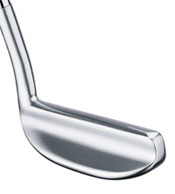
Wilson 8802:
LG’s Project Putter:

USS Enterprise:



 The Power Fade Golf Blog