Fail of the Week 1
April 30, 2011
As an appropriate counterpart to our ever popular “POTW,” we humbly introduce the Fail of the Week.
In his Nationwide Tour Debut, Former Atlanta Braves Pitcher John Smoltz missed the cut at the South Georgia Classic by, not 1, not 2, not 3, but 27 strokes. He backed up his opening round of 84 with a gentleman’s 87. Sorry, John, but they count all the strokes out on the tour.
http://sports.espn.go.com/golf/news/story?id=6456512

Course Review: Shoreline Golf Links (Mountain View, CA)
April 12, 2011
As JK mentioned in his previous post about Southland, our goal at the PF is to review courses that the average joe can play. Enter Shoreline Golf Links. This great little muni is located in scenic Mountain View, CA very near the headquarters of Google. The course offers a full length golf experience at a reasonable price. Who could ask for more? Here’s the run down:

3 practice facilities – chipping, putting, and a practice bunker
18 holes- 4 sets of tees:
Red – 5437 yards – 66.5/116
White – 6061 yards – 69.3/123
Blue – 6608 yards – 71.9/127
Black – 6996 yards – 73.5/129

1st Hole - 579 yard par 5
Large Driving Range – Small bucket 5, large bucket 9 – range cards available
Full service pro shop with decent selection of gear and good deals on occasion.
Great bar/grill/snack shop
Resident rate can get you out at twilight for $21 walking (excellent deal for this area; I’ve finished 18 several times with this rate on the weekends)
The downsides:
1) JK and I played this course together when we were both working in Palo Alto. We were both incredibly impressed by the volume of goose poop that littered this course. We both recommended to the pro shop that the course retain a pack of dogs to help reduce the problem. Seriously, this amount of poop could be used to fertilize any number of “green” projects around the state.
2) We played the course in the mid-afternoon. By the time we reached the back nine, the wind had kicked up so violently that we really had no chance to make any kind of score. The notorious Bay wind really bears its teeth in the afternoons on this course.
3) The par 3s are not really that great. As I play more golf, I realize that I tend to judge a course more by the quality of the par 3s than any other holes on the course. These holes tend to be the most scenic and provide the best drama in most rounds of golf. While I love the set of par 5s that this course offers, the par 3s probably equal out the rating. Three of the four are long forced carries. While I have no issue with this kind of hole, I find these three to be rather repetitive. The par 3 eighth hole, however, has a very interesting green and a tricky bunker that make it an enjoyable hole.

Goose Poop
Review and conclusion:
After our initial negative experience, I was hesitant to revisit Shoreline. After moving to Mountain View, however, I had little choice. Time to play golf has become increasingly limited so even a windy round is highly welcomed. After a few weekend rounds here though, I must admit that first impressions can be deceiving Shoreline is as interesting a layout as almost any muni I’ve had a chance to play. When compared to the Palo Alto Muni, it’s certainly the more interesting track. The course opens with a 579 yard par 5 that plays uphill (I almost got there in two!) and does not get much shorter. The back nine has some of the more interesting holes, to be sure, but the par-5 ninth and tenth (back to back par 5s!) offer two major scoring opportunities. The 9th is a paltry 519 yards and its mate is 525. An ace on either par three that bookend this pair puts you in prime position to do what Phil came up just short of at last year’s Masters – three eagles in a row.

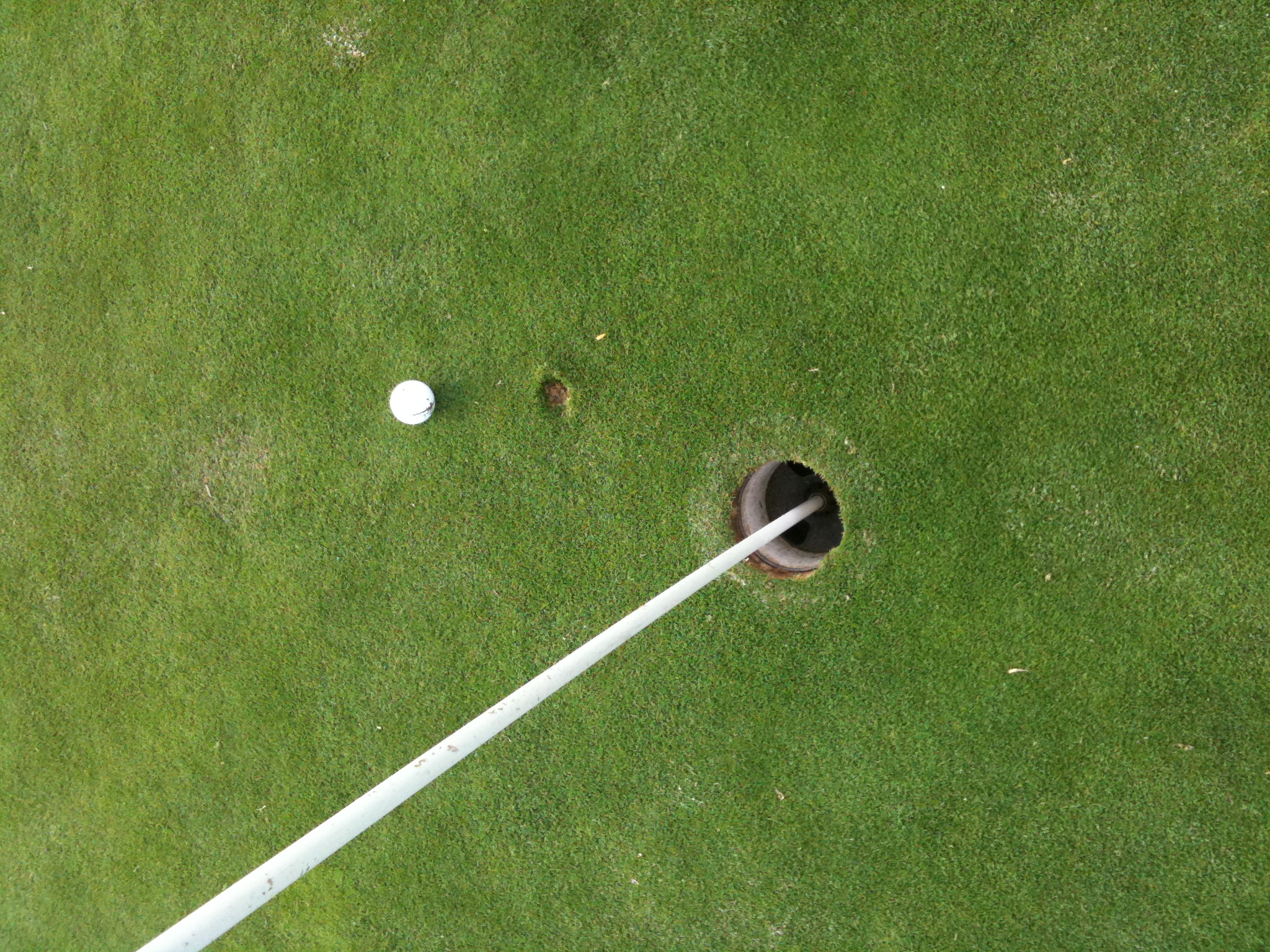
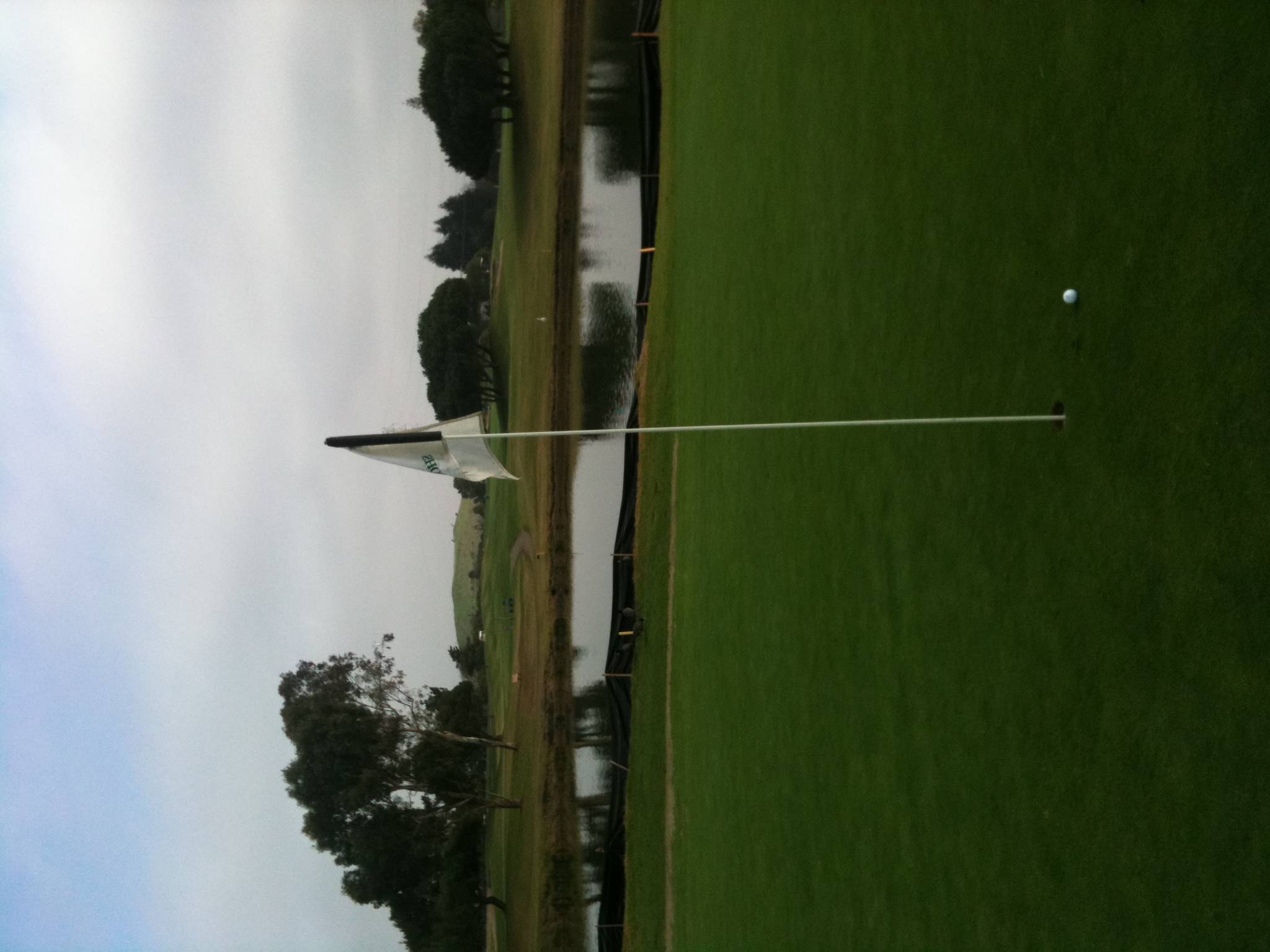
Overall, if you are in the area and have time to get round of golf in, I’d highly recommend Shoreline over the other munis in the immediate area. Not to knock the Palo Alto muni, but I’d rather pay less to play a more interesting layout with some goose poop on it than a long, boring track where you can see nearly every single flag from any place on the course. It also probably doesn’t help my bias that I nearly aced the par 3 fourth hole (see below and POTW 6).
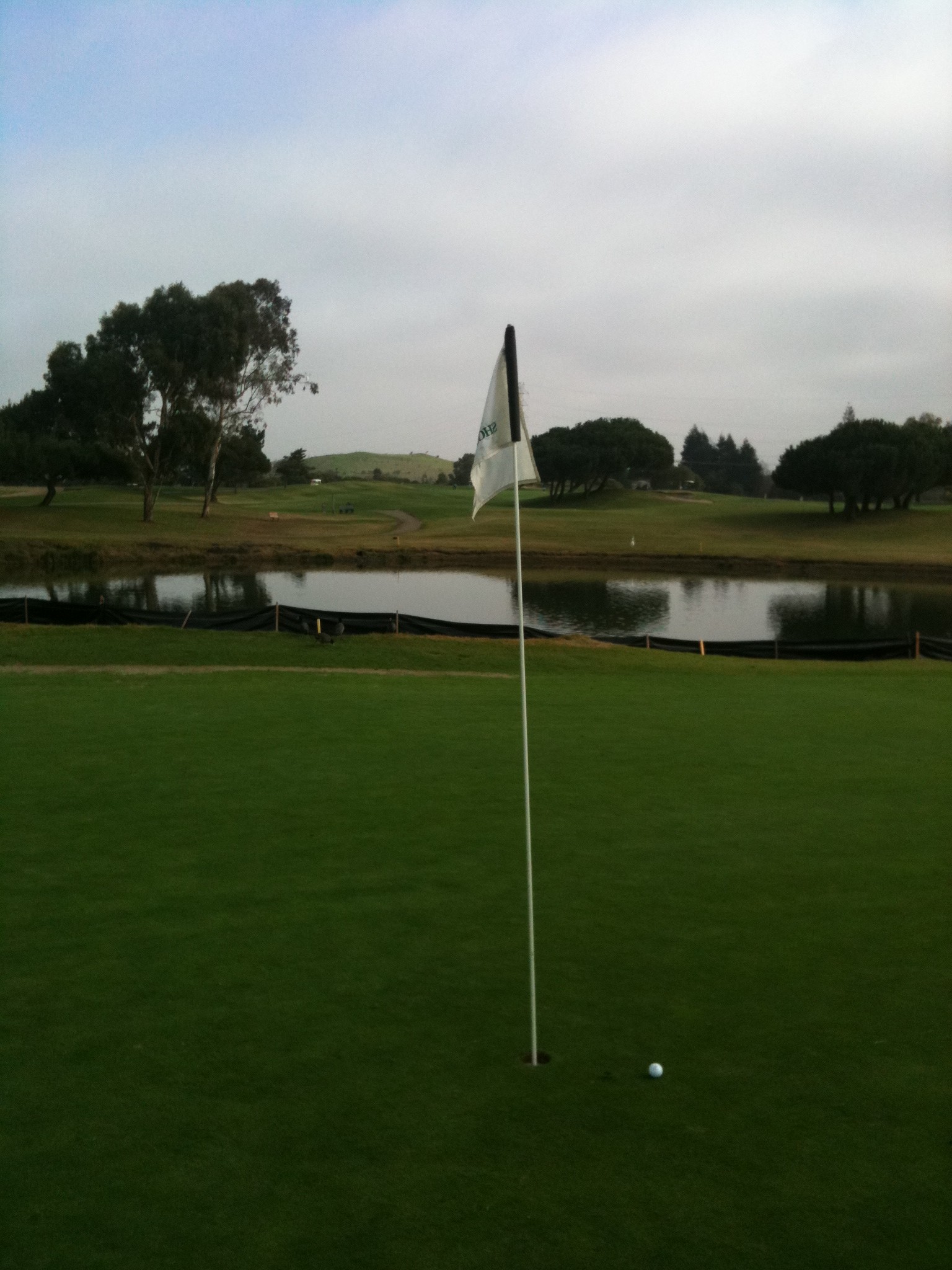
Near Ace - Par 3 Fourth
Greens: 6/10
Fairways: 5/10
Other course maintenance: 3-4/10
Cost: 7/10
Value: 7/10
Pace of Play: 7/10
Pro shop/clubhouse: 8/10
The Verdict: Great casual round, but if you’re looking for high end golf, look elsewhere.
Play of the DAY!
April 8, 2011
Here’s a virtual high-five for my partner in crime, JK.
He’s currently tied for 1st with 5 other people in ESPN’s Masters Best Ball Challenge! Get’em JK!!
(For a frame of reference, I’m currently tied for about 20,000th at -22)

For those of you who don’t follow PGA Tour policy changes, you’re missing out on a “hot” debate at the moment. Camps are split on whether PGA Tour members should be required to play every event on the tour schedule at some point within a certain number of years. Essentially, the point of such a rule is to give a sponsor some assurance that, if they sign a long-term promotional deal, the top players on the Tour will play in their event.
The center of the debate is, of course, Tiger Woods. Fans will know not only that Tiger does not play every event; he rarely plays what could be considered a full schedule for a regular touring pro. Because he prefers to be in top form for each event he plays, he has set his annual schedule up so that he “peaks” for certain events. This schedule has centered largely on a few choice events and the majors. Tiger is not the only pro to take this tack to the Tour. Rarely will any of the top players be found playing events such as the Viking Classic in Madison, MS.
My personal feeling is that such a rule is misguided. Though I understand the desire to make the Tour’s product more valuable to potential sponsors, such a rule only pollutes the quality of the available product. While we watch in awe as these players decimate the hardest courses weekend after weekend, we must realize that very few (if any) players currently play every event on the schedule in any number of years. We think these pros would have no problem on any course they ever play, and while that’s true, they are only able to shoot those scores in the low 60s with local knowledge they develop from years of playing the same courses. Tiger’s schedule has afforded him the opportunity to learn the courses that really “fit his eye” and shoot amazingly low scores year in and year out. Consider the difference in your own game if you were to only play one course for an entire year versus playing a different course every single weekend. True, professionals are much better and should play any course significantly better the first time around than we do, but the difference between shooting 72 and 67 is nearly all in putting, which can be largely dependent on local knowledge.
—————————————————————————————
Response from JK:
I agree somewhat and disagree somewhat. I agree with you that the overall product of such a rule might dilute the quality of the Tour. Part of why we watch is to see those rare moments when the best battle the best and the chase comes down to the wire. Plus, implementation of such a rule would be very difficult–what happens if you don’t play in the required tournaments? You get fined? Kicked off the Tour? Forced to go to Q-School?
Still, I hesitate to agree with your disdain for such a plan. As I’ve already stated, the fun in viewing a PGA event is seeing the best in the world going head-to-head. That seems to be a MORE LIKELY occurrence if the best in the world are forced to play more often. In years gone by, it seemed like every week held a new battle. These battles led to some of the best and most infamous moments in the history of the Tour: Billy Mayfair dueling Tiger; Bob May’s duel with Tiger; Fred Couples’s magicly sticky ball at Augusta; Craig Stadler’s towel incident. Not all of these things happened in majors.
More importantly, the Tour as a whole benefits from such a rule. First, it attracts far better sponsors because those sponsors are guaranteed that they will have the best in the world at some point, creating a bigger viewing audience. Moreover, I think it helps the players themselves. Right now, there’s a lot of young talent that gets lost in the mix because the top 3, 4, or 5 players in the world dominate the air during any given tournament that has any field worth viewing. If the field were dispersed, you might see Anthony Kim win 2 tournaments in California then see Dustin Johnson win two in Florida, while Bubba Watson was in a duel with Phil Mickelson in another tournament. How much publicity would that generate leading into the Masters? The viewing public would think there were many horses in the race, which makes it far more interesting. Right now, the viewing public thinks there are only a few good players at the top and, otherwise, a pretty lacking field. Whether true or not, such an arrangement would make the game more exciting for everyone.
Just my opinion, though.
—————————————
Reply from LG:
I agree with you, JK, that the value of any given sponsorship would increase. It certainly enticing to think that every single player on the Tour would be required to play in your event at some point during the next three years. What we really need to resolve this issue is some data that tells us how much a “premium” tournament sponsorship goes for versus a “regular” tournament sponsorship is worth. (Any help on that front, PGA Tour?) With respect to enforcement, I think such a rule could be enforced through sanctions, fines, and peer pressure much as any other rule is enforced. (See, for example, the groove rule).
As far as the epic battles, I think the reduction in the quality of play would limit the number of these kinds of epic battles. If players don’t know the course as well, how can they make those huge putts? Also, If everyone is required to play every event, it seems less likely that the top players’ paths will cross in any event. Wouldn’t it be a shame if Tiger or Phil had to miss the WGC-Accenture Match Play to play in the Mayakoba Classic?!
Review: Lesson with PGA Professional Mitch Lowe and the Fleming Course at Harding Park
February 22, 2011
As you may recall, last October I posted a “preview” of a review for a lesson with Mitch Lowe. I finally had occasion to take Mitch up on the lesson I purchased all those months ago.
Saturday Morning in San Francisco was a picture perfect day: clear blue sky with streaky clouds. Since I haven’t had a chance to play as much as I’d like prior to getting a lesson, I thought I’d get Mitch some “hard data” by playing a few holes and developing some statistics for him to analyze my game. This was also a wonderful excuse to check out Harding Park’s Gem of a short course – the Fleming 9-hole. This short course is composed of three par-4s and six par-3s. The holes vary in length from 140 to 235 yards for the par-3s and 260 to 425 for the par-4s. Having played few short courses, I was keen to try this one out to expand my horizons on this fantastic idea. There aren’t enough good things to say about this short course. It is set directly in the middle of the back nine of the famous TPC Harding Park. The big course is prominently featured on the Champions Tour and was the site of one of the most dramatic Presidents Cups ever played (I was actually there!). From my limited experience, I have gleaned that short courses generally get the low end of the maintenance support when compared to the marquee course. I was happily dispelled of that notion at the Fleming Course. The greens were impeccable and the fairways were trimmed as though the Presidents Cup were about to return. Also, the Fleming 9 were not short on the scenic views that Harding offers. The beautiful cypress trees that line the big course also have their counterparts on the short course. This truly felt like a mini-Harding experience. For $31 total, the deal could not be beat. No reservation required, just walk up and request to go out.

Having played a decent warm-up round, I went over to the range to meet up with Mitch at the appointed hour. At the beginning of my lesson, he asked me what I wanted to accomplish. I told him my goal was to work on my spotty iron play and to have a plan for improving my consistency and distance. He took these goals and ran with them. I started off hitting a few wedges and Mitch took video on his iPhone and quickly deciphered that my weak fade and spotty iron play was due to casting of the club. Sadly, this much I had gleaned from my own video before. Mitch, however, had a solution. His method focuses purely on getting the club to the right position at impact. Rather than focusing on the positions that my body might have been in, he focused more on getting the club square at impact with forward shaft lean. The videos he showed me proved that though my hands were fast enough to square the club and hit a straight shot, I was essentially turning my 7-iron into a 9-iron by adding loft and having a backward leaning shaft at impact. After a few adjustments, the later videos showed that I had indeed moved from a backward leaning shaft to a forward leaning shaft and was having to rely less on my hands to square the club. In the end, Mitch accomplished what few instructors actually accomplish: he created a plan for me that would lead me to achieving the goals I had set out at the beginning of the lesson.
As far as a review: Mitch was a consummate professional. He entertained my questions about playing in the PGA Championship as well as kept me on track with the principles he was attempting to convey. I believe his style works for me in that we discussed the thought or principle to me that he wanted me to think about during the swing and let me implement it by experimentation. I also watched him work with a beginner prior to my lesson. During that lesson, he was much more hands on and was interested in helping the beginner simply make contact. His style changes as the situation requires, which I find valuable in an instructor. He is very knowledgeable about the game and conveys his knowledge in an accessible and easy to understand manner. He also conveys a true love of the game. Toward the end of my lesson I asked how often he teaches lessons. His response was a big smile and said that it was his full time job. He truly enjoys giving lessons and the game. I would highly recommend him for anyone that needs a tune-up or introduction to the game, and I plan to continue taking lessons from him.

Crossing one off the bucket list: Pebble Beach Golf Links
December 25, 2010
I was very fortunate to have the opportunity to play Pebble Beach on Christmas Eve of this year. Though it is our aim to review courses that the average joe will be able to play, this is one that every golfer must play before they leave for the putting green in the sky. I’ll spare you the play-by-play and leave you with a recommendation: go play Pebble. There really are no words to describe this place. JK describes Augusta as a place that makes the hair on the back of your neck stand up. I’d say the same about the Old Course. I can confidently say that Pebble Beach fits that very same description. It truly is one of those “religious experiences” for a golfer. The price tag is daunting, but I assure you that as soon as you step up the first tee, you will not regret it. The course was very playable, even when wet, so don’t fear the winter season (usually with better rates than normal $499). One critical recommendation: take a caddie. The caddie fee at Pebble is $75 with a suggested gratuity between $35-50 depending on service. I was lucky to have one of the most experienced caddies in Pebble’s stable. Larry had just cleared 5,000 rounds in March and has caddied at Pebble for 15 years. He was able to provide some great local knowledge (especially around the greens) that proved invaluable. Larry also knew all the good places to take pictures and made sure to point out all the spots on the course where a memorable moment from the tour took place.
I had a difficult decision to make right at the get-go: which tees to play. My goal going into the round was to have a good time and enjoy myself. After all, this was my present for passing the bar exam. I decided on playing the gold tees rather than the 2010 U.S. Open tees on recommendation from the Starter and my caddie. Though it really doesn’t matter what tees you play at this course, I occasionally found myself wishing I’d played the Open Tees just to be able to say I’d played a U.S. Open course. To this effect, I played the 8th Hole from the U.S Open Tee. What a beautiful hole. Though my first ball cleared the gap (just barely), I hit a couple of extra balls just to re-live the experience in the moment. There may be no greater second shot in golf. The only decision I truly regret about my day is hitting Driver on 1. Hybrid next time. No need for anything longer.
I’ll leave you with one story from my trip. It was a beautiful, sunny day. The wind was blowing between 15-17 mph constantly with gusts between 25-30mph. As we rounded the 16th green to the 17th tee, a slight gust picked up. Larry suggested a full five or knock-down 4 into the front right-hand pin position. I teed the ball and rehearsed a nice smooth knock-down swing. I stepped off the shot because a group of tourists began yelling at their small child who wanted to come see what was going on. I aimed about 3 yards right of the edge of the green and trusted my draw to bring the ball back to the green. I hit the ball a little thin and a rocket took off straight toward the flag. Here’s the resulting second shot that I thankfully holed for a nice tweeter on 17:

I recall there being another not-so-perfect swing that resulted in an important kick-in birdie at 17 during a U.S. Open… One day… (for those of you who are not up on your golf history, click here)
Overall: 10/10.
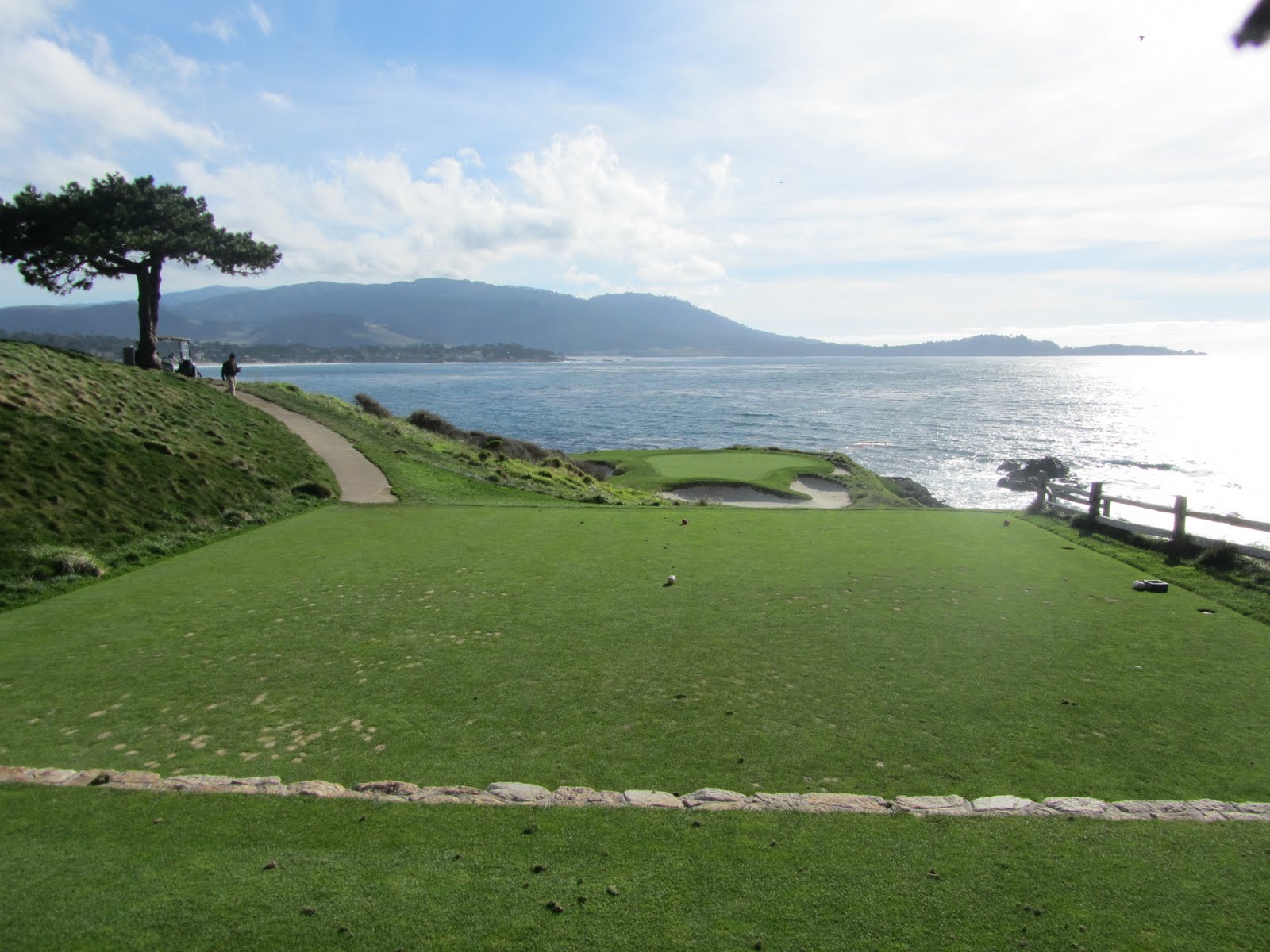
The signature 7th hole. Shortest hole in U.S. Open history and the site of a beautiful LG par. (knock-down 9-iron to a back right hole location. missed the 14 footer for birdie by the roll of the poa; next time, no taking chances, slam it into the back of the cup.)

View from the 8th Hole vista
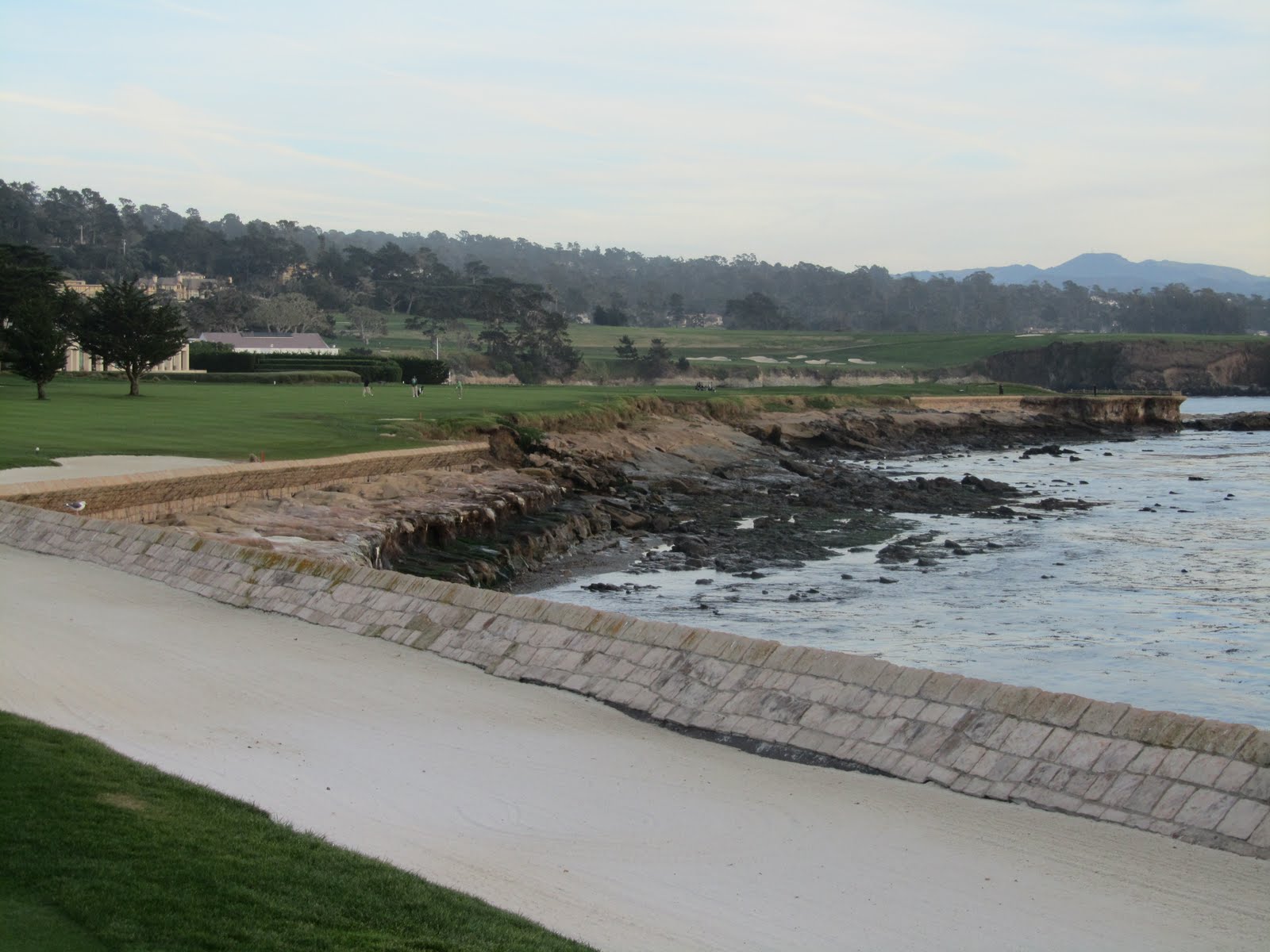
A look back up the 18th from the fairway. Rated the best finishing hole in the world by anyone that plays golf.
LG Painting a club: new tips
December 23, 2010
Following JK’s lead, I decided to paint my clubs. Here are the before and after shots, as well as a description of my shortcomings and new tips.

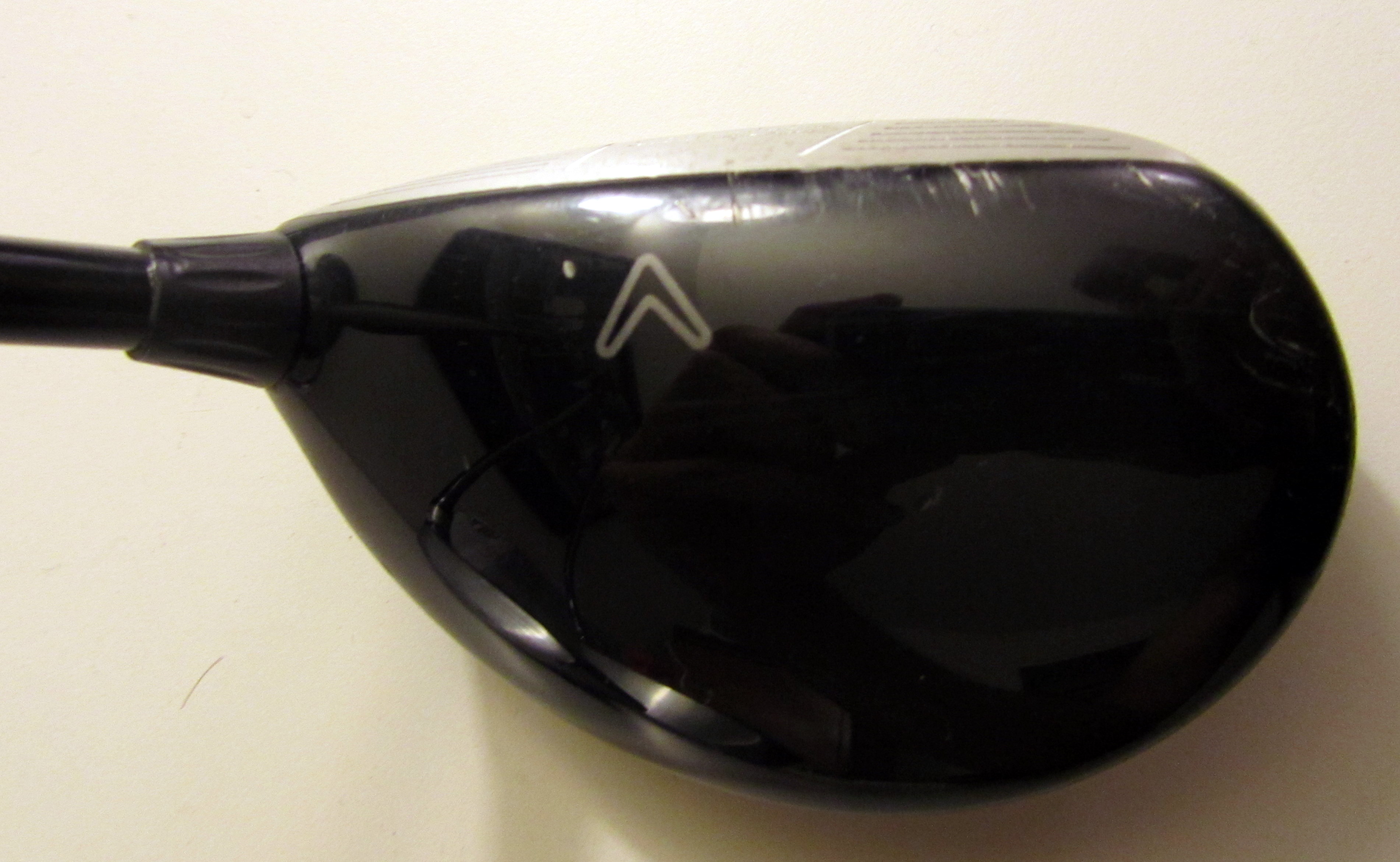

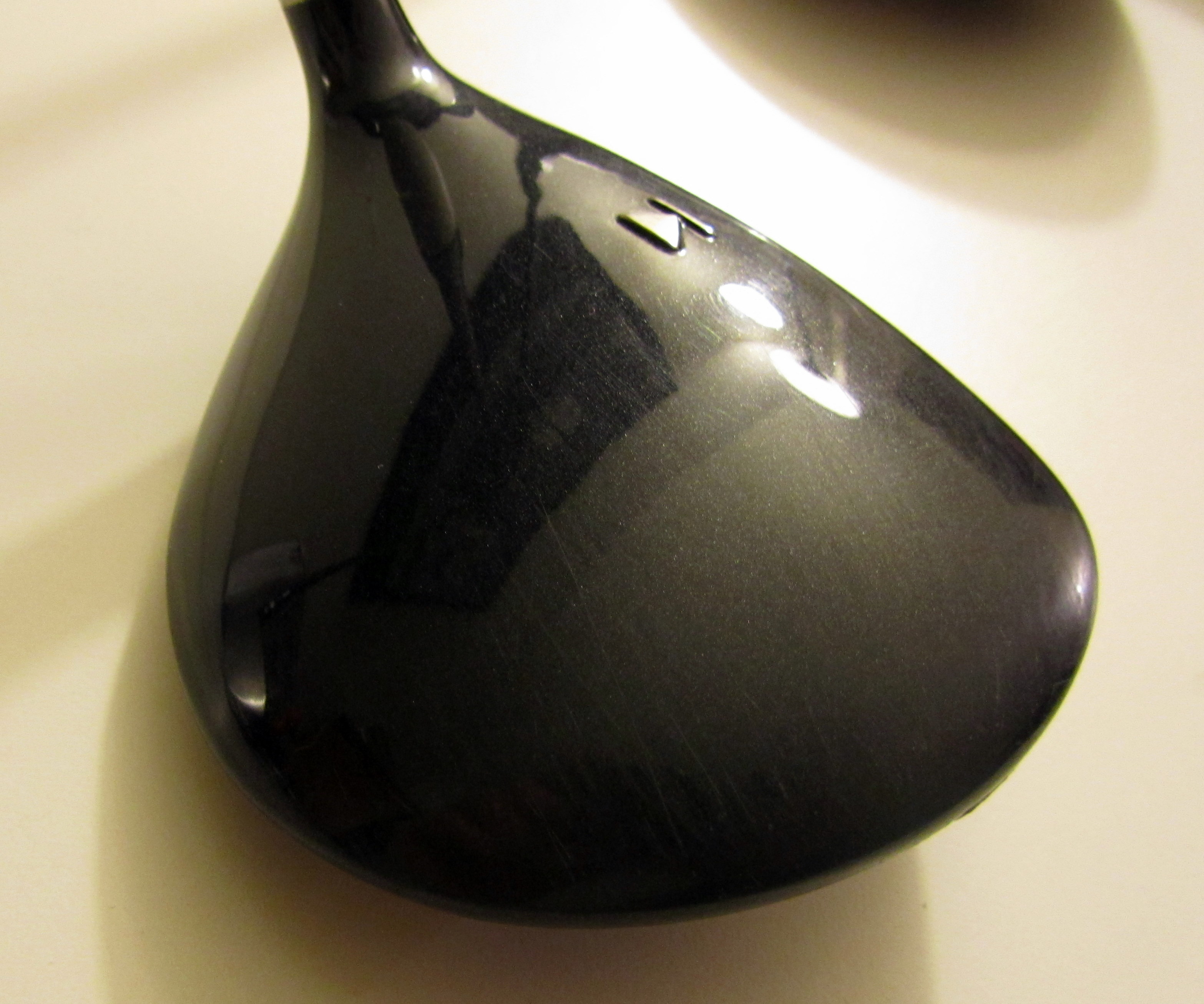
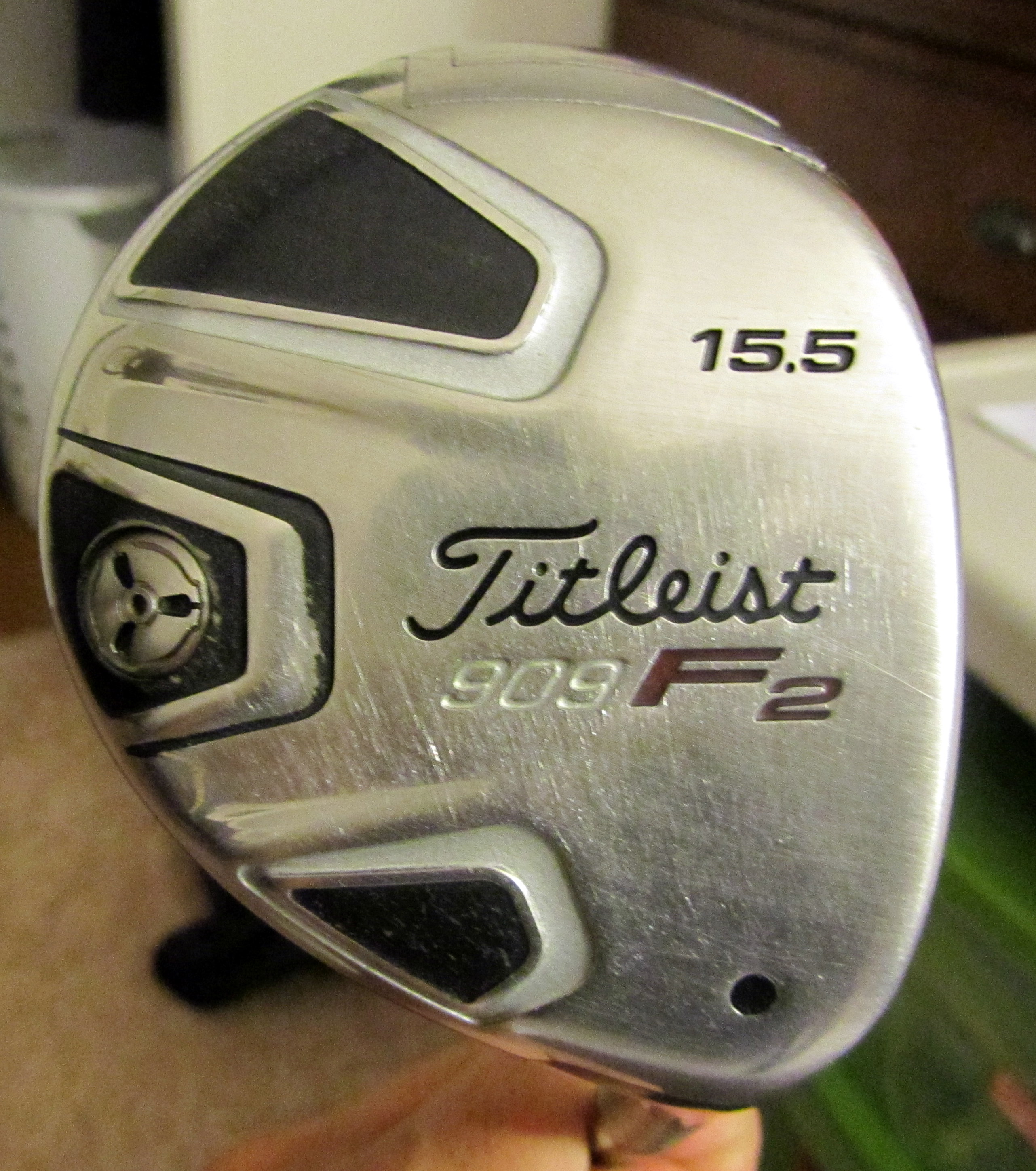


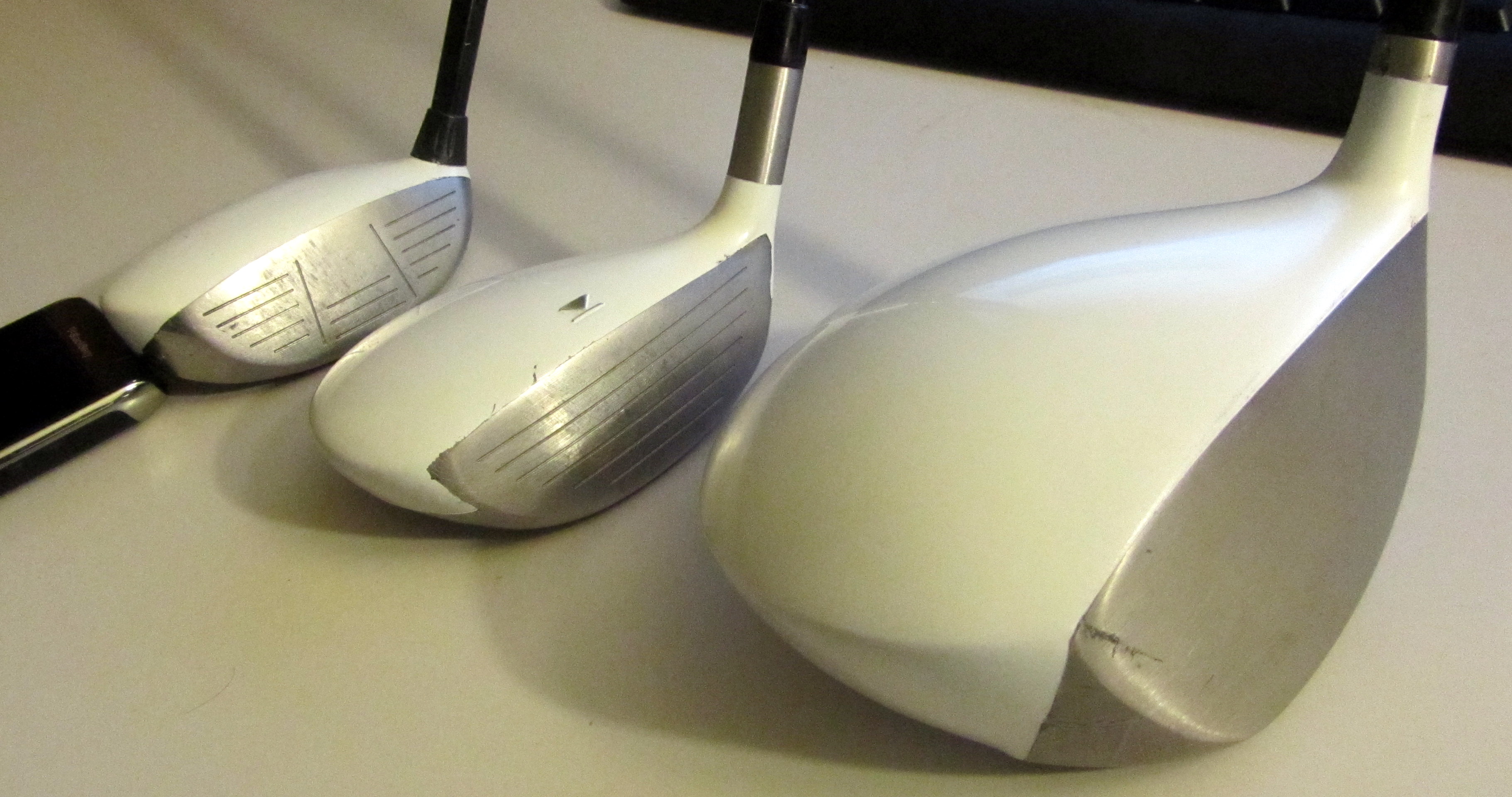


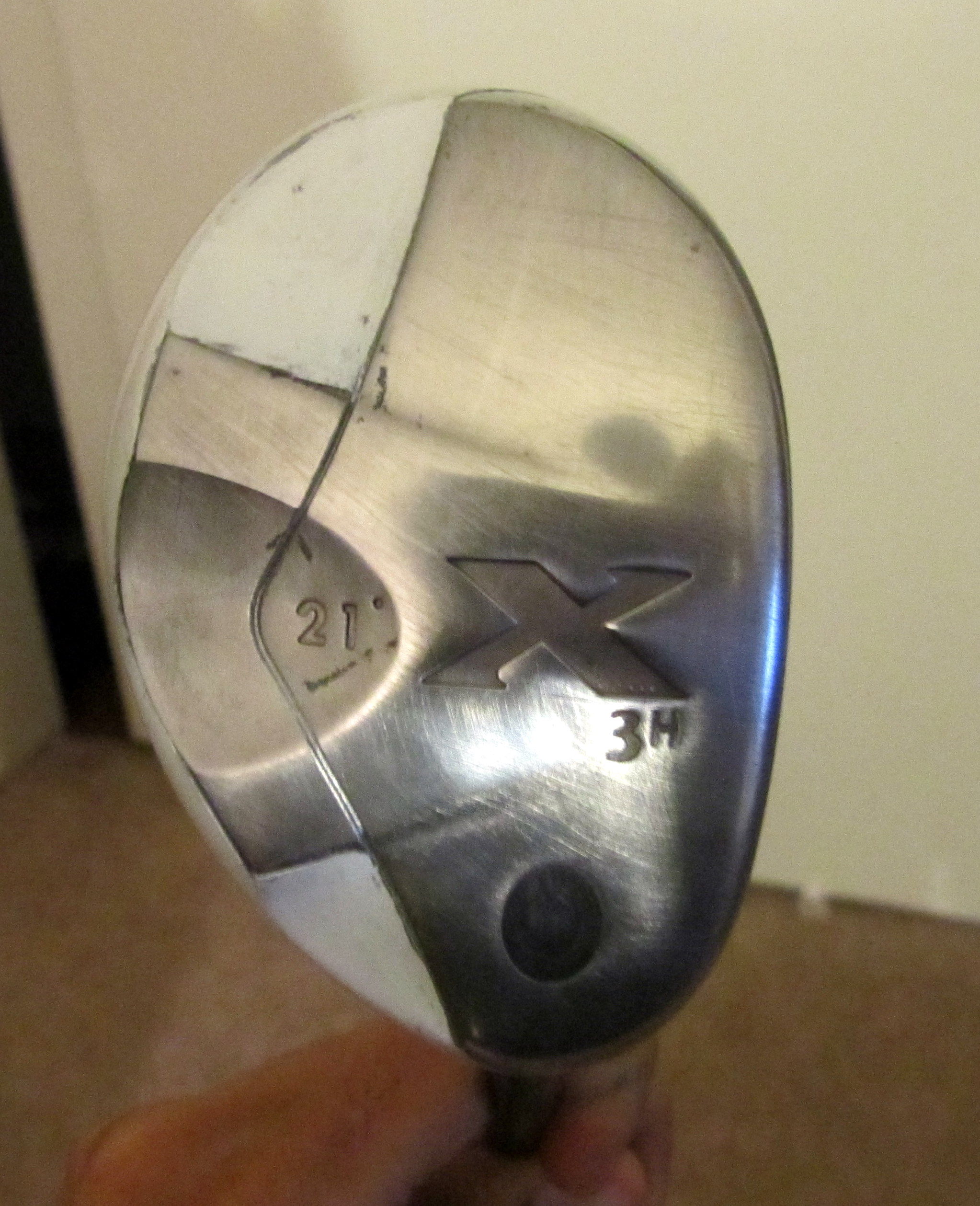
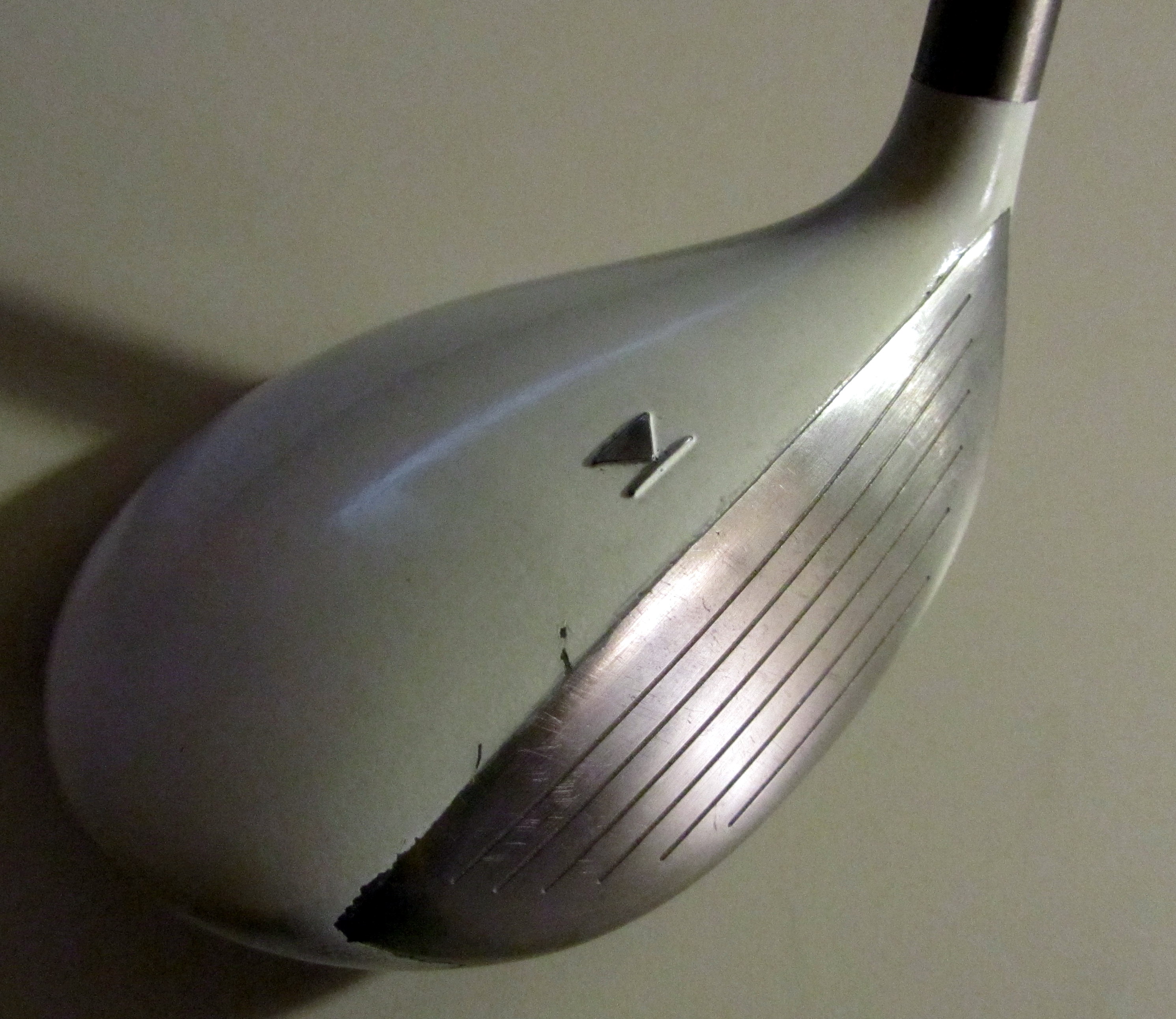

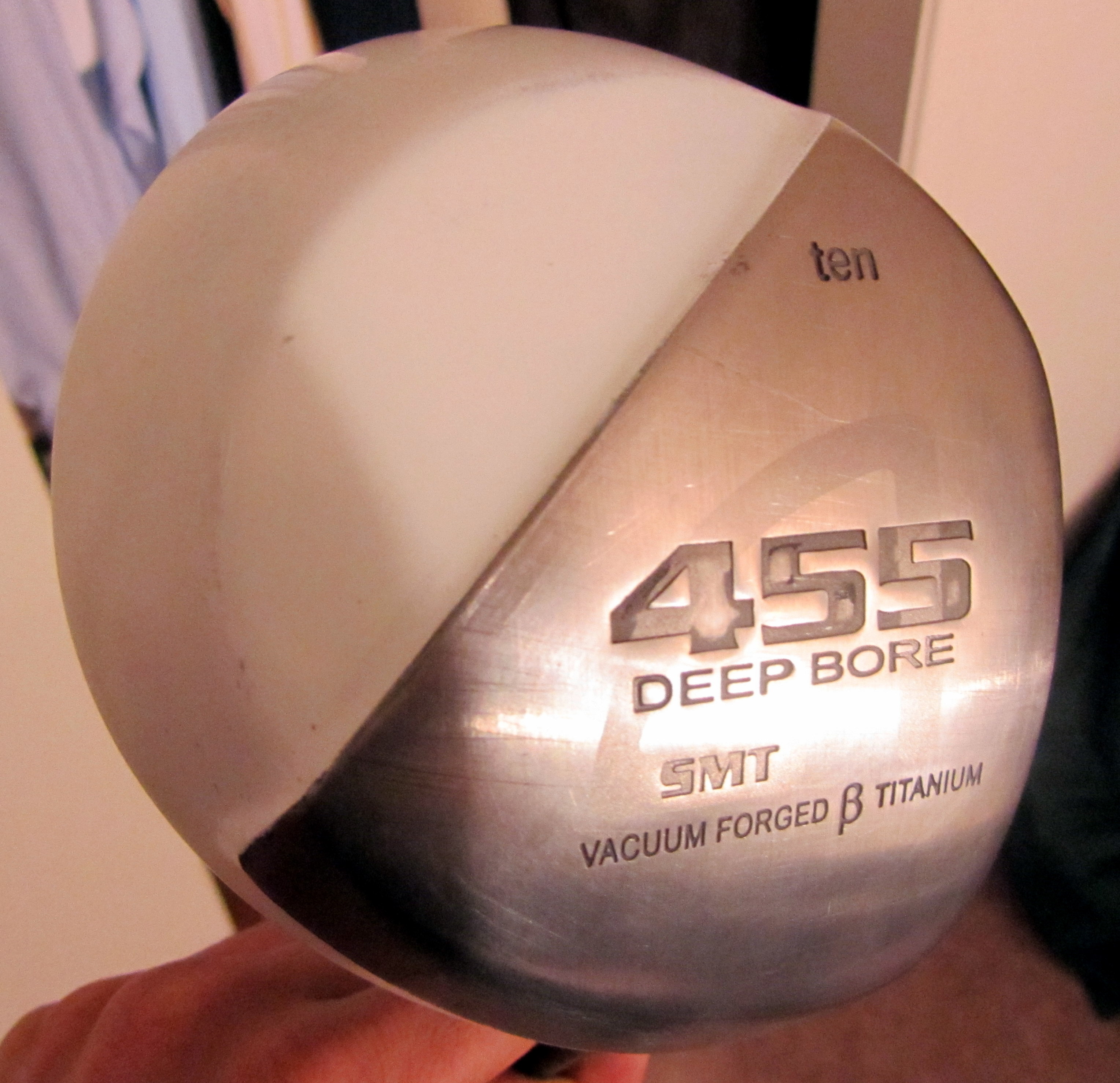
Problems I encountered:
1) White is REALLY hard to get right. Be sure you’re committed to taking the time to do this process correctly if you’re going to go with white. The results (particularly the driver) are pretty amazing when it works though.
2) Electrical tape goo will mess up the paint if you catch any of it on the sandpaper during the polishing phase. Be extra careful, otherwise you’ll get black smudges like i did on the Titleist 3w and the Callaway hybrid.
3) Take as much time as you can with the taping. At no point do you want to have to free hand the edges with a blade. Otherwise you’ll end up with scratches. See, for example, the face of my 3w :(.
4) Don’t use too much paint on any one layer – you’ll end up with something that looks like the Callaway hybrid here.
Tips:
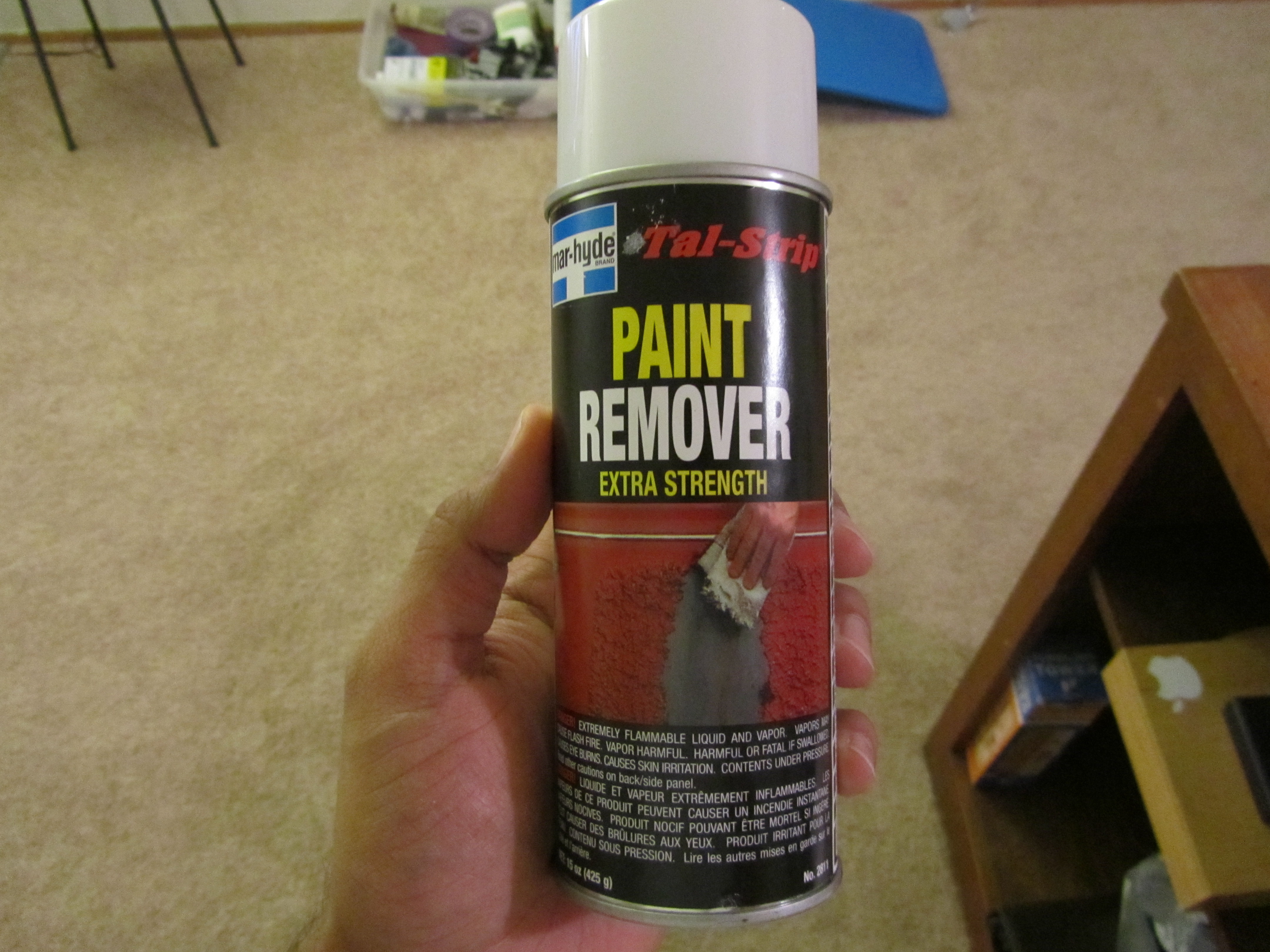
1) Use the paint stripper (Mar-hyde brand Tal-Strip Paint remover) I used in the previous post: Quick Tip: New Life for Old Irons. This stuff works great for getting the paint off the crown of the club too. Rather than the labor of sanding, the paint will simply flake off 10 minutes after you spray it on. WARNING – use proper eye, nose, face, and skin protection when using this substance. I accidentally touched a glove that had some on it with my bare hand and it burned like crazy. This method is MUCH easier than sanding.
2) Be EXTREMELY careful during the sanding process around any edge and any place where paint meets tape. These are the most likely areas for breakage. If you’re particularly worried, don’t sand these areas until the paint cures after 4-5 days.
3) JK recommends waiting 15 minutes between coats. I waited 20 between coats on the driver and really like the results. be your own judge, but don’t tack cloth the club until the paint is dry to the touch. This is a mistake I made with the hybrid and the result was mediocre at best.
4) If you have a lot of scuff marks on the face of your club, you can smooth them down, and in some cases get rid of them all together by giving them a good sanding with the 2000 grit sandpaper you have left over. This really cleaned up the face of my SMT driver and the non-grooved parts of my 3w and hybrid. See for yourself!
5) Raised symbols/alignment markers – I was worried about painting over the arrow/line that are on the crown of the Titleist 3w. I wanted them to stand out even after the new paint job because I like to use them to line up shots. In order to make sure they’d show up, I took a razer and carefully cleaned off all the layers of paint that had built up on them prior to applying the clear coat. I later realized this was probably unnecessary due to the sanding process. JK did not do this and his results turned out just fine. I also recommend the use of a metal needle for really fine clean-up jobs.
All in all, I consider this attempt a good learning step toward the final product that I hope to achieve. Consider the above pictures a decent first attempt, but a promise that better results can be achieved with a little practice. Next up, I will see how long this paint job lasts and hopefully come up with another color that is more forgiving to try next time. Like JK says about this kind of painting, there’s a certain comfort you can take in knowing that if you mess up, all you have to do is spray the paint remover on and start over again.
Happy Painting!
Quick Tip: New Life for Old Irons
December 17, 2010
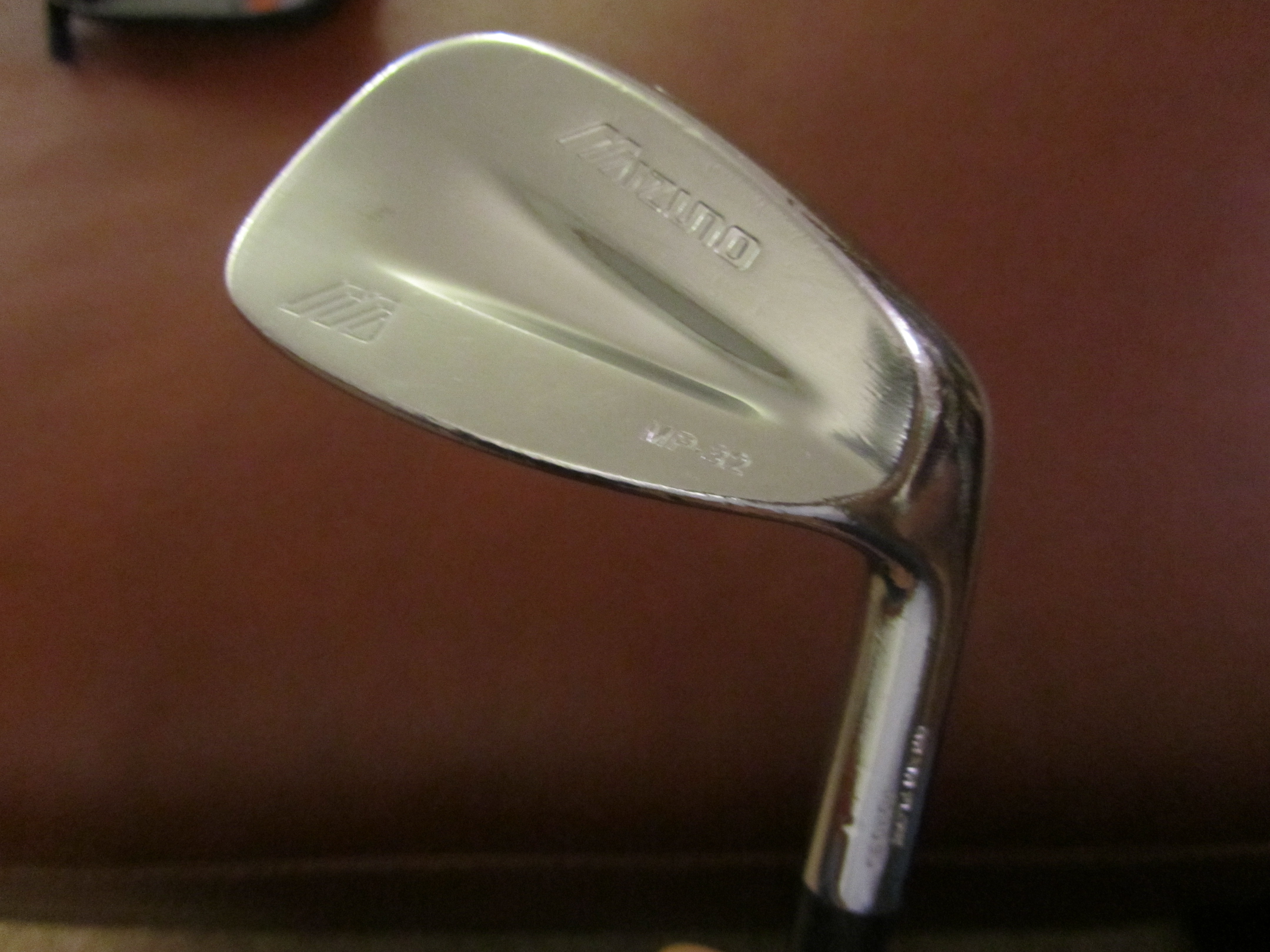
Irons tend to lose their shine more quickly than any other club in the bag. Those with numbers stamped and painted on the sole tend to wear unevenly as well. One technique I like to use to prevent irons from losing their beauty is simply removing all the paint fills from the club. This takes very little time, and for about $7 (mar-hyde brand Tal-Strip Paint remover), can breath new life into your old forged irons. All I do is use a spray on paint stripper (acetone never works for me, for some reason), and wait for it to do its thing. NOTE, be sure to try a small amount of whatever solvent on a test area (or club you don’t use often) just to make sure it doesn’t take the finish off as well. I haven’t ever tried this with a cast club, so proceed at your own risk. See the pics below!
With paintfills:

without paintfills:
Paint stripper I used:
If you’re not a fan of the totally blank look, this is also the first step to doing your very own paintfills! I’m considering experimenting with these guys during the upcoming days off…
Play of the Week 6
December 12, 2010
This week’s play of the week goes to…..ME!!!
Shot of the day: 12/12/10
Par 3 Fourth at Shoreline Golf Links. 165 yards. 3 inches from an ace.
Not bad for not having hit a ball in a month, eh?
Golf Fitness: Endurance and Injury Prevention
December 12, 2010
While these two topics may not be as sexy as “power,” I believe they are two of the most important goals anyone exercising for golf should keep in mind. You can have all the power in the world, but if you can only hit 3 or 4 drives at 90% power before your swing starts to fall apart, what’s the point? Also, if you throw your knee out while swinging at 90% power, you’re not likely going to see much benefit from packing on all that muscle, are you? (Unless you’re TW, but let’s face it, if you are, you probably aren’t reading this). Let’s get right into it, shall we?
Endurance
Depending on your particular goals, I recommend incorporating various amounts of EACH of the following:
1) Cardio! – yeah, I know, I hate it too. The key here is to maximize two things: duration and intensity. For a golfer, it is more important to max out duration for our particular goals. Whether you want to be able to walk 18 without being sore the next morning, or (like JK and myself) walk 36-45 and be able to play the same amount the next day, you must work your heart. If you haven’t done much of this in a while, walk before you run. Like golf, cardio can be just as much a mental challenge as a physical challenge. You have to believe you can finish the distance/time that you have in mind. Try starting with a number you feel you can easily achieve and push yourself from there. One of my biggest problems when I started working out was trying to do too much too quickly and getting discouraged from failure. Prevent these kinds of silly mistakes by keeping your expectations in line with your abilities. (Funny how that translates in to the golf game). My personal favorites include jumping rope (I try for 20 minutes), swimming, and the row machine. I have bad knees, so it’s difficult for me to run much further than 1.5 miles without severe knee pain. The key here is to push yourself to your body’s limit, not beyond.
2) Weight lifting – follow the same regimen you feel comfortable with as described in Golf Fitness: Power, but now lower the weight and max out the number of reps that you perform. You can even add a set and really decrease the weight. This will essentially become another cardio workout if you really get into it. For example, rather than going at 80% of your max, drop to 35-40% and do 2.5 to 3 times the number of reps. This will engage your heart and work on toning your muscles by increasing the exposure to the load. Also, experiment with decreasing the amount of time between sets. This will effectively increase your cardio output as well. It is important to stay safe when working out at an increased pace. Take care with weights and equipment for your sake and others in the gym. Also, be sure to stay well hydrated when trying anything new with weights. Cardio+weights is a serious combination that will work your body in new and different ways!
3) Carry your bag! This might seem like a no brainer, but one good way to increase your ability to walk 18 and carry your clubs might be just that! If you’re really gung ho, try adding a few water bottles or a couple dozen extra balls to increase the load. I try to avoid this particular method of increasing endurance because I’d rather enjoy the golf, but if you play enough to where this is not an issue for you, go ahead and give it a shot!
Injury Prevention
Injury prevention, for golfers, is really a combination of strength and flexibility. Increasing your strength will allow you to go at the ball harder because your muscles have the ability to control your body more effectively. Part of this though, must be flexibility because in order for your muscles to have any room to move, your body must be flexible enough to create room. Try a few of the following:
1) Basic stretching – While I’d normally take the time to write out a full stretching routine for you, there’s no point reinventing the wheel. Virtual Fitness Trainer has outlined a solid basic stretching routine. Take the parts that work for you and work on the areas where you feel most tight. Golfers should focus on the trunk, hips, and shoulders in particular.
2) Yoga and Hot Yoga – I personally have yet to try either of these techniques (JK, please chime in). The flexibility benefits of these activities is obvious. I would not recommend trying either of these without a trained professional. Hot yoga in particular can lead to injuries if you are not careful. Chances are, if you’re considering trying out Yoga, there’s a studio nearby with someone far more knowledgeable than either of us. Give them a call!
3) Warm up before your round – This is easily the best way to avoid injury, particularly when playing in cold weather. Do some of your favorite basic stretches on the range and hit a small bucket before your round. If you have knee problems, warm up your knees, if you have back problems, stretch out your back. The easiest way to avoid injury is to focus on the parts of your body that you know are prone to injury. Listen to what your body is telling you and don’t push it beyond its limits.
4) Stay Hydrated! Part of maintaining flexibility is keeping your fluid levels up. You may notice that you cramp more quickly when you haven’t had enough water in a given day. A noted dietitian recommends drinking enough water to have two completely clear urinations per day. This is an easy way to keep track and is generic to each individual person, so I tend to use it as well. I also recommend avoiding replacing water with sports drinks. While they do provide electrolytes (critical for staying hydrated), they also tend to contain more sugar and carbs than are necessary for golfers. Stick to water on the course and use the sports drinks prior to your cardio program.
Please add your own personal warm up routine or cardio program below! One great way to keep your workout interesting is mixing things up and getting new ideas from your friends.


 The Power Fade Golf Blog